

Access and Info for Institutional Subscribers

Home
Toggle menu

  • Home
  • Editions
  • Images
    • Exhibits
    • Images
  • Teaching
    • Articles
    • Teacher Resources
  • How To
  • About COVE
    • Constitution
    • Board
    • Supporting Institutions
    • Talks / Articles
    • FAQ
    • Testimonials


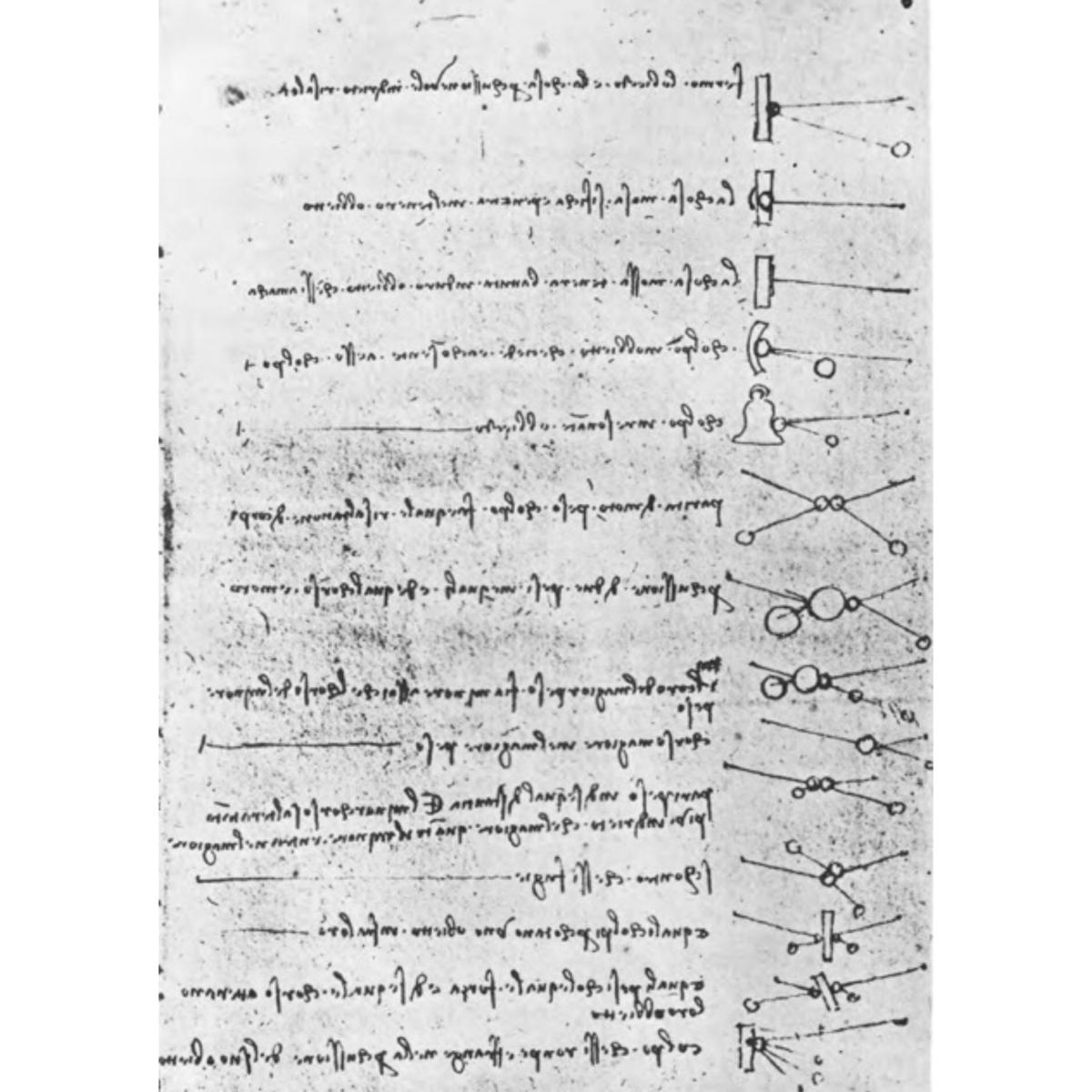
Da Vinci and Sound Waves


Type: Gallery Image | Not Vetted


In one of his manuscripts, Leonardo records his experimentation with how different sounds are produced depending on the hardness and softness of objects. Leonardo was also focused on the time after a blow that a sound is produced, and concluded that a blow can always be seen before it is heard. Leonardo made many other notes of how size, length, shape, and speed have an effect pitch. His observations included studying the speed of wind passing through a reed instrument to conclude that high speeds produce high sounds, and slower wind speeds produce lower sounds. With his knowledge about wind instruments, Leonardo was able to determine that changes in pitch while singing is due to movement of the rings in the trachea, i.e. vocal chords, and not movement of the tongue.  

Photo obtained from: Winternitz, Emanuel. Leonardo Da Vinci as a Musician. Yale University Press, 1982.

Featured in Exhibit


da Vinci and the Renaissance 2020 Gallery

Associated events


Associated Places


Copyright
©

Vetted?
No
Submitted by Chyna Ferguson on Tue, 02/04/2020 - 20:17

Webform: Contact

About COVE

  • Constitution
  • Board
  • What's New
  • Talks / Articles
  • Testimonials

What is COVE?

COVE is Collaborative Organization for Virtual Education, a scholar-driven open-access platform that publishes both peer-reviewed material and "flipped classroom" student projects built with our online tools.

Visit our 'How To' page

sfy39587stp18