
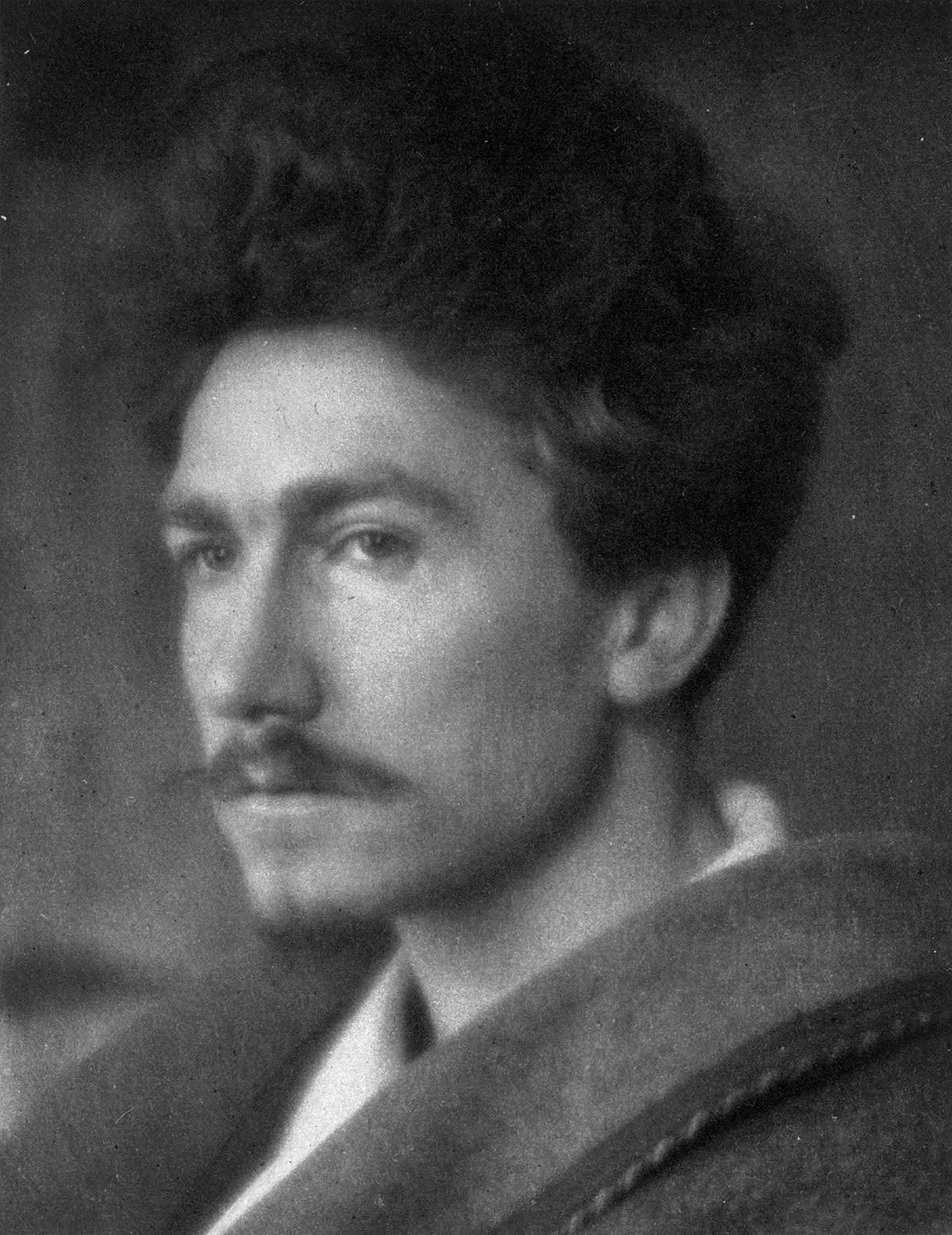
Ezra Pound (age 28 in the photo above) was born in Idaho Territory in 1885 and grew to be considered one of the most influencial poets of the 20th century. Other famous authors and poets have recognized his influence across the board; Ernest Hemingway put it like this: "for poets born in the late 19th or early 20th century, not to be influenced by Pound would be like passing through a great blizzard and not feeling its cold." In 1908, Pound moved to London where he began working as an editor for multiple American literacy magazines. It was here that he helped publish authors such as T.S. Eliot, James Joyce, and Ernest Hemingway. After WWI, Pound was outraged by the effects left by the war and he moved to Italy in 1924. Because of his expressed political views and support for Benito Mussolini, he was beginning to be considered controversial. He made a series of radio broadcasts during his time in Italy and would verbally attack the United States, Franklin Roosevelt, and the Jews. Because of this, Pound was arrested and charged with treason against the United States. However, because he was deemed unfit for a trial, he was admitted to St. Elizabeth's psychiatric hospital in Washington D.C. for over 12 years. He was released in 1958 and lived in Italy until his death in 1972.
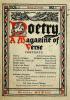
Pound is also often considered a founder of Imagism: a movement that moved away from traditional romanticism and Victorian poetry. It embraces simplicity, clear and concise language, and the use of accurate descriptions of visual images. He wanted to focus more on the individual experience and concrete images and ideas rather than subjective or abstract poetry. The second photo (of the magazine cover) is one that Pound provided and editor's comment in. He believed that using images was the exact essence of what makes poetry poetry. This type of poetry is considered modern and moves away from traditional fixed meters and moral reflections. In his comments, Pound says, "an “Image” is that which presents an intellectual and emotional complex in an instant of time... It is the presentation of such a “complex” instantaneously which gives that sense of sudden liberation; that sense of freedom from time limits and space limits; that sense of sudden growth, which we experience in the presence of the greatest works of art." In essence, Imagism uses no excess words and relies on exact images.
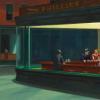
Finally, the painting that is included during this time is called Nighthawks by Edward Hopper. We decided to include this painting because is was first produced in 1942 during the time of modern art and depicts a couple different people in a small downtown diner late at night, viewed through the diner's large windows. Edward Hopper was a realism artist and this piece of his is a great example of how Imagism took over in poetry. While there seems to be a lack of narrative or "substance" in the painting, it provides a concrete depiction of this diner very late at night with few guests.