
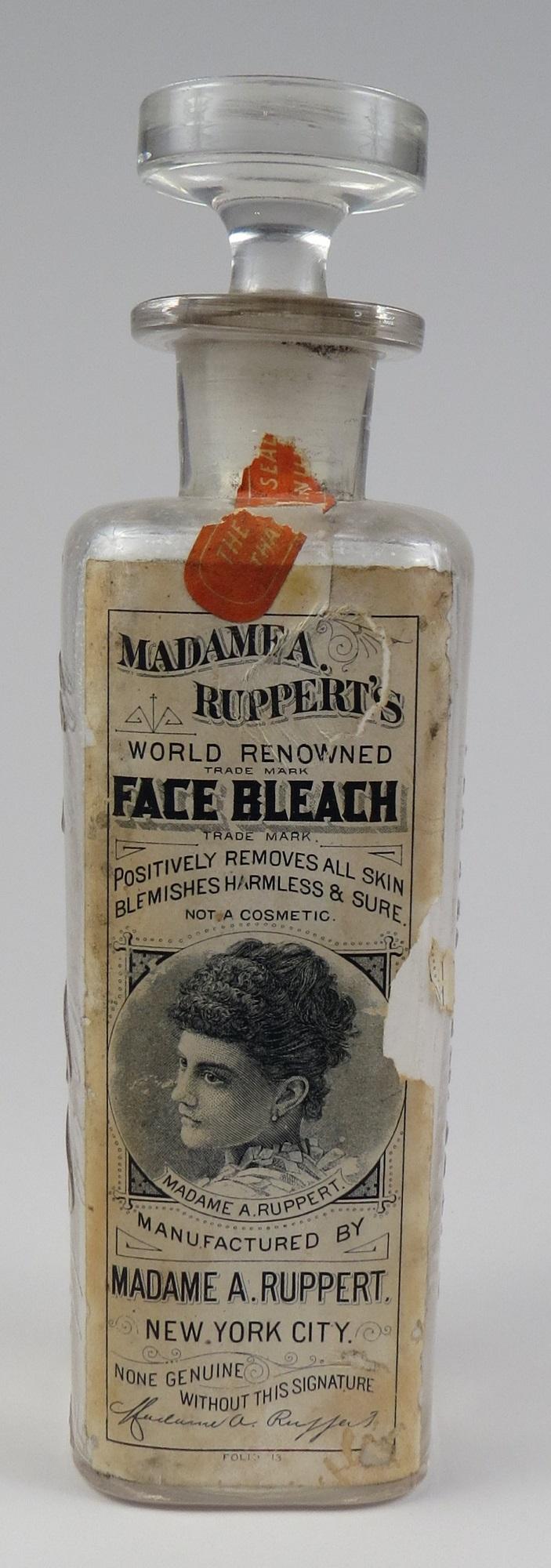

Face bleach has been on my Christmas wish list for forever and I love receiving it every year! Sometimes I am greedy and use it all too fast. When that does happen, I sneak into Lucy’s room and take some of hers because she is usually gone in other parts of London traveling and will never know. I first discovered it on an advertisement column on the newspaper that Father was reading when I was a little girl. Ever since my first Christmas morning that I have received it, it has been a staple product of my skin care and I cannot live without it. It is definitely the best one on the market and it helps me keep my natural glow of my skin without making me look like a white ghost. I love how it makes my skin look shiny and white. I bleach my face so that my skin has an even skin tone and it smooths bumpy parts of my face. Plus, all my friends do it too! God knows where my face would be if I had not discovered this product! I would look like a mess. I definitely recommend this product to everyone and anyone when I am everywhere because if you think you are already beautiful, think again after using this face bleach. Gertrude says that I look ridiculous, but I can’t help but laugh at the state that her face looks like when mine is radiating with beauty. God has blessed me with natural beauty, but that doesn’t mean I can’t take advantage of it.
Editorial Commentary: Phyllis’ use of face bleach is partly because of her obsession to her social status. Although women in the 21st century wear makeup to cover flaws, women in the Victorian era, between 1837 and 1901, wore items, including face bleach, to portray a certain high social status (“Skin Care”). In the Victorian era, women who had the palest skin were considered wealthier because it insinuated that they did not have to do any hard labor in the sun which would cause the skin to become darker (Colonialism and the Origins of Skin Bleaching). Lighter skin also described the women to have a higher social standing, better employment, and better marital prospects (Colonialism and the Origins of Skin Bleaching). In those days, men usually completed the hard labor and had the darker, uneven skin tones. Because of the white supremacy and colonialism linking to the negative connotations that come from being African American was prevalent in the Victorian era, it has made contributions to the concept of face bleach. The face bleach was the beginning of the makeup era that is still ever evolving in society today. Face bleach is related to gender and sexuality because women, even from the Victorian era, were pressured to wear artificial products on their faces in order for society to see them as beautiful and accepted. Since then, women wearing makeup has never gone away and it has only increased in the amount of companies that create and sell powders and concealers that perform the same task that a face bleach in the 1800s would do. One makeup product today that is similar to face bleach is called foundation. The purpose of the foundation is to create an even skin tone to the shade the face already is. The fact that the foundation is created in so many skin colors to match anyone’s face pigmentation, whether light or dark, speaks to the increasing development of gender equality that women are slowly encountering with men. Because of this product, women feel less of the need to make their face a lighter shade and society can accept that women are just as beautiful with a tanner face skin color. Relating back to Phyllis Lorimer, she was a female victim to the challenging beginnings of makeup because she did not know how this small bottle of face bleach evolving to makeup has had as a whole to change the way society views and accepts the differing face pigmentations of women for the future.
Citations:
“Skin Care.” Smithsonian Institution, www.si.edu/spotlight/health-hygiene-and-beauty/skin-care.
“Colonialism and the Origins of Skin Bleaching.” Wellcome Collection, wellcomecollection.org/articles/XIfdHRAAAKbQ_FWB.