
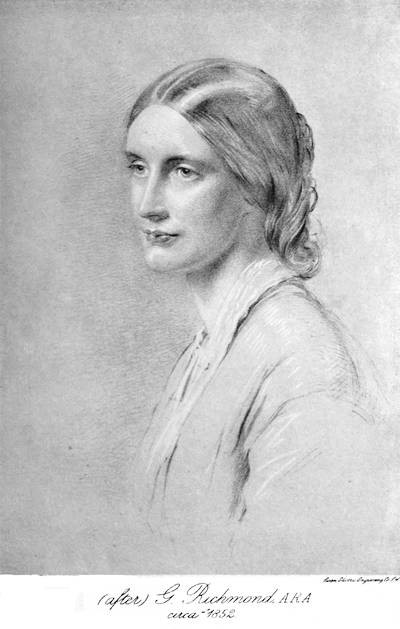
The foundation of the North of England Council for Promoting the Higher Education of Women (NECPHEW) in November 1867 is seen as milestone in the renewal of examinations for women. At the time, examinations were seen as providing a motivation for female teachers to improve their teaching. Therefore, women started to organize lectures “for themselves which would provide both discussion on teaching techniques and additional information on school subjects” (Burstyn 26). Lectures discussing these teaching techniques and subjects were thus “often followed by a brief examination, and those attending received a statement showing that they had reached the standard expected of them” (Burstyn 26).
The NECPHEW, when it was founded in 1867, promoted this cause in the north of England, so much so that they began organizing the lectures themselves to promote studying and higher education for women (Burstyn 26). Founded by Anne Jemima Clough and with the founding president of Josephine Butler, this institution therefore began to advocate once more that women were capable of taking examinations. The organization even offered support to Emily Davies at the University of Cambridge and took up fundraising to help Girton College (Levine 30). At the time, Emily Davies had been petitioning the University of Cambridge “to allow girls access to the new Local Examinations… in October 1864,” gaining the support of “seventeen of the Queen’s College staff and thirty-four of the Bedford College Staff’s signatories” (Levine 23). At Girton College, women were attending higher education to become teachers, with “123 of the 335 women [who attended being] awarded certificates there from its foundation [1869] until 1893” (Levine 26).
However, although the NECPHEW was able to promote these causes, “fundamental disagreements emerged with a number of the founding principles on which Girton College was to rest” (Levine 31). At the time, the founder of the NECPHEW, Clough was opposed to Davies and her insistence on forcing compulsory Greek and Latin studies at Girton College (Levine 31). Clough also believed that the cost of attendance was too high and was suspicious “of the college’s attachment to the Anglican church” (Levine 31).
At the time the divisions were occurring within the NEPCHEW, “a separate campaign at Cambridge with the foundation of Newnham College at its center [had arisen]” (Levine 31). Though the NECPHEW disbanded in 1875 due to fundamental differences, the cause “donated its remaining funds,” mostly to the new library at Newnham College (Levine 31). Thus, while the North of England Council for Promoting the Higher Education of Women did disband, the organization did continue, in donating its funds, to support women’s higher education and examinations.
Anne Clough even continued to pursue this cause through becoming the first principal at Newnham College (Levine 31). Other members of the NEPCHEW, however, also continued their promotion of women in higher education as well, most notably including Elizabeth Wolstenholme and Josephine Butler, its founding president. Through the NECPHEW, both Butler and Wolstenholme ultimately “drew on an older feminist tradition that directly equated freedom with the acquisition of knowledge” (Schwartz 670). Though she was an active participant in the NECPHEW, Wolstenholme herself also championed “a wide range of women’s rights issues, including sex education and the suffrage” (Schwartz 670). She also wrote a tract on girls’ schooling, “calling on her sisters to ‘Set free the women who sigh in the dark prison-houses, the captives of ignorance and folly’” (Schwartz 670). Josephine Butler likewise went on “to lead a national campaign against the exploitation and legal oppression of prostitutes” (Schwartz 670). She saw promoting higher education as another way to allow women to gain freedom with their education, stating that for women “’[w]orse than bodily privations or pains…are these aches and pangs of ignorance” (Schwartz 670). She believed that “‘[t]he desire for education which is widely felt by English women … springs … from the conviction that for many women to get knowledge is the only way to get bread’” (Schwartz 670).
During this time period, “[w]omen were among the most avid consumers of education in the period, and it was their enthusiasm that helped popularize the university extension programmes” (Burstyn 26). The formation of the NEPCHEW therefore also allowed women to pursue their higher education while taking examinations to share their knowledge. This promotion of women and their education was later seen as a stepping stone on the way for women in the “wider question of women’s right to work” (Schwartz 670).
Works Cited:
Burstyn, Joan N. “The Politics of Aspiration .” Victorian Education and the Ideal of Womanhood, by Joan N. Burstyn, Routledge, London, 1980, pp. 11–29.
Butler, Josephine. “(After) G. Richmond, A.K.A. circa 1852.” The Project Gutenberg EBook of Josephine E. Butler, 16 Nov. 2016, www.gutenberg.org/files/53534/53534-h/53534-h.htm.
Levine, Philippa. “Education: The First Step.” Victorian Feminism, 1850-1900, by Philippa Levine, University Press of Florida, 2011, pp. 18–38.
Schwartz, Laura. “Feminist Thinking on Education in Victorian England.” Oxford Review of Education, vol. 37, no. 5, 2011, pp. 669–682., doi:10.1080/03054985.2011.621684.