
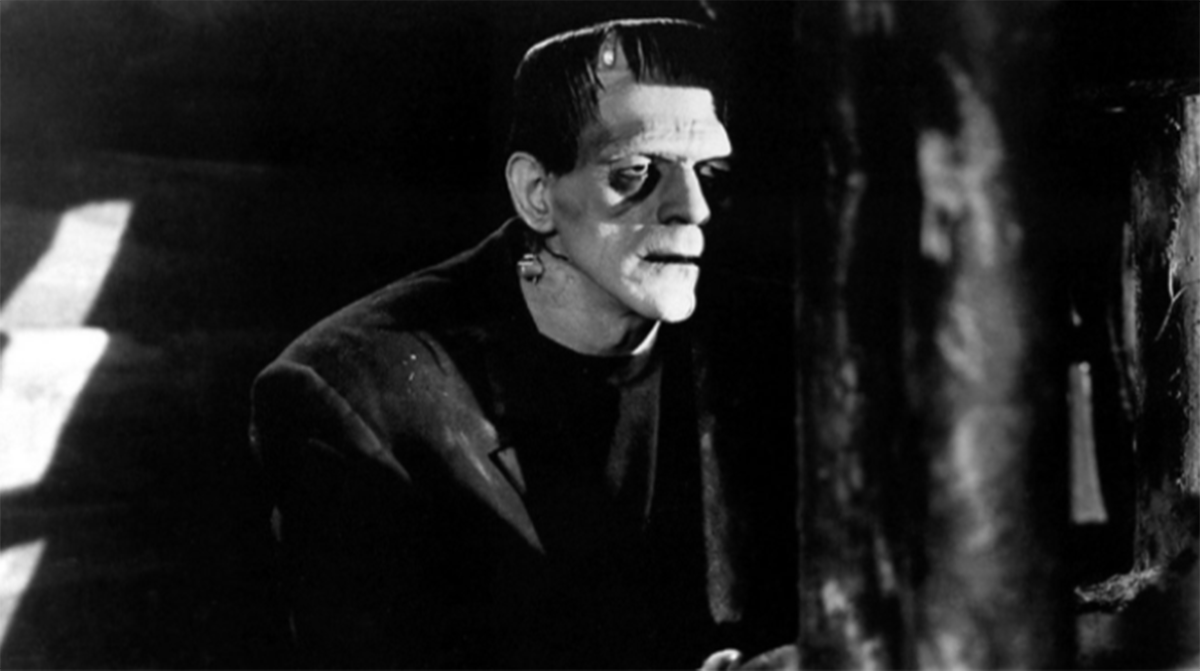
- James Heffernan, professor of English at Dartmouth College, contends that the 1931 adaptation of Frankenstein differs from Shelley’s monster in that, “the monster is totally silenced and thus forced-- like the monster of Richard Brinsley Peake’s Presumption: or, The Fate of Frankenstein (1823)... to make gesture and expression tell a fraction of his story, which is mutilated as well as severely abridged” (135). This adaptation of Frankenstein is critical, because it is one of the first instances where the monster becomes more of a demonic being that would exist in a horror movie and less of a representation of societal criticisms. This is reflected in the monster's appearance, as he has dark marks on his face, green skin, and bolts and screws that protrude out of his neck and the top of his head. The bolts and screws make the monster look more like a collection of parts, rather than a fully formed being, contrary to Shelley’s 1818 description.
Copyright
©
Vetted?
No