
Introduction:
“There are some upon this earth of yours who lay claim to know us, and who do their deeds of passion, pride, ill-will, hatred, envy, bigotry, and selfishness in our name, who are as strange to us and all our kith and kin, as if they had never lived. Remember that, and charge their doings on themselves, not us.”
—The Ghost of Christmas Present
Charles Dickens is often referred to as “the inventor of Christmas”, having written five Christmas themed novellas and numerous Christmas themed short stories over the course of his life—parabolic stories containing themes of social reform and Christian imagery. These works contributed to the construction of what is the Christmas zeitgeist to this today; however, no work of Dickens’ Christmas themed works of fiction seem to have been quite as culturally impactful as A Christmas Carol, written in 1843 during The Victorian Era. Perhaps no greater aspect of the story encapsulates the idea that Dickens is “the inventor of Christmas” than The Ghost of Christmas Present. But what social critiques can be derived from this Christmas spirit?
James P. Henderson says in his paper, What can Social Economists Learn from Charles Dickens, that Dickens “makes a plea for the poor” in A Christmas Carol (142). The Ghost of Christmas Present is perhaps the most significant mouthpiece through which Dickens conveys a variety of ideas with regards to helping the poor and critiquing the status quo.Through “the blending of the pagan and the Christian”, the imagery of the second ghost in the story delivers these social criticisms in a variety of ways; and it has been represented and readapted countless times (Hind-Portley).
The four pictures in this exhibit depict images associated with various plot points and ideas within A Christmas Carol pertaining specifically to The Ghost of Christmas Present and how the spirit reflects said ideas.
Works Cited:
Henderson, James P. “‘Political Economy is a Mere Skeleton Unless…’: What can Social Economists Learn from Charles Dickens?” Review of Social Economy, vol. 58, no. 2, June 2000. EBSCO Host, https://web-p-ebscohost-com.proxy.ulib.uits.iu.edu/ehost/pdfviewer/pdfviewer?vid=11&sid=3411f2b0-e6a2-4374-9908-8b21c275b979%40redis
Hind-Portly, Mary. “Is 'A Christmas Carol' More than a Ghost Story?” University of Birmingham, 09 Dec. 2020, https://www.birmingham.ac.uk/news/2020/is-a-christmas-carol-more-than-a-ghost-story
Images in the Series:
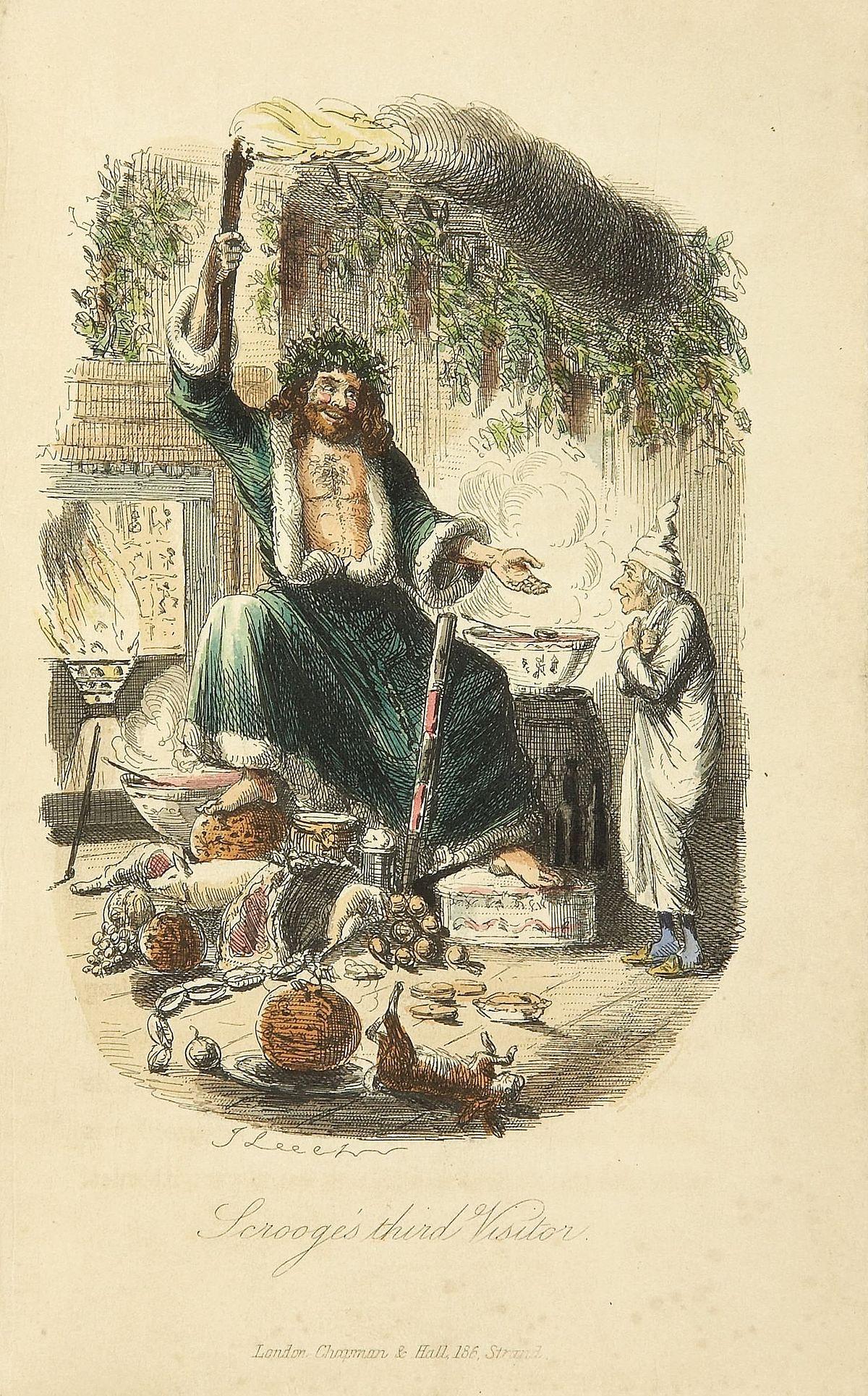
Fig. 1. Leech, John. “Ghost of Christmas Present.” 1843. Wikimedia Commons, https://commons.wikimedia.org/wiki/File:Ghost_of_Christmas_Present_John_Leech_1843.jpg

“It was his own room. There was no doubt about that. But it had undergone a surprising transformation. The walls and ceiling were so hung with living green, that it looked a perfect grove; from every part of which, bright gleaming berries glistened. The crisp leaves of holly, mistletoe, and ivy reflected back the light, as if so many little mirrors had been scattered there; and such a mighty blaze went roaring up the chimney, as that dull petrification of a hearth had never known in Scrooge’s time, or Marley’s, or for many and many a winter season gone. Heaped up on the floor, to form a kind of throne, were turkeys, geese, game, poultry, brawn, great joints of meat, sucking-pigs, long wreaths of sausages, mince-pies, plum-puddings, barrels of oysters, red-hot chestnuts, cherry-cheeked apples, juicy oranges, luscious pears, immense twelfth-cakes, and seething bowls of punch, that made the chamber dim with their delicious steam. In easy state upon this couch, there sat a jolly Giant, glorious to see; who bore a glowing torch, in shape not unlike Plenty’s horn, and held it up, high up, to shed its light on Scrooge, as he came peeping round the door.”
This engraving is the original Illustration of Scrooge’s encounter with The Ghost of Christmas Present, published within the first edition of A Christmas Carol. The Ghost is depicted as a well-fed giant and is reminiscent of the Victorian concept of Father Christmas. Christ-like in its imagery, the Ghost wears winter leaves about its head which may be symbolic of the crown of thorns worn by Jesus during his crucifixion (Hind-Portley). Above itself it holds a torch which illuminates the room with warm light, and it sits upon what appears to be a throne of food. Charles Dickens was an anti-malthusian, and such sentiments are apparent throughout A Christmas Carol (Henderson, 144). Specifically here, that is reflected in the large stock-pile of uneaten food around The Ghost’s feet, stockpiled by one giant in its room rather than given to the malnourished. That may have been Dickens’ way of critiquing the distribution of resources at the time.
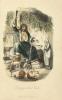
Fig. 2. Leech, John. “Ignorance and Want.” 1843. Wikimedia Commons, https://commons.wikimedia.org/wiki/File:%22Ignorance_and_Want%22_by_John_Leech.jpg

“From the foldings of its robe, it brought two children; wretched, abject, frightful, hideous, miserable. They knelt down at its feet, and clung upon the outside of its garment.”
This engraving is the original illustration of Ignorance and Want, two children who live within the robes of The Ghost of Christmas Present. They appear wretched and frail, Scrooge initially mistaking one of the children’s shriveled hands as a “claw”. Despite The Ghost’s throne of food, these children are malnourished, which may be indicative once more of Dickens’ views on how resources are inadequately allocated in society. When Scrooge asks The Ghost if the children are his, it replies, “They are Man’s,” meaning mankind’s—society’s. Moreover, the malnutrition of the children is caused by the collective inaction of those like Scrooge who have access to food. The children being named Ignorance and Want illustrates how those two characteristics of humankind are bred from the inadequacies of the system and the unkindness of the likes of Scrooge. They cling to robes of Father Christmas, but receive no help from the Ghost—or Christ. The Ghost tells Scrooge that only mankind can prevent the growth of ignorance and want.
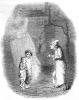
Fig 3. Murphy, Nick. “A Contemporary Representation of The Ghost of Christmas Past.” 2019. Den of Geek, https://www.denofgeek.com/tv/a-christmas-carol-episode-1-review-atmospheric-and-bleak/
This depiction of The Ghost of Christmas Past, which leans heavier into the Father of Christmas as Christ idea, was portrayed in the 2019 mini-series version of A Christmas Carol. While almost every depiction of The Ghost includes a headdress of winter leaves which may be meant to reflect the image of Christ, this one is a bit more on-the-nose about the connection. The headwear in this case is a literal crown of thorns which has left visible wounds across The Ghost’s forehead. Other than its imagery, The Ghost’s connection to Christ is evidenced in the text through a conversation between it and Scrooge. “You would deprive them of their means of dining every seventh day, often the only day on which they can be said to dine at all,” Scrooge says to The Ghost after touching its robe and seeing the food and warm light disappear. This is referring to the idea of the weekend, of stores being closed on Sunday while the people attend church. However, the poor may not get to eat during this holy time because of the closure. When Scrooge explains to The Ghost that the closings are done in its name—another implication that The Ghost is a Christ Figure—it delivers the line which begins this exhibit’s introduction, finishing with, “Remember that, and charge their doings on themselves, not us.” Often, God and Christ are blamed for the misfortunes of others, but Dickens says, through The Ghost of Christmas Past, “no.” It is the system which Man has implemented that causes hunger.
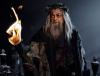
Fig. 4. Zemeckis, Robert. “The Death of Father Christmas.” 2009. Disney Wiki, https://disney.fandom.com/wiki/The_Ghost_of_Christmas_Present
“The bell struck twelve.
Scrooge looked about him for the Ghost, and saw it not.”
The abruptness at which The Ghost of Christmas Present vanishes when the clock strikes twelve in the novella is not seen in the 2009 Disney animated version of A Christmas Carol, though the “death” of Father Christmas here may be more effective at conveying the idea to a motion picture audience. As Christmas lasts but one day, so does the Christmas Spirit. The joy, cheer and acts of kindness which permeates on Christmas are fleeting things. In Stave I, Scrooge’s nephew tells him:
“But I am sure I have always thought of Christmas time, when it has come round—apart from the veneration due to its sacred name and origin, if anything belonging to it can be apart from that—as a good time; a kind, forgiving, charitable, pleasant time; the only time I know of, in the long calendar of the year, when men and women seem by one consent to open their shut-up hearts freely, and to think of people below them as if they really were fellow-passengers to the grave, and not another race of creatures bound on other journeys.”
Even those with the most positive outlook on Christmas seem to acknowledge its fleeting nature. The Christmas Spirit arrives, glows brightly, then dies all within the same day—when the clock strikes twelve.