
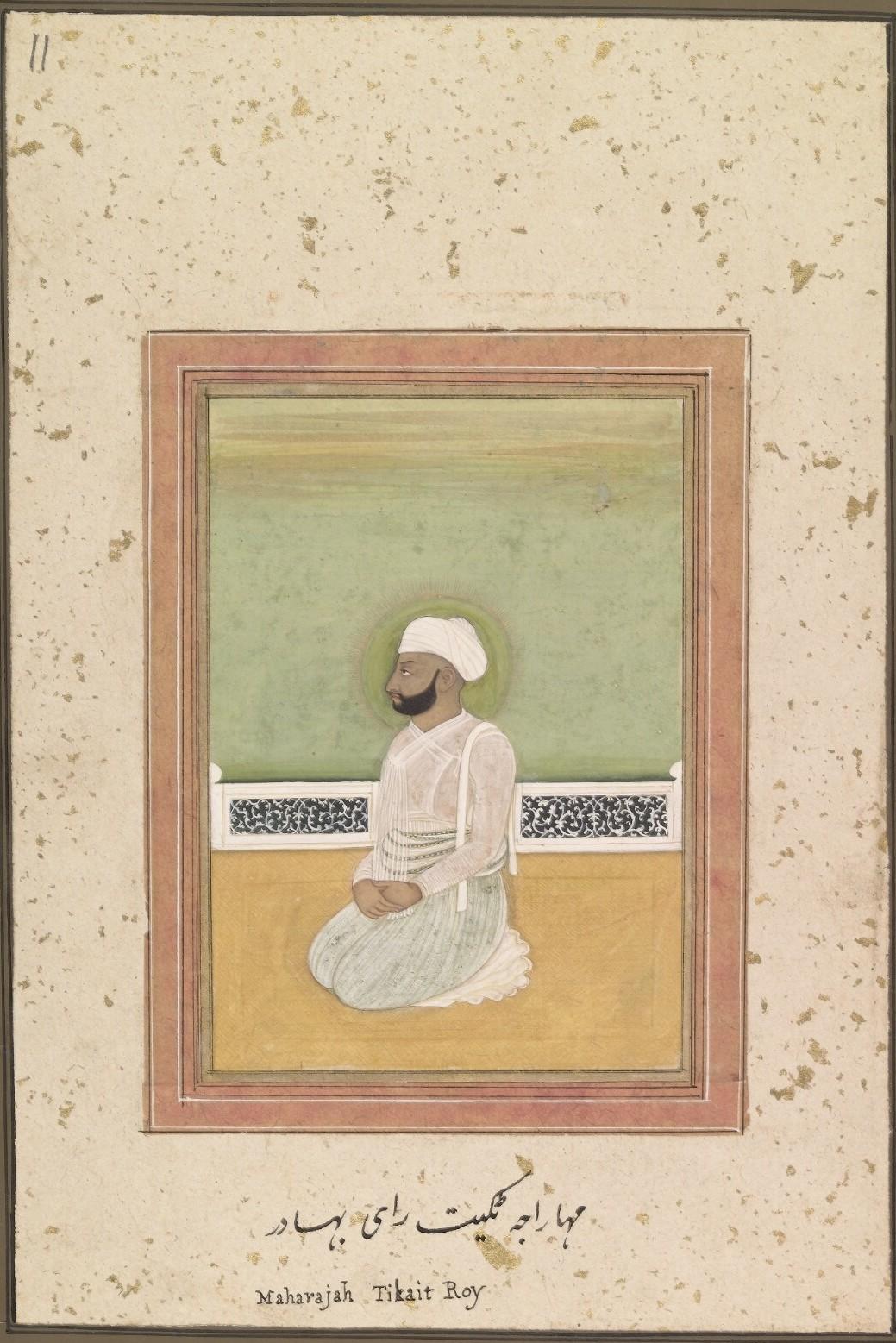
Kayasthas are a scribal caste in the Hindu caste system. They played important bureaucratic and administrative roles in the Mughal Empire and the British colonial government in North and East India. Because of their association with the Mughal Empire, they were seen as a particularly “Islamized” caste, and “Prior to the 1870s, the varna status of north Indian Kayasthas had been largely ambiguous, if not irrelevant to these scribes and their sovereign” (Bellenoit). After this point, however, their varna status, or rank within the caste system, became increasingly subject to debate and attempts at precise categorization within the colonial legal system. In response, Kayasthas tried to define themselves as part of the high ranking warrior and administrative Kshatriya caste and defended themselves against legal decisions that classified them as shudras, a low ranking caste.
Haimabati Sen belonged to the kayastha caste. Her upbringing as the daughter of a zamindar, or landowner, points to the quasi elite status Kayasthas enjoyed in Bengal in this period. Moreover, the frequent warnings that she will lose caste by eating food prepared by particular castes and Muslims shows that she and her relatives considered themselves to have a high status that must be protected. However, Sen, through her association with the Brahmo Samaj and their critical attitudes towards the caste system, becomes progressively less obedient to these strictures. While the debates about food preparation show how individual actions could cause one to lose caste, the controversy over the kayasthas’ status within the legal sphere during Sen’s lifetime shows how castes’ relative statuses were being reshaped by the colonial government on a large scale.
Citations:
Bellenoit, H. (2022). Flesh, booze and (contested) lineages: Kayasthas, caste and colonial ethnography 1870-1930. South Asian History and Culture, 13(2), 157–179. https://doi.org/10.1080/19472498.2022.2067637
Bellenoit H. Legal Limbo and Caste Consternation: Determining Kayasthas’ Varna Rank in Indian Law Courts, 1860–1930. Law and History Review. 2023;41(1):43-63. doi:10.1017/S0738248023000056