
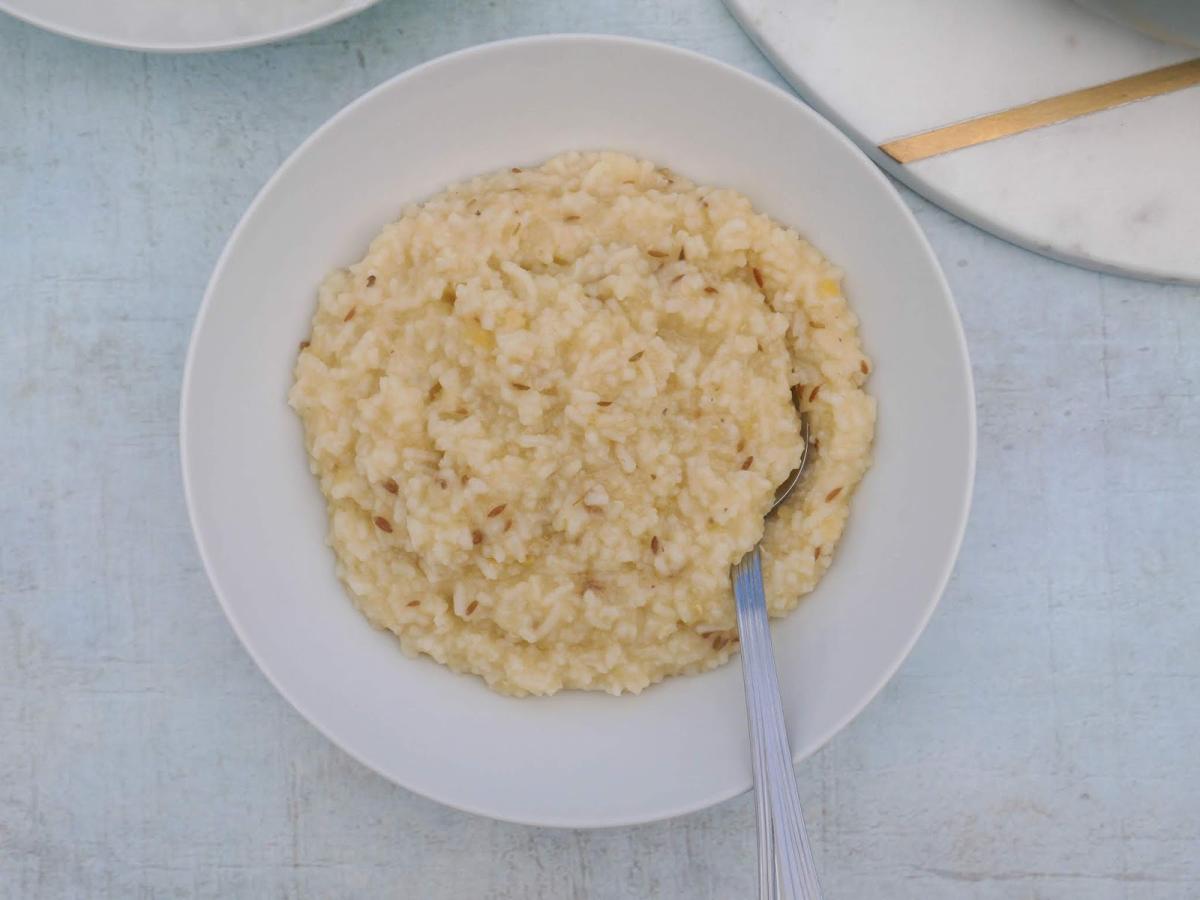
Khichri, also known as khichuri or khichdi, is a dish made of rice and lentils and is popular across India. At its most basic incarnation, khichri is warmed rice and lentil mixed together with greens or spices, depending on what is available, with varying levels of consistency. The poorest members of Indian society would not have had many additional ingredients to add to the dish. In fact, even rice and lentils could be too expensive of ingredients. The poor had to turn to eating gruel, watered down rice after it had been washed by others, or subsisted on the greens that were being grown agriculturally. On the other hand, upper-class citizens would add all manner of spices, vegetables, and salt, an introduction from the British, to their khichri dish. After Europeans introduced their own crops to India, the diets of Indian citizens slowly incorporated such additions into their diets. For example, the Portuguese are thought to have brought to India “potatoes, okra, chillies, pineapples, papaya, cashew, peanuts, maize, guava, custard apples, and sapodilla” (Antani). Potatoes, corn, and tomatoes were heavily adopted within India, along with the British’s introduction of tea and coffee. Such ingredients can now be found in modern incarnations of the khichri dish.
Within Sen’s autobiography, khichri is mentioned in the context of a poor child’s diet and includes European additions. One child says, “some days we have powdered gram or corn with the greens and khichri made of corn or others.’ I asked, ‘Why don't you eat rice?’ They replied, ‘Where can we get rice? We eat lentils and rice or roti only twice in a month. The rest of the days we eat what we have told you’” (216). Sen is struck by this revelation and criticizes the system of moneylenders that have created such conditions. Thus, khichri, despite its simple ingredients, would have still been a luxury to the poorest members of Indian society. Sen writes that such people must survive on “leaves and greens” (217), while the grain they produce is taken away. Thus, although khichri may be considered a dish for all Indians, its history also points to the intense class stratification of the period.
Citations:
Antani, Vishu, and Santosh Mahapatra. “Evolution of Indian Cuisine: A Socio-Historical Review.” Journal of Ethnic Foods, vol. 9, no. 1, 28 Apr. 2022, journalofethnicfoods.biomedcentral.com/articles/10.1186/s42779-022-00129-4, https://doi.org/10.1186/s42779-022-00129-4.
Chatterjee, Rhitu. ““Khichuri”: An Ancient Indian Comfort Dish with a Global Influence.” NPR, 20 July 2017, https://www.npr.org/sections/thesalt/2017/07/20/527945413/khichuri-an-ancient-indian-comfort-dish-with-a-global-influence