
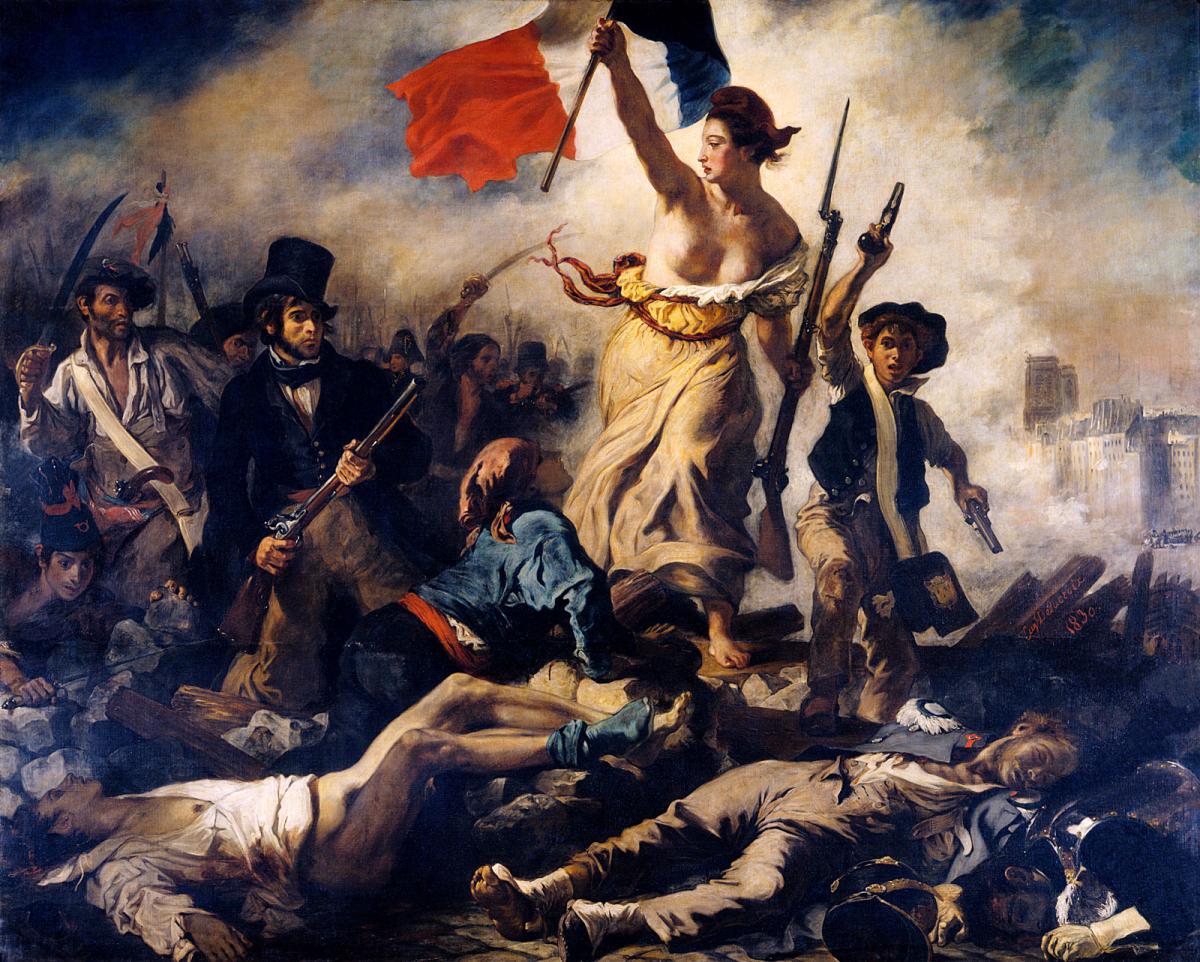

This painting is a prime example of romantic values and ideas. Painted by Eugene Delacroix, it is not only a political statement from the time, it is also an shift from earlier, classical art, because of its style. Classical art was very focused on recreating roman and greek antiquity in the use of color, lack of movement within the picture, and subjects. Romanticism, with its focus on feeling, sensuality, and soul instead of logic and reason, included motion as well as emotion. This painting, in particular, is quintessentially romantic because of its use of different societal figures: a woman (liberty) leading a charge for liberty, a small working-class boy standing beside her, and other working-class people in the ranks behind her. This painting exemplifies the revolutionary views from the romantic era, some of which were actual revolutions (French and American), and social and political movements regarding women, children, and the working-class.