
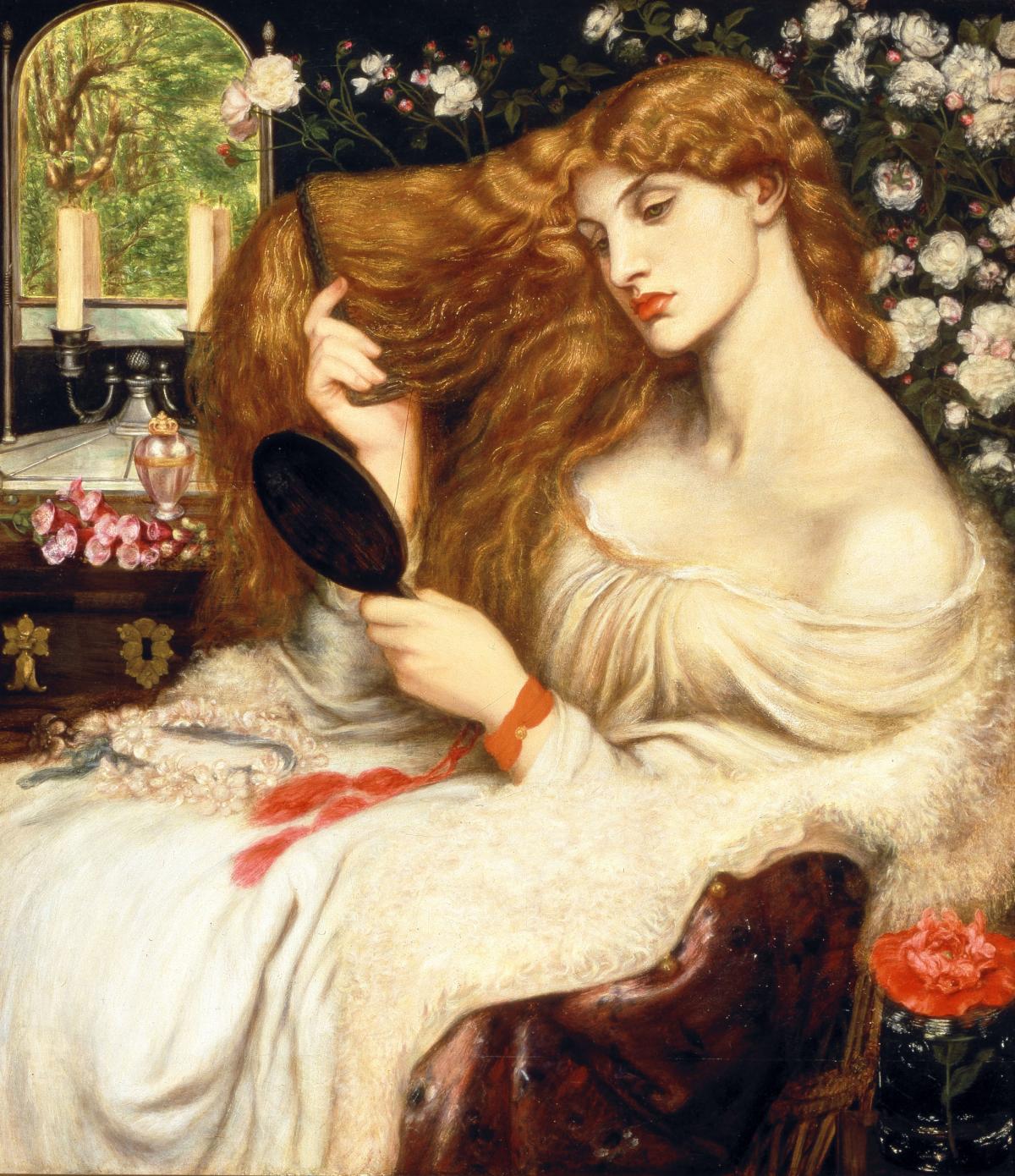
The memories come rushing back as I remember the day the painter drew my portrait. I was still young and innocent back then at the ripe age of 18. My eyes still gleamed with a glow of happiness as I was surrounded by my friends and family that loved me. The Wetherstone household was well-known in society as people begged to be acquainted with me. I still remember my father telling me about the purpose of the portrait. It was a wedding portrait to be presented to my fiancé that I had never met, who was said to be a wealthy merchant that owned many acres of land in the North. Being married and having a happy family was supposed to be the peak of success for women, so the news was a happy one. Little did I know the pain that would come forth after my marriage. The look of the wicked man’s face frightened me when I first met him. His cat-like eyes seemed to track my every move as I glided through the ballroom. Flashbacks plague my mind as I remember that fateful night when I tried to escape his undying grasp. I fled into the night after staring down at the lifeless figure with blood dripping down my face. Fleeing from my family and the life I use to have; I keep this portrait as a way to recall who I was. The bittersweet memories of my innocent childhood prevented me from completely becoming heartless as I wandered through towns with a target on my back. “Eldest daughter of the Wetherstone household turned into a murderer.” That was what was on the wanted posters posted everywhere I go.
Voice of 21th Century Scholar: The portrait seen above comes from a painting by Dante Gabriel Rossetti. It was completed in 1867 and illustrates Lilith Wetherstone, a young woman combing her long hair seductively with exposed shoulders. The flowers surrounding the woman represents different kinds of love. As seen in the article by Hannah Aspinall, long hair for women was seen as the center point of their femininity. Maintaining long and well-groomed hair was often reserved only for the middle and upper class. Aspinall also states that “the abundant descriptions of hair are not just appertaining to aesthetic characterization, but could portray the social and moral position of the woman.” Lilith’s hair is seen to be free-flowing, which implies in society that she was unchaste and morally depraved. This is seen to be true as she was cast away from the main society after escaping from her husband. Her image in the painting references the future as she became a Fallen woman, killing her lover and surviving off of men’s lust. Her self-absorbed gaze in the mirror still attracts men through her body expression. Her womanly figure is barely maintained in her nightdress, which was seen as improper. Although her expression is in a seductive manner, there was still a touch of youthfulness and innocence as this was before her downfall. The painting demonstrates the limitations of women compared to men. The idea of the Fallen woman was commonly portrayed in paintings and literature as Victorian moralists warned of the consequences of losing chastity before marriage (Hide). Lilith is the complete opposite of what was expected of women at that time. A woman’s role was to stay at home and aid her husband in all ways possible. The painting above shatters that stereotype as the beautiful young woman is seen brushing her hair with a steady gaze that can pierce through the ice. Her seductive figure shines through with the loose and flowy nightdress. The tragic transition is seen when Lilith went from the pride of the Wetherstone household to being labeled a murderer on wanted posters. She used to be the ideal for women at the time- elegant, gentle, and feminine, which were all taken away by her husband, who abused and harmed her. Lilith keeps her self-portrait as a way to remember her younger past. Because of the tragic event that completely transformed her life, her mindset completely changed to something dark and revengeful.
Citation: “Lady Lilith, Dante Gabriel Rossetti. © Delaware Art Museum.” Enchanted Living Magazine, 26 Apr. 2020, enchantedlivingmagazine.com/the-enchantments-of-lustrous-locks/lady-lilith-dante-gabriel-rossetti-delaware-art-museum/.
Aspinall, Hannah. “The Fetishization and Objectification of the Female Body in Victorian Culture.” The Fetishization and Objectification of the Female Body in Victorian Culture - Arts and Culture, arts.brighton.ac.uk/projects/brightonline/issue-number-two/the-fetishization-and-objectification-of-the-female-body-in-victorian-culture.
Hide, Louise. “The 'Fallen Woman' in Victorian Britain.” Women's History Network, WHN, 6 Oct. 2015, womenshistorynetwork.org/the-fallen-woman-in-victorian-britain/.