

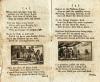
The pages above are parts of the poem The Sorrows of Yamba or A Negro's Woman's Lamentation by English religious writer and poet, Hannah More. Published on 1795, it was regarded as one of the "most popular and frequently reprinted anti-slavery poems of its time" and historians believed it surpassed her previous work Cheap Repository Tacts. In summary, it tells the story of a woman who was abducted from her family and home in 'Afric's Golden Coast' (essentially Africa) and sold as a slave. She accepts the death of her child during the sea voyage as a blessing and says, "Thee, sweet infant, none shall tell." Readers take this to mean that she is not making her child go through the humiliating process of being purchased and sold to complete strangers. Her life was still brutal and painful when she decided that enough was enough and that she would flee to the sea and drown herself; evidenced by the poem: "Death itself I long'd to taste." When she encounters a missionary at the shore, things, however, take a different turn. In addition, he converts her to Christianity, instructing her in forgiving her masters as well. The poems conclude with the woman's expressing desire for the missionaries to travel to her country in order to bring her husband and teach him about Christ's teachings.
Again, though it's popular, that doesn't mean it didn't had any controversies. Historians made an analysis and suspected that the poem is originally written by an Scottish laird named Eaglesfield Smith. They made a comparison while noting some contrasting elements: both poems abhorred the British's involvement with slavery as they viewed it as shame to their kind, but there is a psuedo-dialect and grammatical mistakes made by More as to distance her native readers, since the protagonist is from a different country. As for Smith, he made his writing very emotional and tragic, giving her relatable traits - pointing out similarities between the protagonist and the readers. To end the comparison there is no missionary nor conversion part. It is unclear which tells the tale more accurately, but it is clear that they both have one common goal and view: slavery is immoral to all of Great Britain.