

The River Thames has played a significant role in British history as communities have built up around it over many centuries, including the city off London. While so many lives have carried on surrounding it, many objects have found their way into the river. This created a peculiar opportunity for London’s poor, and in the 1700s the term “mudlark” arose to describe those who searched along the riverbed during low tides for useful or sellable trinkets. The popularity of this activity would reach its peak in the 1800s, as many Victorians faced poverty and sought any means of income.
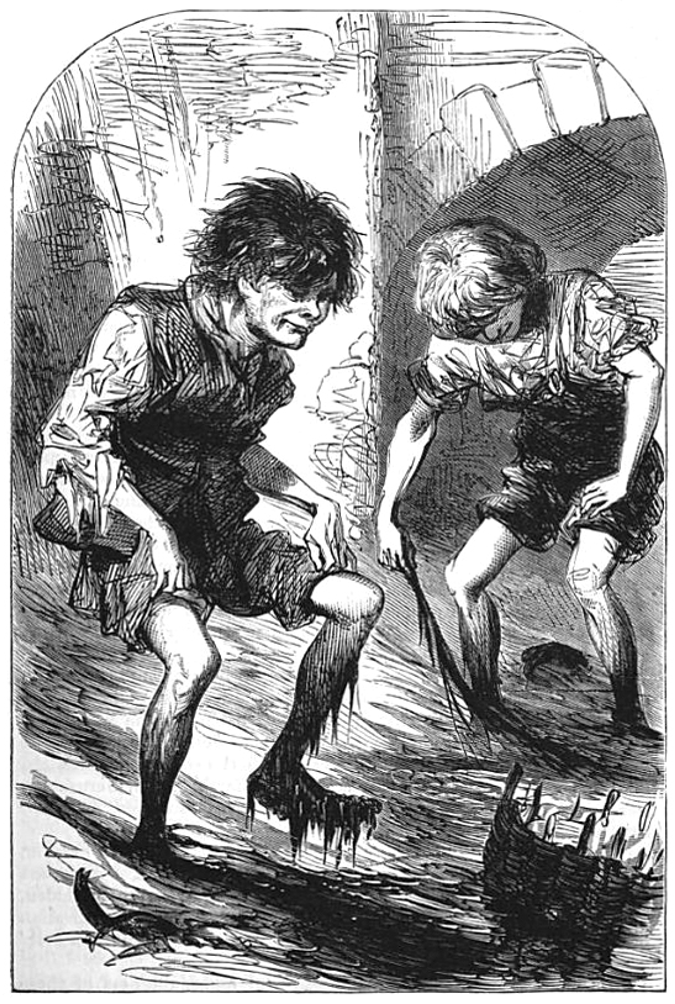
This picture comes from a magazine during the period, depicting two young boys searching through the muddy riverbed. The majority of those who took part in this activity were boys or young men, but there were women too, and people of any age from very young to very old. The connecting trait of those who mudlarked during this period was that they were all quite poor. London had been built up and heavily populated by this time thanks to industrialization. But the demand for work and living necessities was out of proportion to what was available, and welfare services were a long way from being widely accessible. This left many people suffering and looking for other means of making some money to get by. With such a wide array of items that now lay in the Thames riverbed, some people would venture down to search for usable metals, coins, and old items that historians may be interested in buying.
It was a nasty version of a scavenger hunt, however. With so many people living around the Thames, the river had already become dirty and dangerous to be around. Those who became mudlarks were taking on health risks in exchange for a shot and finding valuables in an era with many issues within medicine. But there were many in Victorian London who were low class and destitute, and willing to take the risk for another meal.
Works Cited
“A brief history of mudlarking.” A Mudlark’s Diary, https://amudlarksdiary.com/2018/08/16/a-brief-history-of-mudlarking/. Accessed 26 Nov. 2021.
Gazur, Ben. “The lost treasures of London’s River Thames.” BBC, 29 Jul. 2020, https://www.bbc.com/travel/article/20200729-the-lost-treasures-of-londo…. Accessed 26 Nov. 2021.
Mudlarks of Victorian London in the River Thames, from "The Headington Magazine" 1871.