
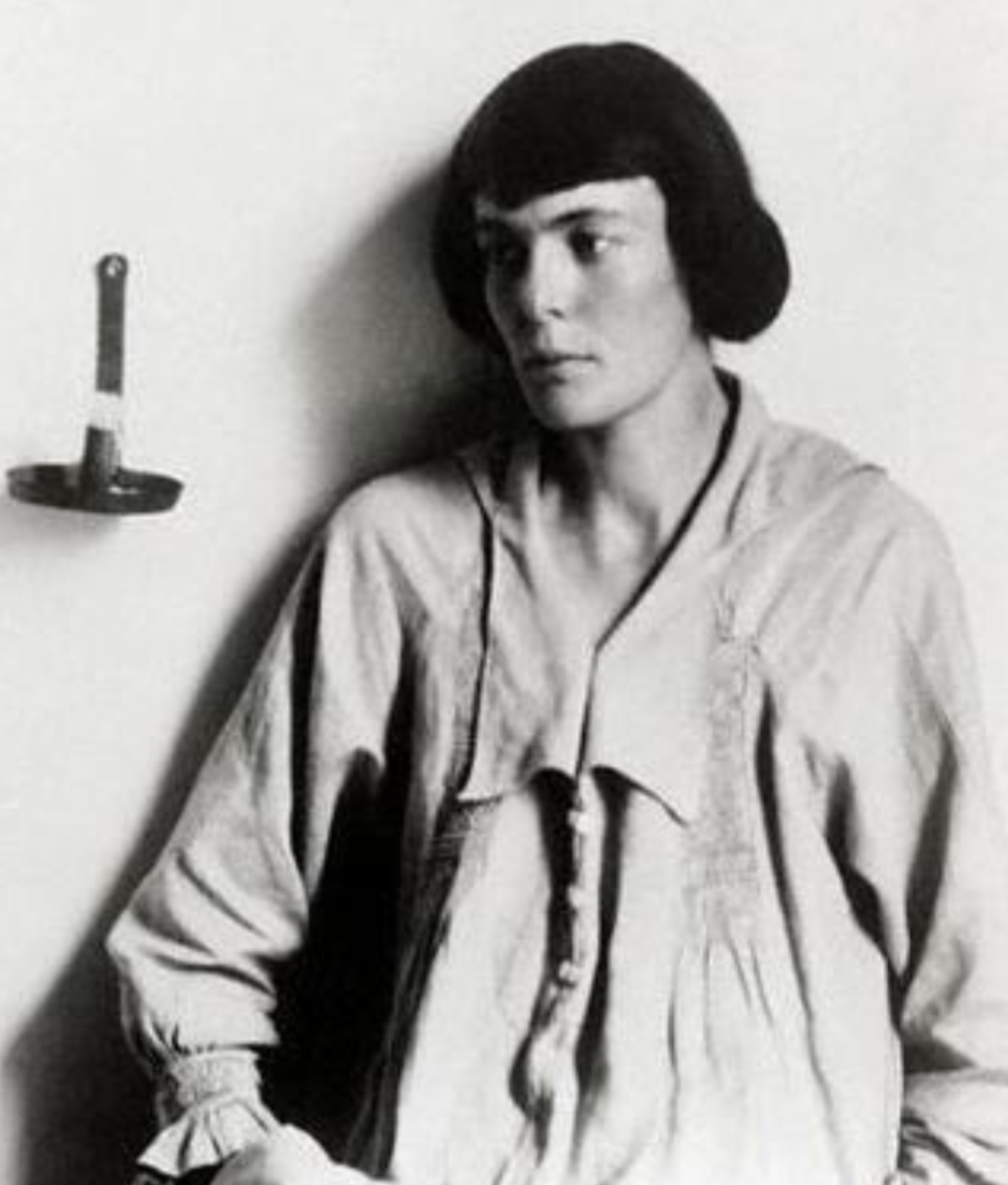

Oread by H.D.
Whirl up, sea-
whirl your pointed pines,
splash your great pines,
on our rocks,
hurl your green over us,
cover us with your pools of fir.
The poem “Oread” by H.D. is a representation of the Imagist Movement. Imagist poetry does not follow the laws of traditional poetry structure. As shown in “Oread”, we see that it is made up of short lines that have condensed wording to create direct images and covey a whole scene or story within a few lines. Although this poem may seem simple because it is so short, it actually holds much power within the six lines. H.D. is able to create a whole story that encaptures a moment in time making an image within very condensed language and lines. Ezra Pound breaks down this concept in "A Few Does and Don'ts by an Imagiste" saying, "An 'Image' is that which presents an intellectual and emotional complex in an instant of time...It is the presentation of such a “complex” instantaneously which gives that sense of sudden liberation; that sense of freedom from time limits and space limits; that sense of sudden growth, which we experience in the presence of the greatest works of art.” According to this definition and commentary, H.D.'s poem "Oread" is among the greatest works of art due to its ability to liberate and evoke emotion through an image in an instant of time.
Famous examples of imagist poetry, such as ‘In a Station of the Metro’ by Ezra Pound, tend to write about urban scenes and city life which is nowhere to be found in “Oread”. “Oread” is focused on only nature which makes it stick out among famous imagist poetry. Through H.D.’s poem being on a topic opposite of popular urban scenes, she adds to what is classified as “imagist” and keeps the genre expanding by adding a new subject. She allows the reader to be transported not to a city scene, but to a mystical world of magic within a split moment that gives the reader a sudden sense of wonder through the experience showing how powerful her imagist poem is.
The title “Oread” holds much insight into not only the poem itself, but to H.D.'s writing style. "Oread" refers to oreads that are mystical creatures and “Oread” specifically was a nymph of the mountains or nymph of mountainous conifers. Conifers are a type of tree that has spiky pine needles and cones and are the pines and fir referred to in the poem. Epic poems written by men would normally be titled with something that ends in -ad or -id such as the famous "Iliad". This is important when analyzing H.D.'s choice for her title because it ends in -ad, yet displays a whole story with a powerful female lead, written by a female, and all in six lines rather than 20+ books. H.D. was able to take very traditional poetry and even somewhat traditional topics, like mystical beings and magic, and condense it into an equally powerful modern version.
In this poem, the Oread is commanding the waves of the ocean to rise and "whirl up" onto the rocks and land. In the first line, the reader is able to take the three powerful words "Whirl up, sea-" and already begin to create the image and story of the poem. Within the three words, H.D. shows the goal of the Oread and the command she is trying to achieve in the poem. H.D. uses the beginning of the commands to show the progression like the water level rising more and more. She starts with 'whirl', 'whirl' to create the movement of the sea swirling up. Then goes on to say 'splash' making us see the sea splash onto the land a little bit. Finally, using words like 'hurl' and 'cover' allows the feeling of finally going onto the land and fully covering it with the water therefore making the land and sea one. Throughout the poem, she still is commanding the sea to grant her wishes while giving the reader more and more images to hold onto in order to add to the richness of the scene. Although the nymph is in the process of calling the waves onto the land throughout the poem, we see how the lines already combined the sea and the land together creating images such as 'splash your great pines' and 'pools of fir'. This gives us insight into the Oread's mindset in which she is already believing and imagining the waves upon the land to help her magic succeed. Even though the poem does not end with clearly stating if the magic worked or not, the reader can imagine the Oread's wishes being fulfilled because the Oread herself is imagining the sea and land joining as one.
Works Cited
H.D. "Oread by H.D." Poetry Foundation, Poetry Foundation. https://www.poetryfoundation.org/poems/48186/oread
Pound, Ezra. "A Few Don'ts by an Imagiste" Poetry Foundation, Poetry Foundation. https://www.poetryfoundation.org/poetrymagazine/articles/58900/a-few-do…;
“Imagism.” Poetry Foundation, Poetry Foundation, https://www.poetryfoundation.org/learn/glossary-terms/imagism.