
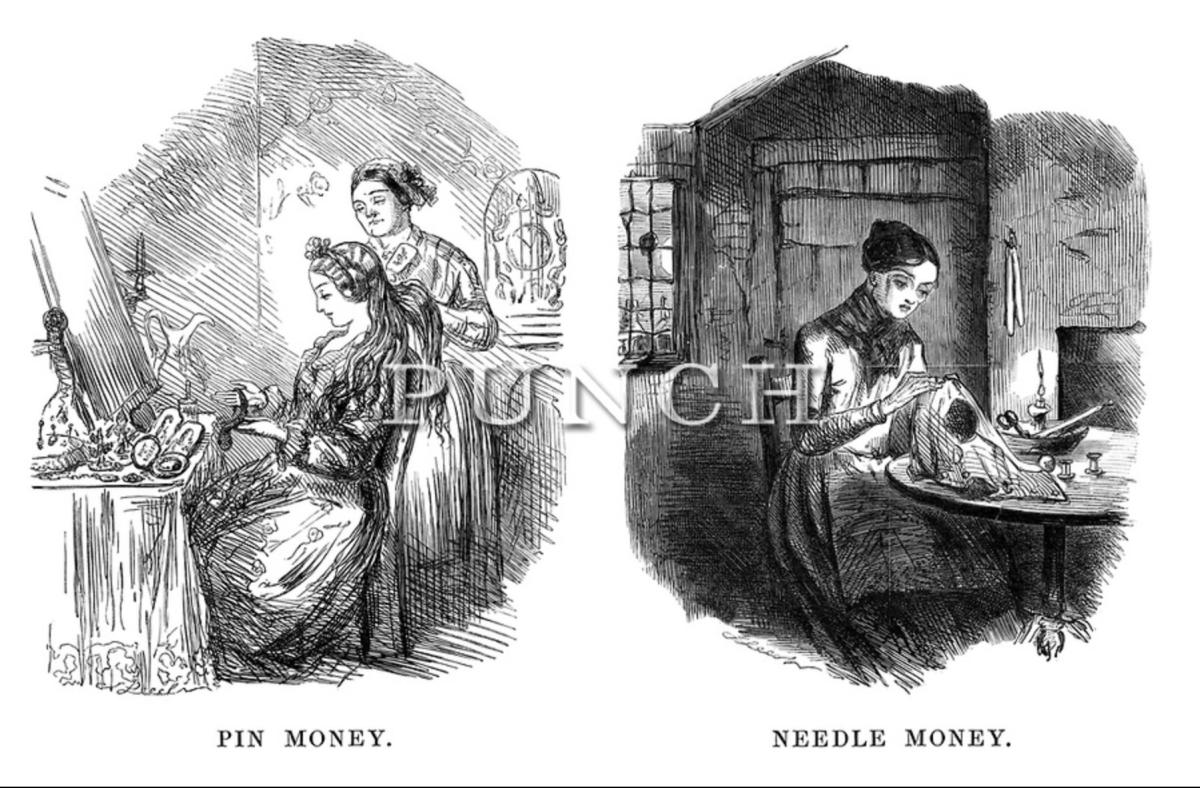
I saw this cartoon in the Daily Gazette, and it struck a deep chord with me. It painfully mirrors my pitiful situation. The woman pictured looks fine during the day, but her demeanor changes drastically at night. I can tell the toil of trying to support herself is weighing on her conscience and physical health. I know that working nights can be long and lonely. This reminds me of my struggles with writing blocks during the day. I sit in front of the paper and stare for hours, and then when night falls, my ideas start to flow. This cycle leaves me exhausted during the day, and my physical health suffers accordingly. I try to mask my fatigue when I am in public, but I think some people still see through my disguise. The illustration displays the side of working women that people out in public never see. While I slave away at the expense of my health, men around me flaunt their success. I am fairly successful in my field when it comes to women, but the men in related industries make an amount that makes me sick to my stomach. All the while they are laughing in their offices and smoking cigars, enjoying themselves. Mr. Perry Jackson informed me of his “meager” success, and it was more than I could dream of. He can afford a massive house while I live in a far more humble home. If I bide my time, I may make more money, but I am not sure how long I will have to wait. Waiting for something I deserve is nothing new, and I know the hard-working woman in the cartoon feels the same pain.
Editorial Commentary: In this entry, Mary Erle touches on the issues she faced as a working woman. Women who were not financially supported by a man struggled to make enough money to survive throughout the Victorian era. Mary relates to a woman who works both day and night. The woman portrayed appears to be fatigued and is slouched over a desk while she should be asleep. Mary also complains about a lack of sleep and claims that she tries to hide her issues when she is in public. This is because Victorian women were expected to maintain a certain image, the image of a smiling and angelic woman. If they strayed from this image, they were considered undesirable, and they would be looked down upon by the women and men around them. Mary felt that if she looked tired or stressed, people would think less of her. Another interesting subject Mary touches on is the Victorian gender pay gap. Today the gender pay gap issue exists, but to an extent, that is dwarfed by the Victorian pay gap. Mary was very successful when compared to other female writers of the era, but she still struggled to support herself. She notes that the men around her smoke and laugh in their offices during the day, which suggests they do not need to work nearly as hard as she does. Even though they did not work as hard, they made far more money. This pay inequality led women like Mary and the one pictured in the illustration to work themselves to their breaking points. This was done intentionally to undermine women who tried to support themselves without submitting to marriage.
Citation: [bradyandersen23, et al. “Week 5.” Ways of Seeing 201, bernault.wordpress.com/category/week-5/.]