
Image Source:
“「ribbonwork」おしゃれまとめの人気アイデア|Pinterest|create by Manja: シルクのリボン刺繍, ハンドメイド, 手芸.” Pinterest, 5 May 2023, www.pinterest.com/pin/986077280893618779/.
Gertrude:
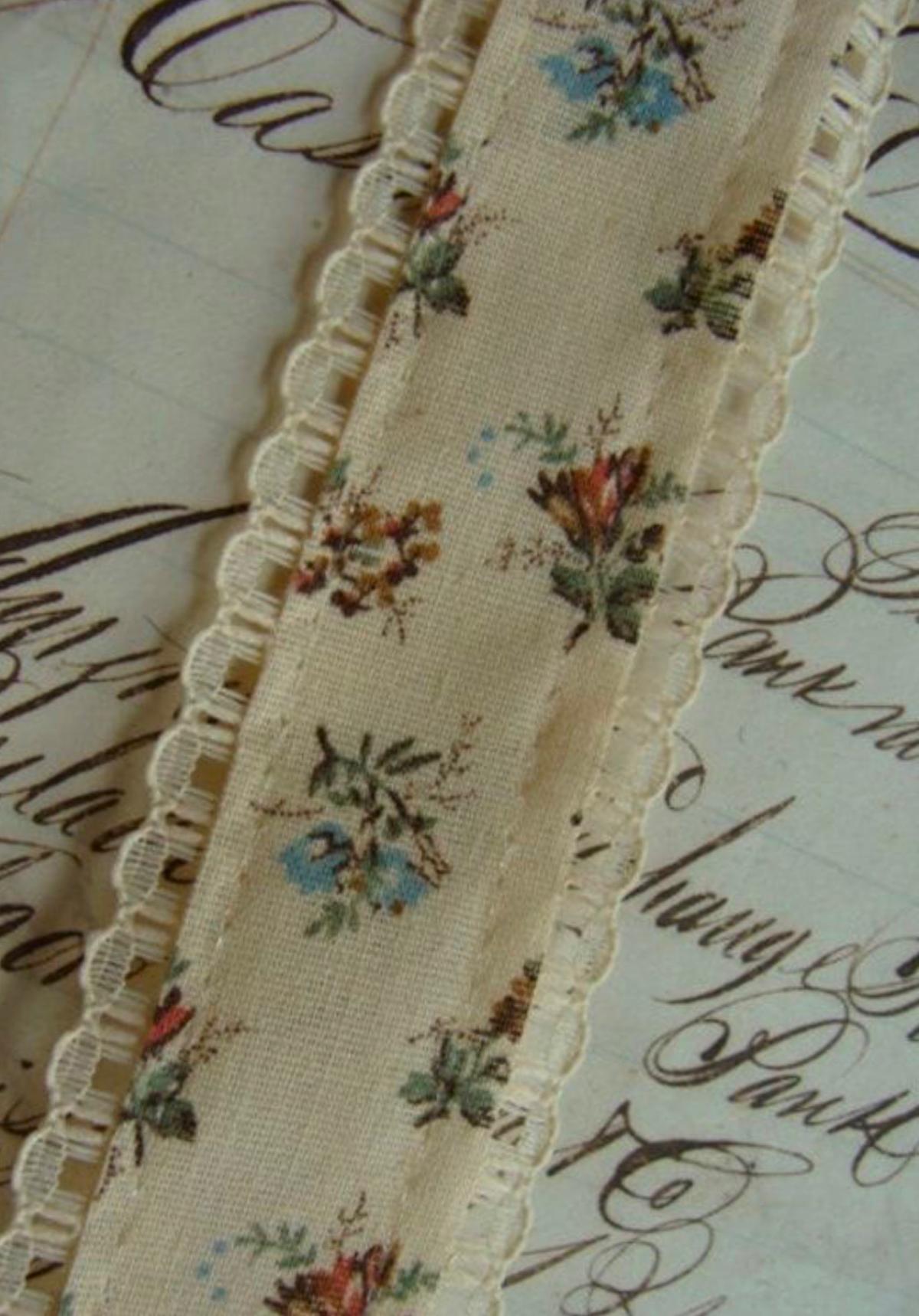
I must admit that, when Fanny descended from her room and presented me with this ribbon, I felt a distinct feeling of remorse tainted with shame. In the past years, there have been many instances in which my sisters and I simply did not engage much with our poor half-sister. She has been kind and supportive, yet, only now that she is leaving have I found a hint of sadness in the realization that I had never been particularly nice to her. Though it is a rare occurrence for Fanny to express the same values as the rest of us, I will miss her comforting presence around the studio. Despite this, I am delighted that Fanny is finally able to fulfill the role of a dutiful orthodox wife to Mr. Marsh that she has been wanting for so long. I am fearful to admit, however, that the shifts within our lives that have been caused by the wedding and Lucy’s engagement to Frank have dampened my spirit in a quite twisted and shameful way. I do not know if jealousy would be the right word to describe my emotions, yet I can not ignore the bitter taste left behind as my sisters fall into love one by one and I remain stagnant and unchanged.
It is clear now that Fanny has undoubtedly risen in the ranks of our Aunt Caroline's favour now that she is following the path that my Aunt believes all women must follow at our age. Fanny herself, more content than ever, has obviously experienced an inflated sense of self importance and has done well to let us know. I have not taken offense to this however, and rather find myself amused and pleased as I watch her moving forwards with more energy and excitement than ever before.
Researcher:
From this woman’s previous journal entries, I have determined that she falls into the spectrum of the Victorian New Woman. I do still believe that Gertrude played a part in the late Victorian feminist movement due to her independence in taking care of her family and working in a business run solely by women. However, her reflection on her own desires and want for love from a husband is a perfect example of how the New Women of the Victorian era did not have to follow a highly strict and specific set of guidelines to be considered a New Woman. Though it was a common practice for Victorian women to spend several years of socialization within society before getting married (Landale 153), Gertrudes worries about being left behind while the women around her are married indicate that she has experienced an abnormally long time unmarried by Victorian standards. While this could be used as justification for her classification as a New Woman due to her lack of a need for a man’s support, her admitted desire for a relationship does not take away from this identity. Despite the importance of class and social standing in marriage, marriage was not based solely on logic, but also love and the spirit of the bond between man and woman (Landale 149). While this may have been true in some cases, it was not uncommon for Victorian era marriage to be a sort of imprisonment for women who had little power when choosing who to marry as well as little power within the marriage (Hammerton 269-270). The fact that Gertrude, who can financially support herself with her business, is emotionally impacted by her half-sister’s marriage, demonstrates that she was free to make decisions about what she wants from life and marriage rather than being forced into marriage for financial reasons which causes her to stand out from the stereotypical Victorian Woman.
Sources:
Landale, Nancy S., and Avery M. Guest. “Ideology and Sexuality among Victorian Women.” Social Science History, vol. 10, no. 2, 1986, pp. 147–70. JSTOR, https://doi.org/10.2307/1170861. Accessed 11 Oct. 2023.
Hammerton, A. James. “Victorian Marriage and the Law of Matrimonial Cruelty.” Victorian Studies, vol. 33, no. 2, 1990, pp. 269–92. JSTOR, http://www.jstor.org/stable/3828359. Accessed 11 Oct. 2023.