
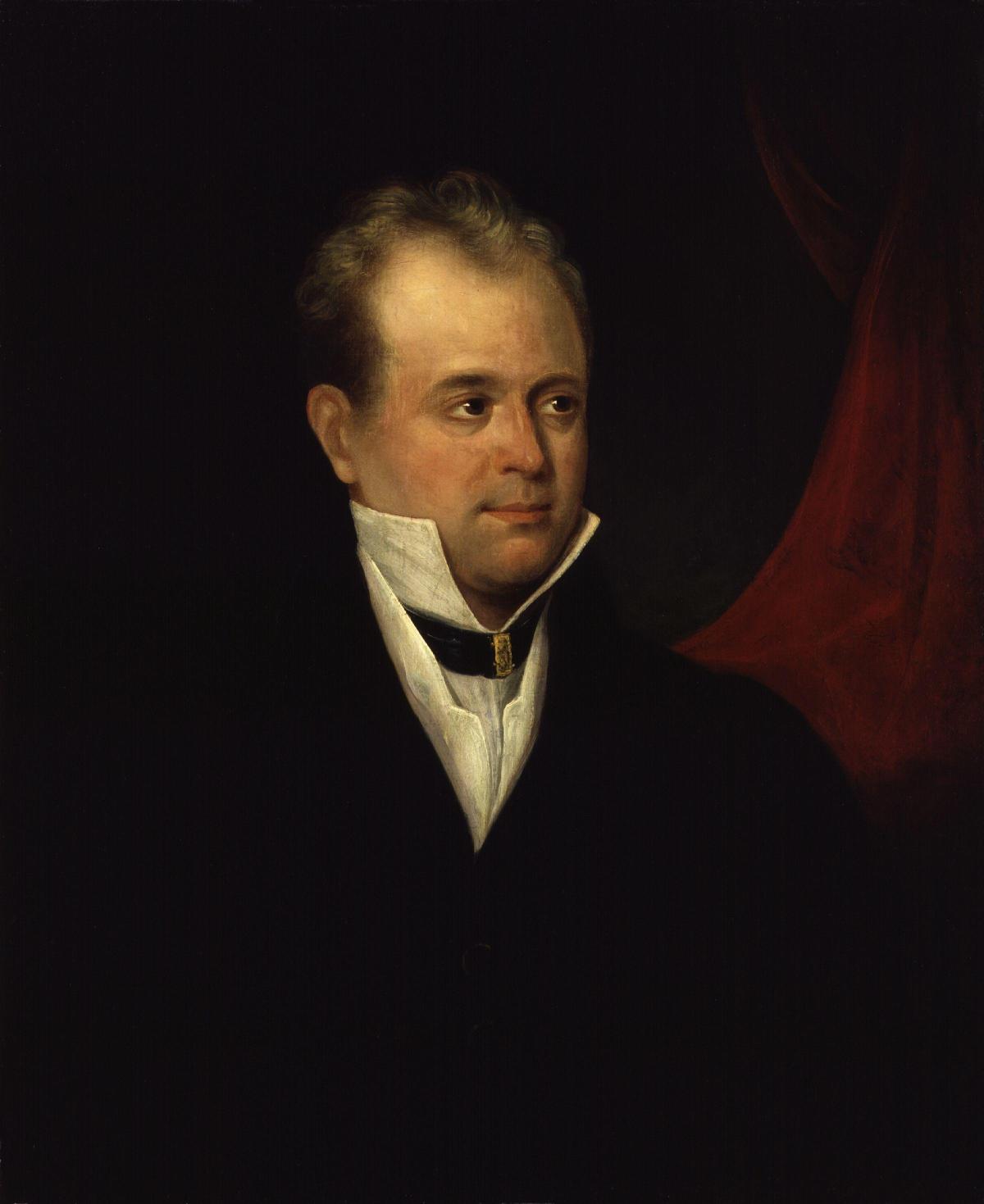
Richard Carlile (1790-1843) was a publisher whose trials and imprisonments fueled debate around the freedom of the press. Born in Devon, he was abandoned by his father and raised by a single mother. His formal education ended at the age of twelve, and for many years he carried on a precarious and peripatetic existence as a tinworker. Ultimately, he settled in London and, influenced by the revolutionary ideas of the period, embarked on a publishing career. As a publisher and writer, he distributed radical newspapers along with other texts that were considered seditious and blasphemous, most notably republishing and repopularizing the writings of Thomas Paine. His political views reflected a growing radicalism within the artisan and working classes in the beginning of the nineteenth century. Carlile’s radicalism consisted of a commitment to egalitarian, democratic ideals, a criticism of the existing social hierarchy and the aristocracy, and religious skepticism. He also later espoused radical sexual politics, advocating for and disseminating information about birth control. A witness to the Peterloo massacre, he published his own firsthand reports of the event. He was arrested and imprisoned several times for printing blasphemous, seditious, and libelous material. During his six year imprisonment from 1819 to 1825, his family and supporters continued to print similar material, leading to their arrests, trials, and imprisonment. These trials and Carlile’s calls for freedom of the press were highly publicized and led to an outpouring of support for Carlile among the working class.
John Stuart Mill references Carlile once in his autobiography, saying “The prosecutions of Richard Carlile and his wife and sister for publications hostile to Christianity were then exciting much attention” (Mill 52). He describes how this controversy prompted him to write a number of articles about the importance of being able to freely debate religious opinions, some of which were published in the Morning Chronicle in 1823. He comments that “Freedom of discussion even in politics, much more in religion, was at that time far from being, even in theory, the conceded point which it at least seems to be now” (Mill 52) This episode thus illustrates how the cultural consensus around freedom of expression and religion shifted within Mill’s lifetime. In the opening of his autobiography, Mill claims that the interest of his book depends partly on the fact that it describes the life of someone who lived through such changes since “in an age of transition in opinions, there may be somewhat both of interest and of benefit in noting the successive phases of any mind which was always pressing forward” (Mill 5). In his analysis of the Carlile trials, Mill depicts one instance of this “transition in opinions.” However, brought up without religion and always a steadfast supporter of the freedom of the press, Mill cannot present himself as an emblem for his society, someone whose personal development or “successive phases of [] mind” mirrored a broader cultural development and progress. Rather, he was on the forefront of these issues, and society only later adopted his views.
Citations
Martin, Philip W. "Carlile, Richard (1790–1843), radical publisher and writer." Oxford Dictionary of National Biography, Oxford University Press, 11 May 2023, https://www.oxforddnb.com/view/10.1093/ref:odnb/9780198614128.001.0001/…. Accessed 18 May 2024.