

Introduction
Virginia Woolf’s “A Room of One’s Own,” allows readers to have a perspective on what one’s own room symbolizes when it comes to women who read and write. When it comes to this essay, there have been different opinions and perspectives on what Woolf tries to aim for. For some, the essay symbolizes the importance of women having their own privacy, time to write, financial independence, moreover, which at that time, prevented women from their creative potential to write. On the other hand, there are others that would merely say that this essay reflects strongly on what might have had been had women were given the opportunity to write as freely as men did. The use of one’s own room reflects highly on Woolf when it comes to capturing her own stream-of-consciousness technique which are used in her work. Woolf writes about window(s) a couple times throughout her essay which symbolizes something more than it seems. In one section of the essay, Woolf writes: “The leaves were still falling, but in London now, not Oxbridge; and I must ask you to imagine a room, like many thousands, with a window looking across people's hats and vans and motor-cars to other windows, and on the table inside the room a blank sheet of paper on which was written in large letters WOMEN AND FICTION, but no more” (COVE). This part indicates how women like Woolf could see through a window exploring everything they could see and somehow, they would not still be able to write freely.
Constance Koh, a student ambassador for The Art Story and an intercollegiate student who studies Asian, African, and European art history, wrote an article about windows in art. In the article, Koh mentions how “artists have used windows as a framing device to direct our gaze to a particular scene or subject, letting us understand the beauty they saw in a particular sense, or as a way to introduce light to an interior” (Koh). Not only that, but there are also times where in artwork, that “the window becomes a motif with symbolic associations of illumination and hope, or, conversely, a symbol of urban decay and destruction” (Koh). In this exhibit, the goal is to focus on the rooms in the background of artworks and the illustrations of windows that have been “permeated by their creative force” as Woolf once said. Each artwork in this exhibit display women in rooms that have a window that reflect on what it means to have a window of one’s own and what it might symbolize when it comes to women who read and write.
Works Cited
Koh, Constance. "Windows to the World: Windows in Art." The Art Story, https://www.theartstory.org/blog/windows-to-the-world-windows-in-art/.
Woolf, Virginia. "A Room of One's Own," COVE Studio, 1928, https://studio.covecollective.org/anthologies/sp22-eng-l302-anthology/documents/a-room-of-ones-own-f6103b88-dea0-4828-b66f-963f7307ebd3.
The Images Explained
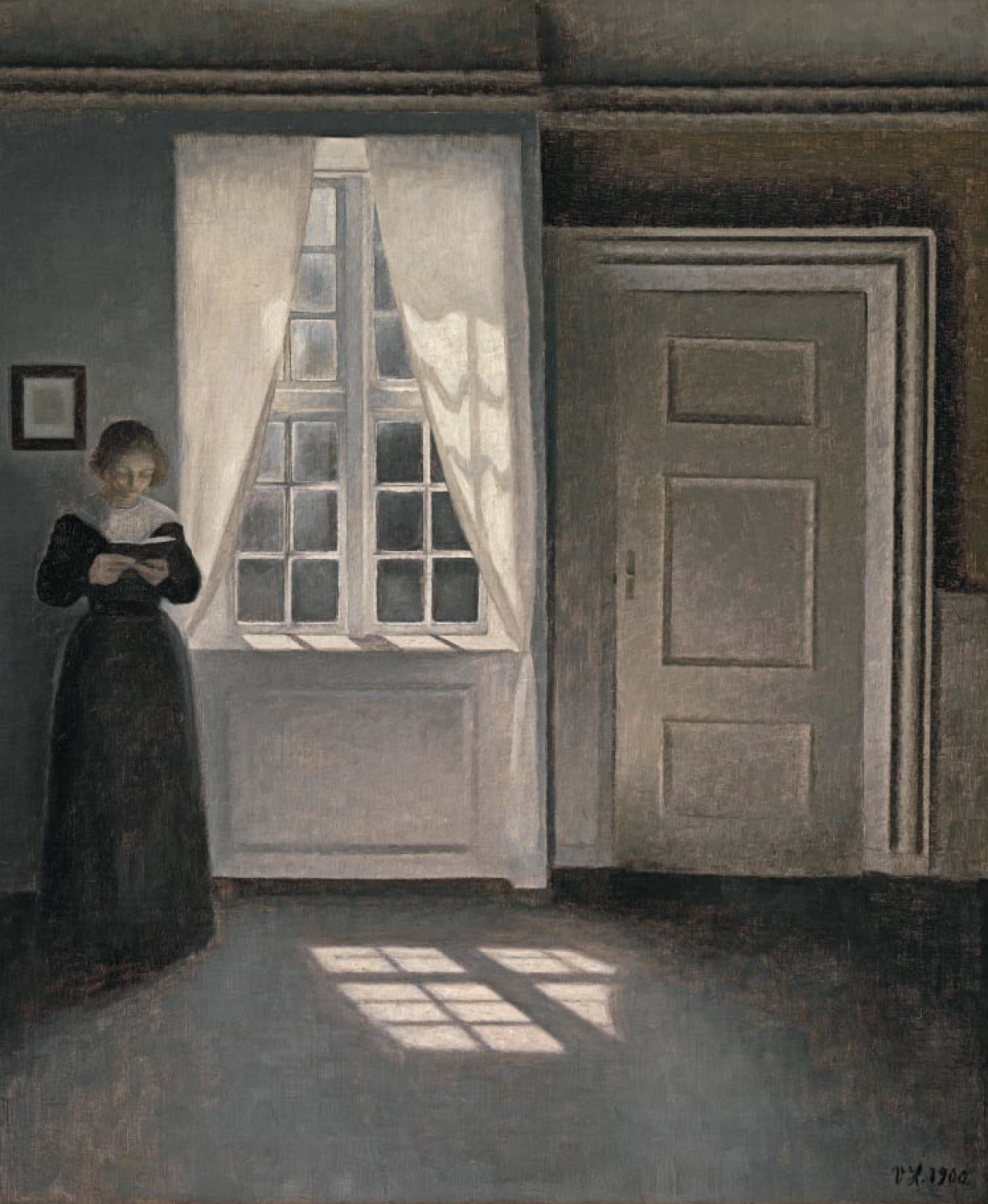
Fig. 1. Hammershøi, Vilhelm. "Interior, Strandgade 30." Bruun Rasmussen, https://bruun-rasmussen.dk/m/news/News_190812_01. Accessed 20 March 2022.
Vilhelm Hammershøi painted this with oil on canvas in 1900 and was considered as a controversial painter because there were many artists who did not understand his art. Several of his artworks at a time were rejected, but today he is one of the most sought-after artists as his work is displayed in places all over the world. This masterpiece, “Interior, Strandgade 30”, was sold for ‘DKK 31.5 million which is equal to $4,586,195.25 and it is the most expensive work of art ever sold in Denmark’” (Bruun Rasmussen). The woman in the painting is his wife, Ida, “who stands next to a window in their residence in Christianshavn in the heart of Copenhagen, where he lived with Ida from 1898-1908" (Bruun Rasmussen). In comparison to Woolf’s text, she once stated that “The mind is certainly a very mysterious organ, I reflected, drawing my head in from the window, about which nothing whatever is known, though we depend upon it so completely. Why do I feel that there are severances and oppositions in the mind, as there are strains from obvious causes on the body? What does one mean by 'the unity of the mind'? I pondered, for clearly the mind has so great a power of concentrating at any point at any moment that it seems to have no single state of being. It can separate itself from the people in the street, for example, and think of itself as apart from them, at an upper window looking down on them.” Ida, who is reading in the painting, is so focused on the book in an empty room that as Koh mentions in their article, like with one of Hammershøi’s artwork with “The room as a whole seems like a vacuum, enclosed and inscrutable, rousing our curiosity at what lies beyond. The beauty of this painting, for me, lies in how the window illuminates the muted interior without disturbing its tranquility, while providing us with steady reassurance of the presence of the greater world beyond the room” (Koh). This connects with what Woolf said about the mind having severance and oppositions which there are strains from obvious causes on the body as shown through Ida, who remains fixed on a specific posture and neutral looking face that appears more powerful than one would think with the window and the light that shines through her side.
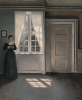
Fig. 2. GBDAY. “A Room of One’s Own: The Life of Virginia Woolf, 2021.” Artsy, https://www.artsy.net/artwork/gbday-a-room-of-ones-own-the-life-of-virginia-woolf. Accessed 20 March 2022
This artwork was done by GBDAY, an illustrator whose unique drawing styles are mostly based on street art. The painting “A Room of One’s Own: The Life of Virginia Woolf” was done in 2021 using acrylic and oil pastel on canvas. This artwork displays a skeleton reading a book who is assumed to be Virginia Woolf. In connection with Woolf’s text, she wrote that “it was tempting, after all this reading, to look out of the window and see what London was doing on the morning of the 26th of October 1928. And what was London doing? Nobody, it seemed, was reading ANTONY AND CLEOPATRA. London was wholly indifferent, it appeared, to Shakespeare's plays. Nobody cared a straw—and I do not blame them—for the future of fiction, the death of poetry or the development by the average woman of a prose style completely expressive of her mind. If opinions upon any of these matters had been chalked on the pavement, nobody would have stooped to read them.” The artist, GBDAY, appears to symbolize the importance of reading and writing by using Woolf in the modern day as a skeleton. The window on the canvas is shattered and that symbolizes a lot. One of the things that it symbolizes is desire/longing because windows do offer a way to look around the world outside and see the opportunities it brings. For example, if you happen to be in a house that you are unable to leave for some reason, you will often find yourself starting outside the window, longing for whatever could be out there to be your escape. However, in this canvas, the window is shattered and there is no reason to feel unstuck anymore. The skeleton, reading unbothered, indicates that too much time has passed to the point when the window is finally shattered, the mindset and opportunities one might have wanted before are not there anymore. Woolf appears to be the one who sits and reads in the room, and it is possible that GBDAY did it with the intention of pointing out how even now, women do not receive the same opportunities as men do.
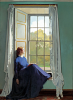
Fig. 3. Orpen, William. "The Window Seat, 1901." Sir William Orpen, http://www.sirwilliamorpen.com/the-window-seat-by-william-orpen-1901-with-a-current-photo-of-same-location/. Accessed 28 March 2022.
As this was painted in oil on canvas in 1901, this painting is currently part of a private collection. Previously, it was part of the Sotheby’s Auction in 2006 of May which was sold for £243,200 pounds which is equal to $317,348. The woman pictured in the painting is Grace, who is Orpen’s wife. This was painted in Arthur Herbert Orpen’s holiday house at Lisheen, County Cork, Ireland in September of 1901 when they were on their honeymoon. In connection to Woolf’s text, in the beginning, she stated: “No need to hurry. No need to sparkle. No need to be anybody but oneself. We are all going to heaven and Vandyck is of the company—in other words, how good life seemed, how sweet its rewards, how trivial this grudge or that grievance, how admirable friendship and the society of one's kind, as, lighting a good cigarette, one sunk among the cushions in the window-seat". When looking at the painting of the artist’s wife sitting on a window seat, serenity, selflessness, and freedom is what is shown. In “A Room of One’s Own,” Woolf explains the importance of the body in an effective way in connection to how one thinks with ''One cannot think well, love well, sleep well, if one has not dined well,” and this painting perfectly captures what Woolf aimed for. There is more to what a woman should have to succeed as a writer equally as a man.
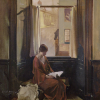
Fig. 4. Alison, David. "Woman Reading by a Window" ArtUK, https://artuk.org/discover/artworks/woman-reading-by-a-window-218200. Accessed 28 March 2022.
David Alison, studied at Glasgow School of Art and in Paris and Italy (ArtUK). This painting uses a medium of oil on canvas and is on display in the Fleming Collection Museum in London. Janet Badia, dean of the college of Liberal Arts at Purdue University Fort Wayne once published “Sylvia Plath and the Mythology of Women Readers” which mentioned this painting by Alison. She stated that “One finds the traces of these connections between women’s reading and women’s health in the art produced during this time as well, particularly in paintings. While there appears to be no shortage of paintings from the nineteenth and early twentieth centuries that romanticize women as readers, 14 more than a few depict women readers as dangerously lost, not simply in a book, but in a melancholy state of mind, including Claude Monet’s Meditation (Madame Monet on the Sofa) (ca. 1871), Hans Heyerdahl’s At the Window (ca. turn of the century), and David Alison’s Woman Reading by a Window (ca. early twentieth century)” (Badia 5). When analyzing this with Woolf’s text, when talking about Mary Beton that “She has asked you to follow her flying into the arms of a Beadle, lunching here, dining there, drawing pictures in the British Museum, taking books from the shelf, looking out of the window. While she has been doing all these things, you no doubt have been observing her failings and foibles and deciding what effect they have had on her opinions. You have been contradicting her and making whatever additions and deductions seem good to you. That is all as it should be, for in a question like this truth is only to be had by laying together many varieties of error.” This aligns with Badia’s statement on how paintings like Alison’s have romanticized women as readers along with their minds being dangerously lost in a state of mind like the woman in Alison’s painting.
Works Cited:
Badia, Janet. Sylvia Plath and the Mythology of Women Readers, University of Massachusetts Press, 2007. ProQuest eBook Central, https://ebookcentral.proquest.com/lib/iupui-ebooks/detail.action?docID=4532901.