
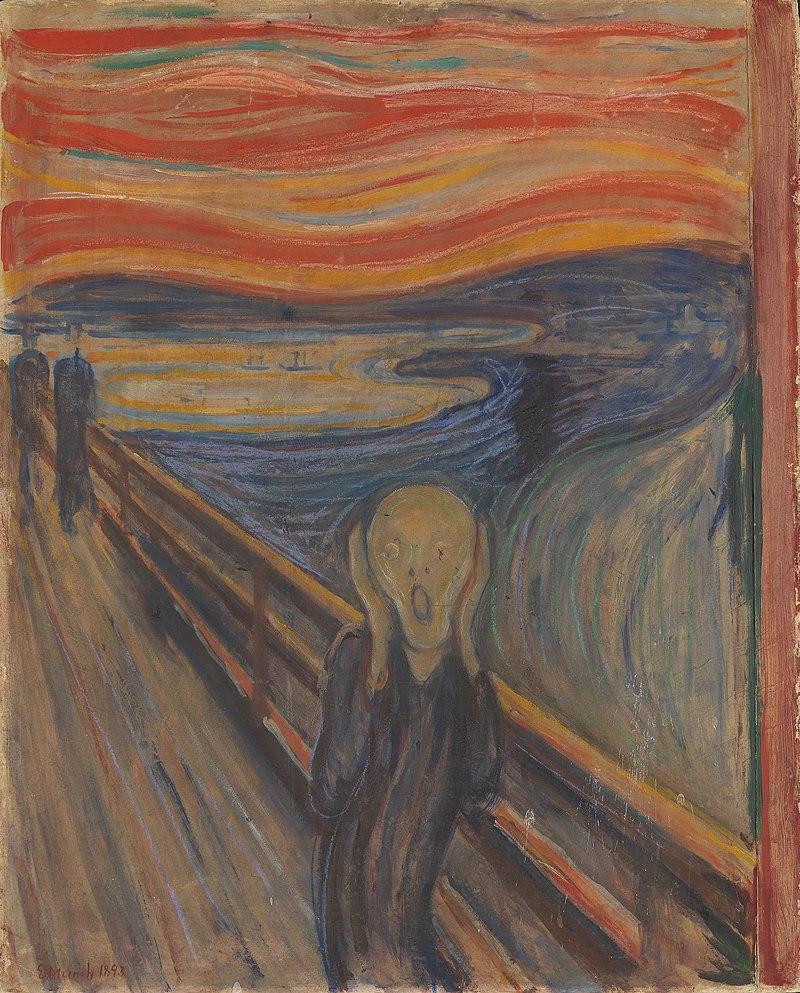
This painting depicts a person with a horrified expression, mouth wide open, and hands clutching their face. This painting embodies the theme of "The Macabre" through the portrayal of intense fear and anguish. This relates to Edgar Allan Poe's "A Tell-Tale Heart" This is expressed because Edgar explores themes of terror and madness within the short story. The painting and the literary piece delve into the depths of the human psyche and help to reveal darker aspects of human nature and the consequences of obsession and guilt. Throughout the story, there is a constant eerie and spooky feeling which resonates with the theme of the macabre. Arthur Robinson states in the article, "Poe's "The Tell-Tale Heart", "The criminal, for example, appears obsessed with defending his psychic self at whatever cost, but actually his drive is self-destructive since successful defense upon either implied charge-of murder or of criminal insanity-automatically involves admission of guilt upon the other". This quote expresses that the efforts the main character goes to, to try and prove his innocence ultimately leads to his self-destruction, with his guilt taking over, and eventually admitting to the murder. In A Tell-Tale Heart, the man says, "I heard all things in the heaven and earth./I heard many things in hell." This quote signifies that the man has been hearing voices due to his actions as well as his mental disability.
The man later says, "Villians! Dissemble no more! I admit the deed!-tear up the planks! here, here!-It is the beating of his hideous heart!" This quote portrays the man showing the police the murder he committed. Due to him becoming overcome with guilt and hearing the dead man's heart beating because of it. While this story does a good job of portraying mental illness as well as symptoms of Schizophrenia. The story also does a good job of representing what unchecked obsession and guilt can do to someone. It spreads awareness about the destructive power of obsession and guilt, urging people to confront their inner demons and the consequences of their actions before it is too late.
Works Cited
Giordano, Robert. “The Tell-Tale Heart.” “The Tell-Tale Heart” by Edgar Allan Poe - Print Version, poestories.com/print/telltaleheart. Accessed 18 Mar. 2024.
“The Scream.” Wikipedia, Wikimedia Foundation, 29 Apr. 2024, en.wikipedia.org/wiki/The_Scream.
“The Scream.” Encyclopædia Britannica, Encyclopædia Britannica, inc., 11 Mar. 2024, www.britannica.com/topic/The-Scream-by-Munch.