
Display Explanation:
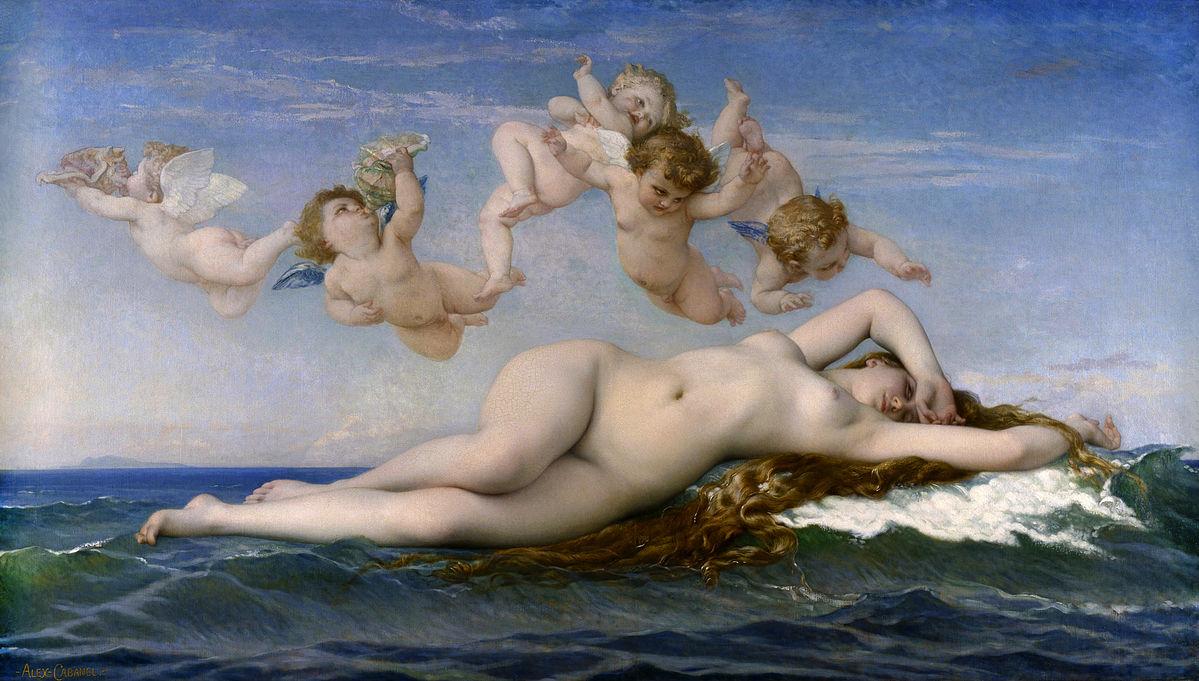
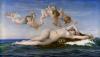
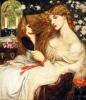
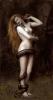
The room that I would select to display the paintings in would be a long, somewhat “skinnier” room. From the door where guests would enter, to the back of the room, the paintings in order would be The Birth of Venus by Alexandre Cabanel, Lady Lilith by Dante Gabriel Rossetti, and Lilith by John Collier. The Birth of Venus would be placed on a stand/table in the front of the room with sand around the base of the painting and the stand would be angled in toward the middle and guide the guests through the room. The painting is 98 inches in length and 59 inches tall, so the length of the painting (from right to left) will also guide the guests along the path of the installation. The body positioning of the woman also leads you to the next painting by looking at her head on the right side of the painting to her feet on the left side. The purpose of the sand is to bring the setting of the painting (an ocean) out into the real world for grounding purposes to enhance the in-person viewer experience. A bright spotlight will be on the painting to highlight the “pureness” that is being conveyed by the “birth” of the woman. If you follow the slightly angled path to the opposite side of the room, in which the first painting was facing, it leads you to the painting in the middle of the room which is also slightly angled towards the middle, Lady Lilith. In the painting, the woman is brushing her hair and checking her appearance in the mirror. The painting would be placed on a simple vanity to accentuate the setting and actions of the woman as well as bring you to sit down at the vanity to get a level view of the smallest painting of the three chosen. Choosing the vanity as a foundation for the painting appeals to the maturation of the woman from birth to a girl who is discovering her developing beauty and fostering a strong, female sense of self through polishing her appearance in the mirror. In the way the painting was placed, along with the body positioning of Lady Lilith, it forces you to look in her direction, which would be back at The Birth of Venus, as if reminiscing on her past and sitting unknowingly with her back to the future(next painting/evolution). Lady Lilith on her vanity faces towards the middle and is angled toward the back of the room, directing you along the path to Lilith, centered on the back wall. Instead of a spotlight, Lilith will be surrounded by darker/dim light to accent her pale skin and to represent the evolution of embracing her body and sexuality as a woman. Along with the intentionally dim lighting, there would be green vines hanging from the ceiling on either side of the painting to bring out the dark jungle background. When the museum guests turn around after viewing Lilith and experience the darker microenvironment around the painting, they can ‘walk towards the light’ of the spotlight on the first painting in the front of the room after exiting the darkness that surrounded Lilith.
Installation Note:
As you walk into Sinful Subtleties of Evolving into a Woman, you are greeted by The Birth of Venus, painted by Alexandre Cabanel in 1863. Venus is the Roman god equivalent to Aphrodite, the goddess of love and known for her beauty. As the name of the painting suggests, the birth or creation of such a beautiful woman is being carried out by five cherub angels. Angelic Venus is seen lying down between the waves on her back with her chest bared to the heavens as the cherubs construct her beautiful form in the image of God. Being built in the image of God, Venus must shield her red hair from his view, for it is a symbol of modesty to cover your head/hair as a woman in the Christian faith, suggested by the cherub angels. Her pale, white skin as well as the other brighter colors used for this piece, suggests that purity surrounds Venus as she is being born, akin to the purity of a child who has not yet sinned. The cherub angels facilitating her creation carry your view from her head to her feet where they are flying away to the next stage in her life. The cherubs take you to the next piece in the installation, Lady Lilith, which was painted by Dante Gabriel Rossetti in 1866-1868. Biblically, Lilith was the first wife of Adam who refused to lie under him and was cast out of the garden of Eden. She was then known as a she-demon, seducing men and murdering children. The first evolution of Venus growing into a woman and her sexuality can be seen in Lady Lilith as she cultivates her feminine appearance and is seen taking special care of her long, red hair. Instead of hiding her hair, a symbol of her female sexuality, she is taking her time and becoming familiar with the weight of her hair and how her hair flows through the brush, and how it looks while doing so. Instead of baring her pureness to the world, she is seen fully clothed in a dress, falling off of one shoulder, with a red ribbon adorning her wrist. When Adam and Eve were cast out of the Garden of Eden, they wore clothes to hide themselves and their shame from God. Lady Lilith no longer holds the purity of a newly-born child and that can be seen by her dress falling off of her shoulder, which is sexually suggestive as she plays with her appearance as a woman discovering her sexuality. She is also looking in a hand-held mirror at herself, reflecting on the past pure self that was left behind at birth, and peering into whatever her future holds. Lady Lilith has her back turned to her last sinful evolution of the installation, Lilith painted by John Collier in 1889. Lilith is seen in the nude while a snake wraps between her legs and around her body where she is seen nuzzling the head of the snake with her cheek. The heavy biblical imagery with the snake from the Garden of Eden suggests that the woman has lain with sin and is no longer pure. Her long, red hair is no longer hidden underneath her or constrained by any forces, it is shamelessly let down, freely flowing down her back. As the installation progresses, she loses her bright purity and evolves into her darker self as her understanding of herself and her sexuality matures.
Cabanel, Alexandre. The Birth of Venus. 1863.
https://en.wikipedia.org/wiki/The_Birth_of_Venus_(Cabanel) Accessed 16 Feb. 2023.
Rossetti, Dante Gabriel. Lady Lilith. 1866. Delaware Art Museum. https://en.wikipedia.org/wiki/Dante_Gabriel_Rossetti#/media/File:Lady-Li.... Accessed 16 Feb. 2023.

Collier, John. Lilith. 1887.
https://en.wikipedia.org/wiki/Lilith_in_popular_culture#/media/File:Lilith_(John_Collier_painting).jpg Accessed 16 Feb. 2023.
.jpg)