
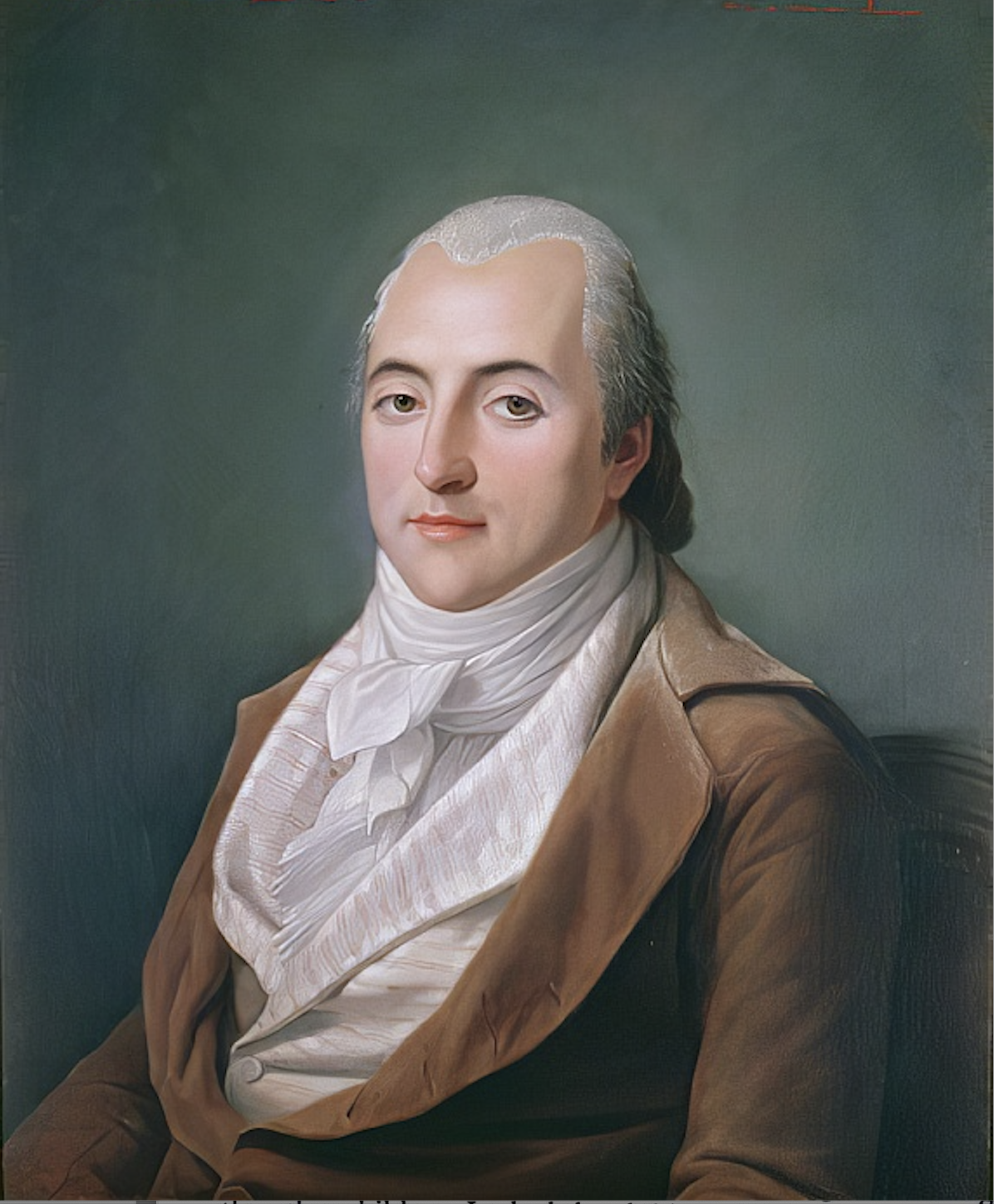

Founded by Claude-Henri De Ronvroy, Comte de Saint Simon, St. Simonianism is thought to be one of the first French socialist movements. Augustine Comte, a French philosopher, collected and refined Saint Simon’s ideas into an organized proto-socialist philosophy. One of the main principles of St. Simonianism is that science should be utilized to study human affairs in order to discover the mechanisms through which societal change is enacted. In his model society, there would be little need for governance as society would be led by engineers, scientists, and “captains of industry” (Boos). St. Simon was especially critical of the current economic climate and advocated for the working class. St. Simon gained wider public popularity in 1814 and, by the 1830s, missionaries had left France for England. They advocated for trade unions, the abolition of private property, inheritance, and marriage. Advocating for women’s rights was also an important component of St. Simonianism. Members saw both the working class and women as similarly oppressed in society. From Mill’s autobiography, St. Simonianism thought that “the labour and capital of society would be managed for the general account of the community, every individual being required to take a share of labour, either as thinker, teacher, artist, or producer, all being classed according to their capacity, and remunerated according to their work” (Mill), which Mill writes, “appeared to me a far superior description of Socialism to Owen's” (Mill).
John Stuart Mill became aware of the St. Simonianism movement in 1829 and 1830 through their writings. While Mill was still skeptical about the efficacy of socialism, St. Simoniansim captured his interest due to his belief that it provided a stronger case for such a system than others he had previously seen. Mill writes, “Their criticisms on the common doctrines of Liberalism seemed to me full of important truth; and it was partly by their writings that my eyes were opened to the very limited and temporary value of the old political economy, which assumes private property and inheritance as indefeasible facts, and freedom of production and exchange as the dernier mot of social improvement.” Mill’s appreciation for St. Simonianism marks a moment of development within Mill’s thinking as he moves away from an adherence to traditional political philosophies of the eighteenth century to consider alternative systems introduced by the modernizing nineteenth century.
Citations:
“Saint-Simonianism and Fourierism | Professor Florence S. Boos.” Victorianfboos.studio.uiowa.edu, victorianfboos.studio.uiowa.edu/saint-simonianism-and-fourierism.
"Autobiography, by John Stuart Mill.” Www.gutenberg.org, www.gutenberg.org files/10378/10378-h/10378-h.htm.