
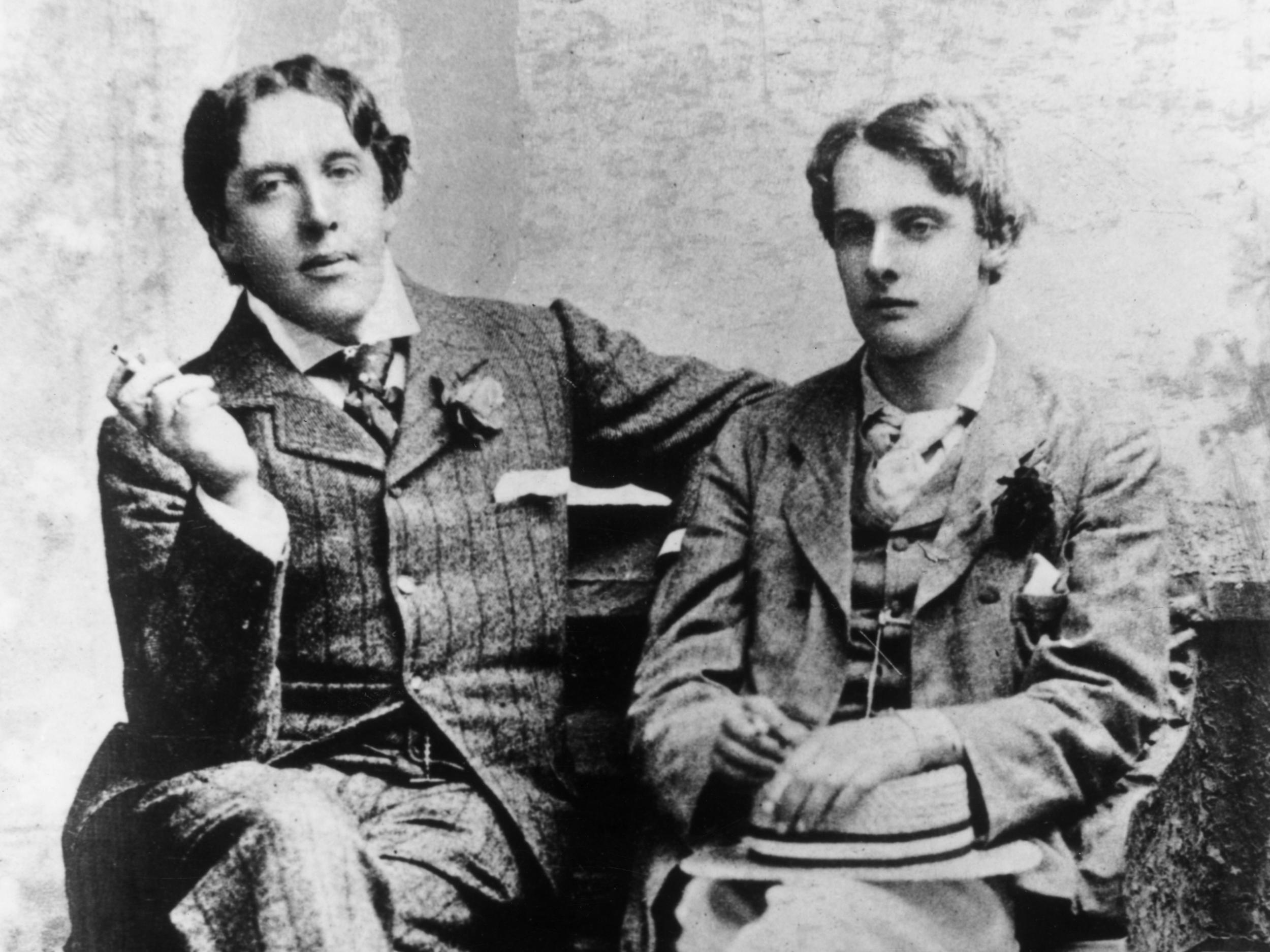
Oscar Wilde, born on October 16, 1854, was widely known across London as one of the most popular poets and playwrites, but later became more known for his trials and later criminal conviction for "gross indecency" under the 1895 Criminal Law Amendment Act, which made it a crime to commit any acts of "gross indecency," or in other words, incriminate anyone who performs sexual activity with another individual of the same sex. Wilde was put on trial because of Lord Alfred Douglas' father, John Sholto Douglas, who was concerned about the relationship Wilde had built with his son.
The trials of Oscar Wilde caused homosexuals to become more of a threat to the public eye, and people were much less tolerant of them. Same sex couples who were looked over before the trials became suspect after, and people in same sex friendships became anxious of giving the public reason to believe they were in a sexual relationship. Art also began to be associated with homo eroticism, and feminine characteristics in a man immediately offered the idea of homosexuality.
Works cited:
Linder, Douglas O. The Trials of Oscar Wilde: An Account. http://law2.umkc.edu/faculty/projects/ftrials/wilde/wildeaccount.html