





With the popularity of eBooks and Kindles, do you fear book covers are becoming extinct? Tim Kreider laments in “The Decline and Fall of the Book Cover” (published in The New Yorker, July 16, 2013), “soon enough, book covers, like album covers before them—like albums themselves, or sheet music for popular songs, or dance cards—will be a quaint, old-timey thing you have to explain to the uninterested young” (p. 4). However, Kreider qualifies in this same article, “For some reason children’s books, Y.A. literature, and genre fiction still have license to beguile their readers with gorgeous cover illustrations, but mature readers aren’t supposed to require such enticements” (p. 3). This assignment invites you to design one such “beguiling” book cover for one of the three Brontë works we are reading this semester—Jane Eyre, Wuthering Heights, or The Tenant of Wildfell Hall. In designing your cover, also consider novelist John Updike’s advice in “Deceptively Conceptual: Books and Their Covers” (New Yorker, October 10, 2005): “A good cover should be a bit recessive in its art, leading us past the cover into the book itself” (p. 2). The following covers created by students in EN 248 on "The Brontës" lead us “into the book itself” by highlighting symbols, themes, and characters essential to Wuthering Heights and The Tenant of Wildfell Hall.
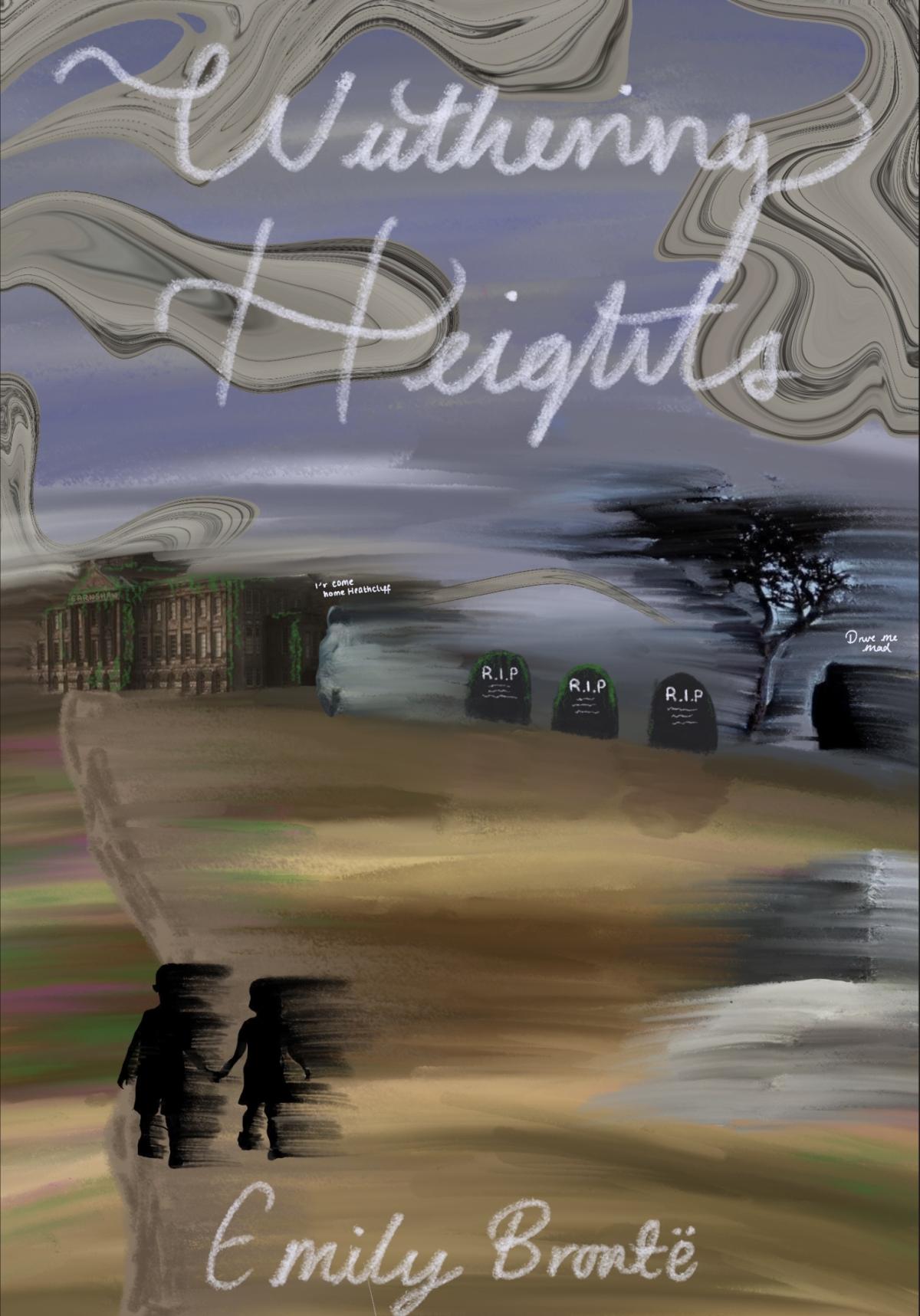
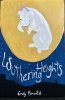
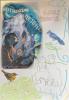
"When the Past Refuses to Die: Exploring the Tumultuous Themes of Wuthering Heights through Book Cover Design," Wuthering Heights Book Cover Created by Millie Everitt, 2026. With the rise of sleek, minimalist paperbacks, many modern covers of Wuthering Heights (1847) have softened the novel into a windswept romance set on the Yorkshire Moors. Yet Emily Brontë’s moors are not merely romantic; they are haunted landscapes where love becomes destructive, and the past refuses to stay in the past. My book cover resists the temptation to sentimentalize the novel’s central relationship of Catherine and Heathcliff to foreground an atmosphere of restless haunting. My design emphasizes that Wuthering Heights is governed not by tender love but the inescapable presence of the dead. By visually merging landscape with memory, the moors themselves warp and smear, allowing the cover to lead readers “into the book itself” as Kriedler notes in a New Yorker article on book covers (2013). Brontë entwines setting and psychology so completely that the natural world becomes a canvas for Catherine and Heathcliff’s obsession, love, and haunting revenge.
"Foliage and Stones: Repression and Obsession in Emily Brontë’s Wuthering Heights," Wuthering Heights Book Cover Created by Kit Simpson, 2026. Covers of Emily Brontë’s well-loved and well-read Wuthering Heights vary wildly. Many are adorned with floral decorations, which, while nice to look at, give very little window into the actual text at hand, hiding its darker elements behind gold leafing. Those that lack florals often are simple illustrations of bare tree branches, which, while more tonally appropriate to the text, still do not allow for much of a window into the story that a reader is about to endure. In turn, my cover, while still based on the natural world, is specifically based upon one of the most well-known quotes from the novel, illustrates the ways in Brontë continuously juxtaposes Heathcliff and Edgar Linton throughout the novel to explore different notions of love and obsession over the course of the text. In doing so, Brontë seems to imply that much of Catherine and Heathcliff’s obsession with one another is born primarily out of their lack of ability to have one another.
"The Importance of Place in Emily Brontë’s Wuthering Heights," Book Cover Created by Paige Goodsell, 2026. When picking out books in the library or bookstore with no knowledge of its contents, one cannot help but judge a book by its cover. Even though “the important thing is to be different,” as William Krider notes in a New Yorker article on book covers, contemporary book covers are becoming bland, using the same fonts and designs. While many covers paint Emily Brontë’s Wuthering Heights (1847) as purely a romance novel between Catherine and Heathcliff, I wanted to avoid conformity by privileging the Yorkshire moors where Thrushcross Grange and Wuthering Heights are placed. As Tim Cresswell notes in Place: A Short Introduction, “When humans invest meaning in a portion of space and then become attached to it in some way (naming is one such way), it becomes a place” (10). Using place theory to explore the characterization of Wuthering Heights, my book cover uses the moors as a place that shapes the main characters and exhibits their unspoken desires and emotions. Catherine’s love triangle with Heathcliff and Edgar is rooted in place, and her two love interests are tied deeply with the two different houses in the novel–Wuthering Heights and Thrushcross Grange. However, in the end, as my book cover reveals, all three characters end up buried side by side in their true home of the moors.
"One and the Same: The Dangers of Obsessive Love in Emily Brontë’s Wuthering Heights," Book Cover Created by Clover Donoghue, 2026. To design a book cover is like getting to choose one’s own face, down to the maddening struggle of trying to understand what face would “best express your inner self” (Kreider 1) to the world. Trying to find only visage is an impossible feat especially if one is intertwined with another as the case with Catherine and Heathcliff in Emily Brontë’s Wuthering Heights. Catherine and Heathcliff are never truly whole without the other. While the novel pushes its way through the tumultuous events of Wuthering Heights and Thrushcross Grange, what ghosts its way throughout the narrative is Catherine Earnshaw, the loss of her love and life leading to the loss of Heathcliff’s self as a result, and vice versa. Through fractured reflections in a broken mirror and the use of opposing colors, my book cover focuses on the idea that Catherine and Heathcliff are one and the same no matter their positions in life, as well as how Catherine’s death influences the violence and misery inflicted throughout the second part of the novel.
"Let the Dogs Alone!," Book Cover for Wuthering Heights Created by Cora Burch, 2026. Emily Brontë’s 1847 novel Wuthering Heights is packed with dogs. Shaggy or shorthaired, docile or aggressive, over “half-a-dozen four-footed-fiends” populate the moors in nearly every chapter (Brontë, 6). In designing my book cover for this novel, I developed a particular interest in how Brontë uses dogs to symbolize the unrealized violent intentions of her human characters. The members of the Earnshaw and Linton families use dogs as stand-ins for themselves as they navigate their violent feud, representing in turn Heathcliff’s antipathy for his tenant, an argument between the Linton siblings, and Heathcliff’s conquest of Isabella.
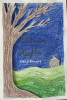
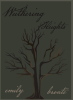
"The Moors: How Landscape Impacts the Characters of Wuthering Heights," Book Cover Created by Katie Cromie, 2026. In Emily Brontë’s Wuthering Heights, the moors play an integral role to both the plot of the and the development of the residents of the Heights. The moors serve as a place of refuge, but they also act as a barrier from the rest of the world. Their presence isolates the central house, Wuthering Heights, from the rest of civilization, which allows Catherine and Heathcliff to live free from prying eyes and society’s judgment but forces Lockwood to ultimately flee. Through elements such as a tree, rolling hills, and a dark sky, my book cover seeks to demonstrate how central nature is and emphasize the isolation that the moors create in Wuthering Heights.
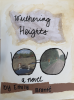
"Through Someone Else’s Eyes: Perspective and Context in Wuthering Heights," Book Cover Created by Charlotte Ballantoni, 2026. Emily Brontë’s famous 1847 novel, Wuthering Heights, has been printed countless times with more book covers than one could imagine. However, these book covers often do not give readers an accurate perception of the story or don’t connect to the novel. Even though a famous adage many have learned since childhood tell us to “not judge a book by its cover,” it’s still difficult to select a book with an unassuming or generalized cover. In my own cover design of Brontë’s novel, I intentionally depict two scenes of Catherine and Heathcliff inside the lenses of a pair of glasses, demonstrating how the story of the Earnshaw and Linton families is told from the perspective of someone who saw the events but did not live them: Nelly Dean. In this book cover, I allow audiences to see the importance of Nelly’s perspective before they even open the novel, influencing them to recognize that Nelly is inherently an unreliable narrator because she only observes the events that she shares with Mr. Lockwood and much time has passed before her narrative opens.
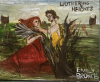
"Wuthering Heights and the Ghost of the Moors," Book Cover Created by Sofia Halpern, 2026. In Wuthering Heights (1847), Emily Brontë explores the themes of racism, classism, generational trauma, and property in 18th-century England. The novel begins in the present where the first narrator, Mr. Lockwood, rents a now deserted Thrushcross Grange to escape from society only to find echoes of history swept through the moors. Thus begins the story of the past, with the first generation living within the walls of the estates Wuthering Heights and Thrushcross Grange: Hindley and Catherine Earnshaw and Heathcliff in the Heights, and Edgar and Isabella Linton at the Grange. What follows is commonly referenced as one of the great literary romances, as “Catherine Earnshaw” battles between “Catherine Linton” and “Catherine Heathcliff” (Bronte 16) as she inscribes on her windowsill. I selected Catherine and Heathcliff to be the focal point. Emily Brontë's lush novel contains so many important themes, but the takeaway from audiences will always be the star-crossed lovers. I found it imperative to highlight their relationship as a draw to the novel. While it appears that she chooses Linton over Heathcliff, her resting place is her final choice. Through her love of the wild, savage, and free, Emily Brontë illustrates the battle between passion and social propriety. By having her grave face the moors, Catherine chooses her untamed passion--the Heath.
"Through the Walls of an Aching Heart: Love and Difference in Emily Brontë’s Wuthering Heights," Book Cover Created by Abby Kanter, 2026. Regardless of how many times we have been warned against it, at some point or another, we have all judged a book by its cover. In an incredibly competitive market, authors and publishers have very little time and space to convince you that their book is worth picking up and reading. The cover thus provides information that the words in a title cannot—they appeal to human emotion and curiosity, beckoning the reader in and leading them into a world of the author’s own creation. As it pertains to older novels in particular, re-designing the cover allows for specific aspects of the novel to be brought to the forefront of the reader's mind. For Emily Brontë’s Wuthering Heights (1847), especially at a time when that same title has been corrupted by an uninspired filmmaker, it is particularly important to capitalize on the opportunity to combat the misrepresentations and inaccuracies perpetuated by this film, as well as preserve the legacy of Brontë herself.
"Wuthering Heights In Color," Book Cover Created by Lorelei Heuer, 2026. In creating the book cover for Wuthering Heights, the ideas for my illustration altered over time. Ultimately, seeing how the mood and effect of Catherine's death on Heathcliff motivated me to visualize through color how impactful her haunting could be on him. Both characters die of a “broken heart”--their intense emotional afflictions cause physical ones. But Catherine’s is documented through Nelly’s narration of visits to her bedroom, and we get to see the decline up close. However, Healthcliff’s perspectives are largely missing from the story, except for the rare moments of passionate reveal of internal struggle. Through this book cover, we see Healthcliff’s mind and the true effect of Catherine on his dying soul.
"The Split Tree in Wuthering Heights," Book Cover Created by Nicolette Kirwan, 2026. This Wuthering Heights book cover features a split tree at its center with green filling the rest of the page, reflecting the novel’s heavy emotional and environmental influence. Healthcliff and Cathy are stormy, violent, and damaging to others, just like the windy moors that they reside in. This tree is the central element of my book cover for this specific reason: the storm that comes in the middle of the novel and splits this tree is relevant not only to the plot and climax of the text but also to Heathcliff’s violent and destructive nature. This intense scene and the similarly intense image of this tree represent the novel’s broader themes of growth, death, and destruction, all of which are central to the novel's message about generational trauma. However, through this tree, the book cover also focuses on human nature and our ability to change, cause harm, and show love for others. There is no passion without damage, and the storm that breaks this tree, as well as the novel as a whole, shows this dynamic.
"From Flame to Wind: Generational Reversal in the Cover Design of Wuthering Heights," Book Cover Created by Vasanti Liu, 2026. A book cover is a threshold into a story, "leading us past the cover into the book itself” (Updike 2). Wuthering Heights (1847) is known for its violence and love. Emily Brontë's moors burn with flames of anger, obsession, and uncontrolled chaos. Beneath this seemingly oppressive and despairing land lies a deeper structure. The explosive love and hate of the first generation (Catherine Earnshaw and Heathcliff) are rearranged, transformed, and continued in the second generation of characters (Catherine Linton and Hareton Earnshaw). My multi-faceted cover design highlights this generational reversal, tracing a movement from destruction toward restoration and rebuilding.
"The Tenant of Wildfell Hall," Book Cover Created by Cora Burch, 2026. My cover focuses on little Arthur, Helen Huntington’s young son, whose salvation the story revolves around. He is the reason the plot happens at all, as Helen has rescued him in an effort to preserve the innocence of his childhood and to save him from becoming like his father. Even in the face of judgmental, opinionated neighbors, Helen remains strong, protecting her child from what she knows firsthand would be detrimental to his happiness. Brontë’s story is one of spousal abuse, escape, and found family, but it is also about learning how to raise a good man. Arthur remains central to Brontë’s novel, which is why I chose to make him central in my cover. From the moment Gilbert Markham and Helen meet, he is there, bringing them together himself as he falls from the wall surrounding Wildfell. They are united in the interest of keeping the child safe. I implied this relationship by placing Arthur between symbols of Gilbert and Helen: in one hand, Arthur holds a handful of flowers (picked when his mother asks him to run off for a moment in the woods), and in the other, he waves at someone in the distance (a frequent greeting directed toward Gilbert). Holding a symbol of each person in his hands, Arthur represents the binding force between them. In addition, there are subtler references to his importance. Helen paints Arthur because he is as beautiful to her as her landscapes. She has similarly painted her former husband, but this portrait is turned to the wall, whereas little Arthur faces out in my design, which I made intentionally painterly, opting for water colors and an Impressionistic landscape. I also tied in Helen’s painting of the coastline by including the presence of distant seagulls, as though this image captures a moment from the party’s walk to the beach.
"Estates and The Language of the Flowers in Anne Brontë’s The Tenant of Wildfell Hall," Book Cover Created by Catherine J. Golden, 2026. Anne Brontë names The Tenant of Wildfell Hall (1848) after one of the grand homes where her protagonist, Helen Graham (nee Lawrence) lives. But the novel contains three grand homes—Staningley, where the novel begins and ends; Grassdale Manor, where Helen lives with her handsome but dissolute husband, Arthur Huntingdon; and Wildfell Hall, the abandoned mansion that Helen, posing as a widow, escapes to with her young son, Arthur, to hide from her abusive husband where she meets Gilbert Markham, a young farmer who falls in love with her. This book cover includes both a grand home and a close-up of two hands—symbolizing Arthur and Helen—and a Christmas rose, which Helen gives to Gilbert when they meet in Staningley. This book cover focuses on Anne Brontë’s use of the Victorian language of the flowers to reunite the lovers: a Christmas rose means “tranquilize my anxiety.” The grand home in the background symbolizes not only Staningley but also Grassdale Manor and Wildfell Hall, signaling the journey Helen will make among these settings to find love at last with Gilbert.
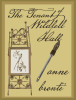
"The Tenant of Wildfell Hall," Book Cover Created by Nicolette Kirwan, 2026. The Tenant of Wildfell Hall is Anne Brontë’s novel that centers around themes of abuse, freedom, passion, art, and connection. A surprisingly feminist story for its time, Helen Graham and the novel as a whole are well represented by this book cover. A number of objects correlate with Helen’s art and the yellow, warm nature of her being, as represented by the warm colors of the background. The specific choice to highlight a Victorian art easel and paintbrush was also entirely intentional, as Helen’s art represents her means to escape her abuse and her husband. The paint brush is also intentionally connected to the title, as the novel takes an epistolary form, and much of it is written through Helen’s diary and Gilbert’s letters. This novel is a beautiful and passionate look into social standards, and the birds and flowers on the easel’s canvas also represent many of the story’s key ideas about forgiveness, fear, the violence of human nature, and the power of human resistance.