



Introduction. Lydia Bennet is most known for her careless decision-making throughout Jane Austen's Pride and Prejudice (1813). This exhibit and silhouette explore the usefulness of Lydia throughout the novel as someone who may have wayward characteristics and intentions, but ultimately is necessary for moving the main marriage plot along. Looking at first her interactions with her sisters, then the chaos of her elopement, and lastly, her marriage to Mr. Wickham, Lydia's wayward actions throughout the novel are useful in the sense that they prompt Mr. Darcy's second proposal to Elizabeth as well as comment on Regency Era gender standards.
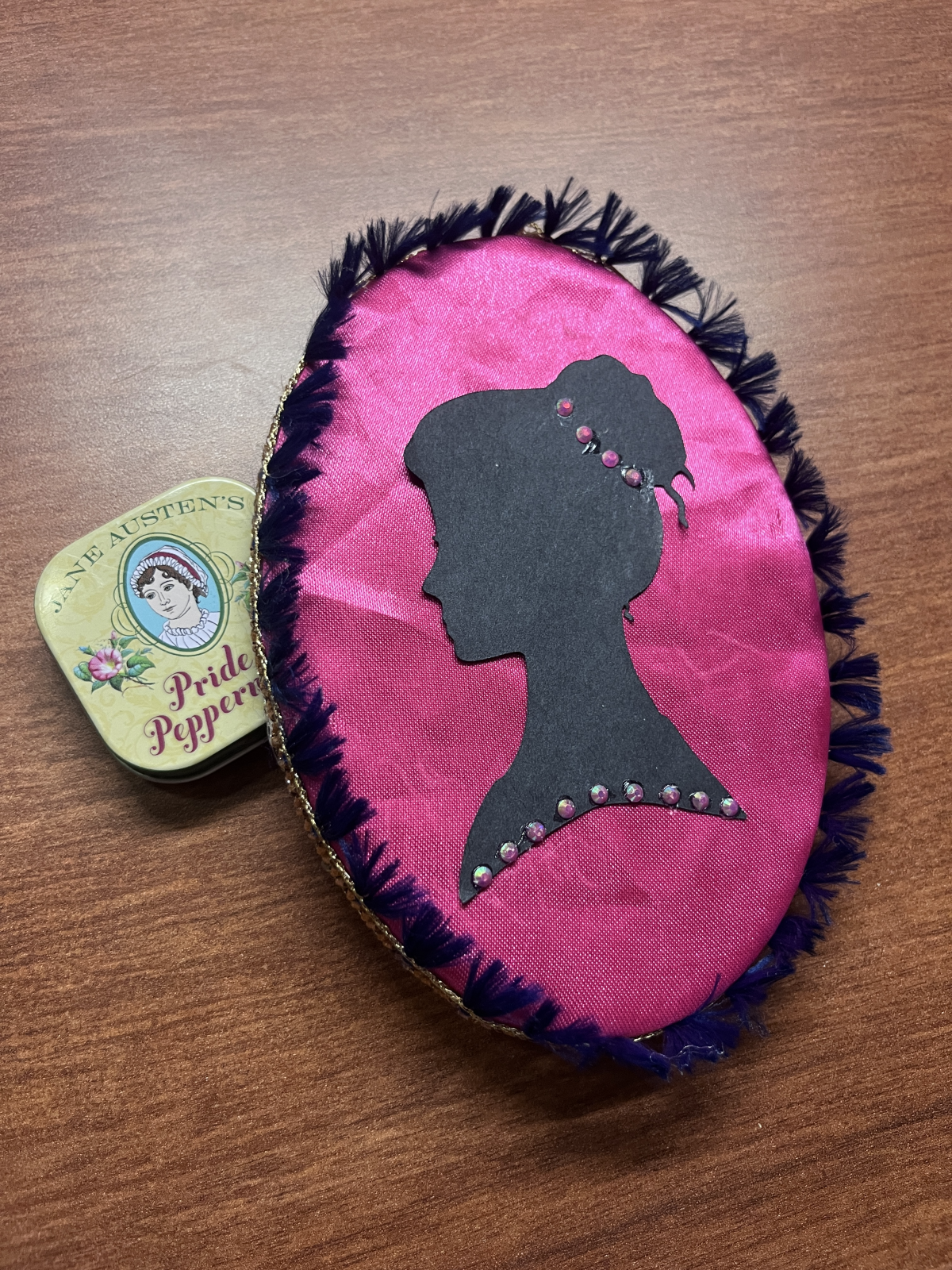
Silhouette of Lydia Bennet from Jane Austen's Pride and Prejudice (1813), Created by Paige Goodsell, 2025. Lydia Bennet--headstrong, silly, and reckless, with a large family and flirtatious disposition--seemed to make fanciful decisions wherever she went and had lived nearly sixteen years in the world with very little to restrain her tendencies. Lydia, the youngest Bennet sister, is known for her flirtatious tendencies and never thinks about the repercussions of her actions. She stood out to me as a character because while she does have many negative qualities, her actions drive Elizabeth and Mr. Darcy together in the end, so I do believe she is useful as a character and plot device.
Crafting Process of Lydia Bennet's Silhouette, Photo by Dr. Golden, 2025. While I didn't quite know where my silhouette was going when I first started out, I decided it reminded me most of Lydia Bennet from Pride and Prejudice. I chose Lydia for my silhouette because the hot pink is very bold, just like Lydia, and also quite feminine. The unruly border, as well as the wisps of hair escaping from her bun, portray how Lydia can be rash and impulsive when making decisions. The nose on the figure is a bit upturned, too, signifying how Lydia thinks of herself very highly, especially after she is married to Mr. Wickham. I struggled with gluing the fabric on at first, but I ended up putting a second wooden oval in the back to cover up the excess fabic, and it turned out well. I also felt like it was missing something, so I added a few sparkles as Lydia does care about her appearance, and it seemed very fitting.
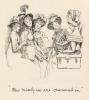
Hugh Thomson, "How nicely we are crammed in," for Jane Austen's Pride and Prejudice (1813), 1894 Edition. '"How nicely we are all crammed in," cried Lydia. "I am glad I bought my bonnet, if it is only for the fun of having another bandbox!" I thought this illustration of the Bennet sisters and the accompanying text showcased Lydia's character quite well, as she really doesn't think about the ways that her actions impact others. This carriage scene is almost foreshadowing her ending, as she goes off with Mr. Wickham without thinking about how it may negatively effect the marriage prospects of her sisters. Furthermore, the feminine feathered hats all the sisters are wearing signify to me that even though Lydia is misguided in many of her actions, she is heavily influenced by her family around her and the gender roles of the time, so she is not entirely at fault for her misdeeds.
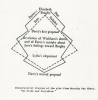
Dorothy Van Ghent, Structural Plot Diagram from "On Pride and Prejudice" in The English Novel: Form and Function, 1953. This diagram by Van Ghent illustrates the importance of Lydia to the plot of Pride and Prejudice, as her actions are ultimately what prompt Mr. Darcy's second proposal, which Elizabeth deigns to accept. Van Ghent focuses on the major plot points that move their relationship along, and by including "Lydia's elopement," this diagram portrays distinctly how Lydia is crucial to the ending of the novel. While her elopement could have ended in ruin for the rest of the family, Mr. Darcy's quick intervention and actions prevented it from causing too much damage to the other Bennet daughters. However misguided, Lydia's elopement created a pivotal moment for Mr. Darcy to step into a heroic role and save the day for the Bennet family.
Jena Malone as Lydia Bennet in the film adaptation of Pride and Prejudice, 2005. This is an image of Lydia Bennet and Mr. Wickham in the 2005 version of Pride and Prejudice. I loosely based my silhouette on this version of Lydia Bennet, as the actress always has her hair flowing all over the place and the earrings made me want to include the sparkles for embellishment. While Lydia is certainly misguided throughout the novel, her significance as a plot device cannot be understated. Lydia's foolish decision to attach herself to Mr. Wickham proves to be the boost that Elizabeth and Mr. Darcy's relationship needs to evolve, as Mr. Darcy's actions intervening in Lydia's situation help Elizabeth see him as a kind and capable partner. Focusing on Lydia's marriage, this picture also illustrates Mr. Wickham's disinterest in her after they are married, as he is looking away in a neglectful manner. Jena Malone conveys Lydia's unhappiness quite clearly in this scene, as she does not look satisfied with her situation. However, in Lydia's defense, she is a product of her household and of her time--growing up with a mother who feeds into her delusions and in a time with strict gender roles, where the only path for women was to marry well in order to improve their station in life. Comparatively, Jane Austen herself rejected this view and never got married during her lifetime, but many women, such as Lydia, did not see remaining single as a viable pathway for their future.