
Created by Oliver Aubain on Tue, 03/25/2025 - 00:14

Description:
William Faulkner’s Absalom, Absalom! is a modern Southern tragedy that navigates through the collapse of a family, and a region, through the haunted memories of its narrators. Faulkner, raised in the deeply religious American South, draws on the Bible not for doctrine but for structure, language, and myth. By reworking the story of King David and Absalom from 2 Samuel he transforms a biblical tale of rebellion and grief into a critique of legacy and historical memory in the post Civil War South.
THE AUTHOR
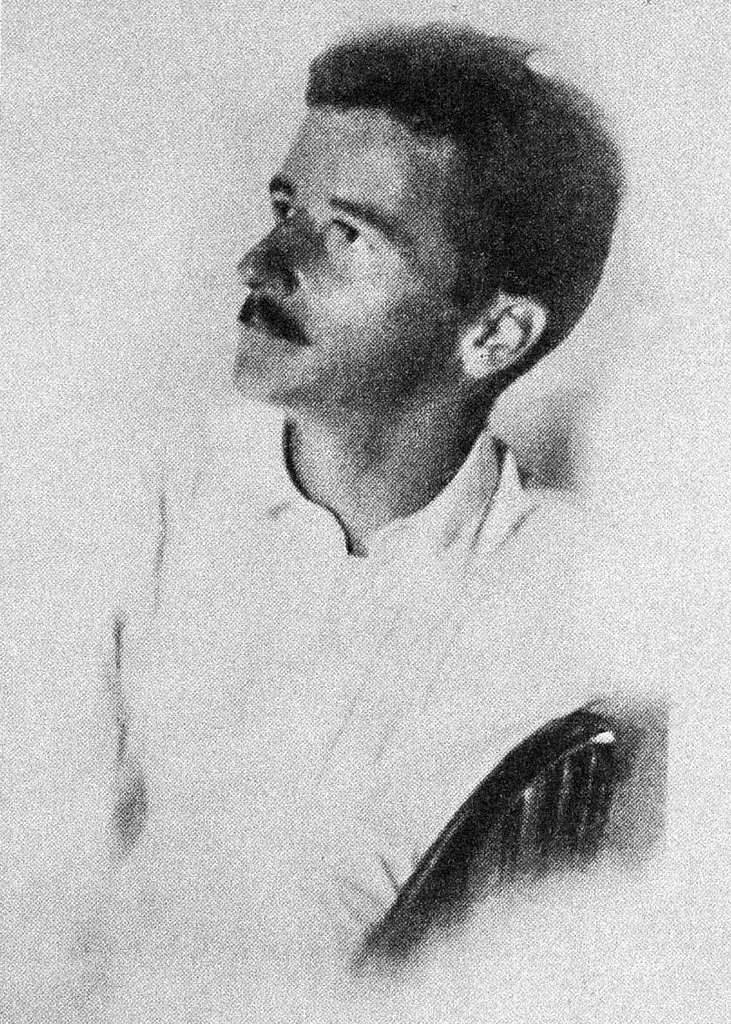
The first plate depicts a 1924 publicity photograph showing William Faulkner at age 27, a few years before he became a major literary figure. Faulkner was born in 1897 in New Albany, Mississippi, and raised in nearby Oxford, where he lived most of his life. His family was relatively wealthy by Southern standards, upper-middle class, but in his own words "not quite of the old feudal cotton aristocracy" (Wikipedia). From a young age Faulkner took an interest in studying the history of Mississippi and the South at large, and he was particularly inspired by stories he'd heard as a boy, of his great-grandfather William Clark Falkner, an eventual confederate colonel born into poverty who, like the primary character in Absalom Absalom!, Thomas Sutpen, was somewhat of a legendary figure. Shaped by Southern culture, Faulkner’s writing often deals with the legacies of slavery, of pride, defeat, and memory in the American South. His style became known for long sentences, multiple narrators, and fragmented and complicated storytelling. His fictional Yoknapatawpha County was based on his home region and appears across many of his novels.
In 1949, Faulkner won the Nobel Prize in Literature for his unique contributions to the modern novel. Though Faulkner was not religious in a conventional sense, the Bible played a central role in his work. He often said he was less interested in theology than in storytelling, and the Bible was a central text in the South's moral and cultural life. Its symbols and dramatic stories shaped his sense of narrative. In Absalom, Absalom! Faulkner takes a well known biblical story, the rebellion and death of King David’s son Absalom, and reimagines it through the lens of Southern history.
THE PLOT
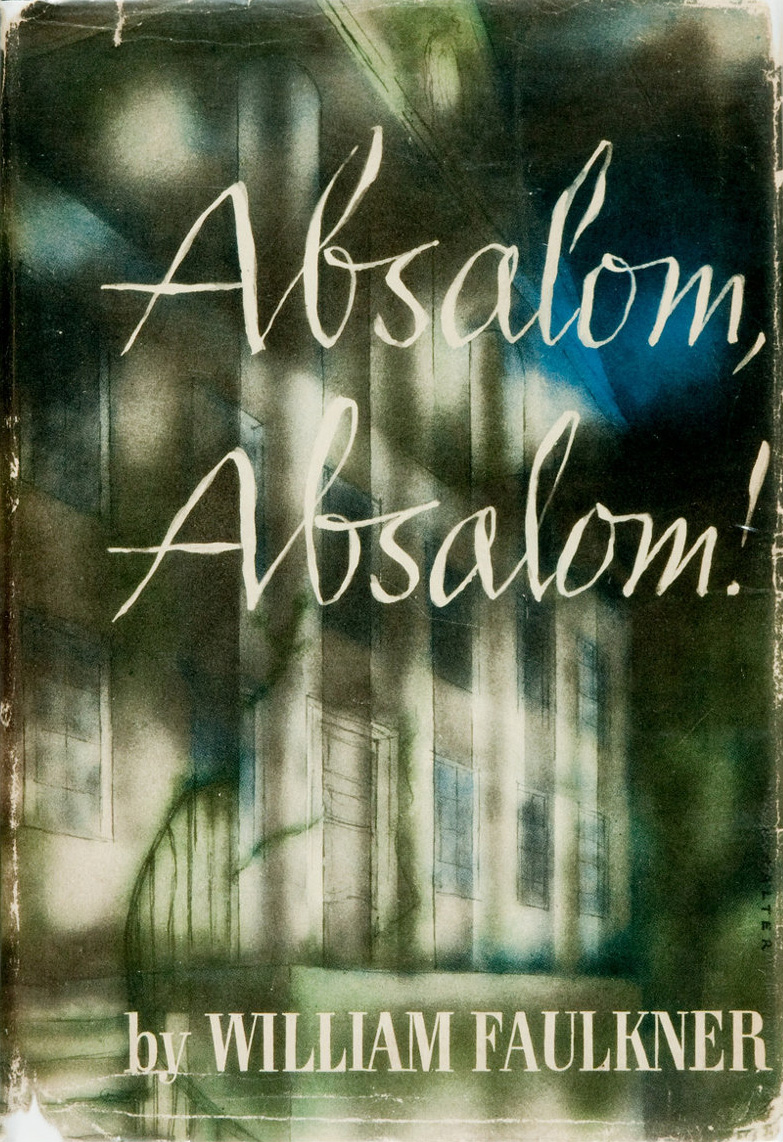
In plate 2, the first edition cover of Absalom, Absalom! features a faded image of a Southern plantation house, drawn in pale green and blue tones. The house looks almost ghostlike, appropriate for a novel so focused on memory and haunted legacies. Published in 1936, the novel came out during the Great Depression, a time when Americans were rethinking their history and identity. For the South this meant coming to terms with the Civil War, slavery, and the myths of the “Old South.” Faulkner’s novel takes these myths apart. He doesn’t just tell the story of a Southern family, he shows how that story is retold, twisted and misunderstood, and ultimately passed down like a curse. The central character is Thomas Sutpen, a poor white man who arrives in Mississippi with a plan to build a dynasty. Humiliated as a child when he was turned away from a plantation’s front door, Sutpen becomes obsessed with proving himself. He acquires land, builds a large house called Sutpen’s Hundred, and marries into local respectability (wedding the fair and coveted Ellen Coldfield).. Sutpen's aims come crumbling apart when his hidden past resurfaces and sends a stake through the fragile order of his family. These secrets of his come to light, like the rest of the plot, through the fragmented story telling and recollection of various characters in the frame story of Quentin Compson. Namely, we find out that years earlier, Sutpen had a son, Charles Bon, with a woman in Haiti; Bon is mixed-race, something Sutpen refuses to accept. When Bon returns and falls in love with Judith, Sutpen’s other daughter, the family begins to unravel. Judith’s brother, Henry, discovers Bon’s true identity and eventually strikes him dead to prevent the marriage from coming to fruition. After his final blow, Henry disappears.
The story is told through several narrators, most notably Quentin Compson, and often jumps between times, memories, and interpretations. It becomes less about what happened and more about how the story is remembered, and misremembered. By the end of the novel, the Sutpen family is destroyed and their estate burns to the ground. The deeper tragedy, though, is not just the loss of one family but the collapse of a whole way of life originally built on slavery, silence, and racial lies.
BIBLICAL MATERIAL
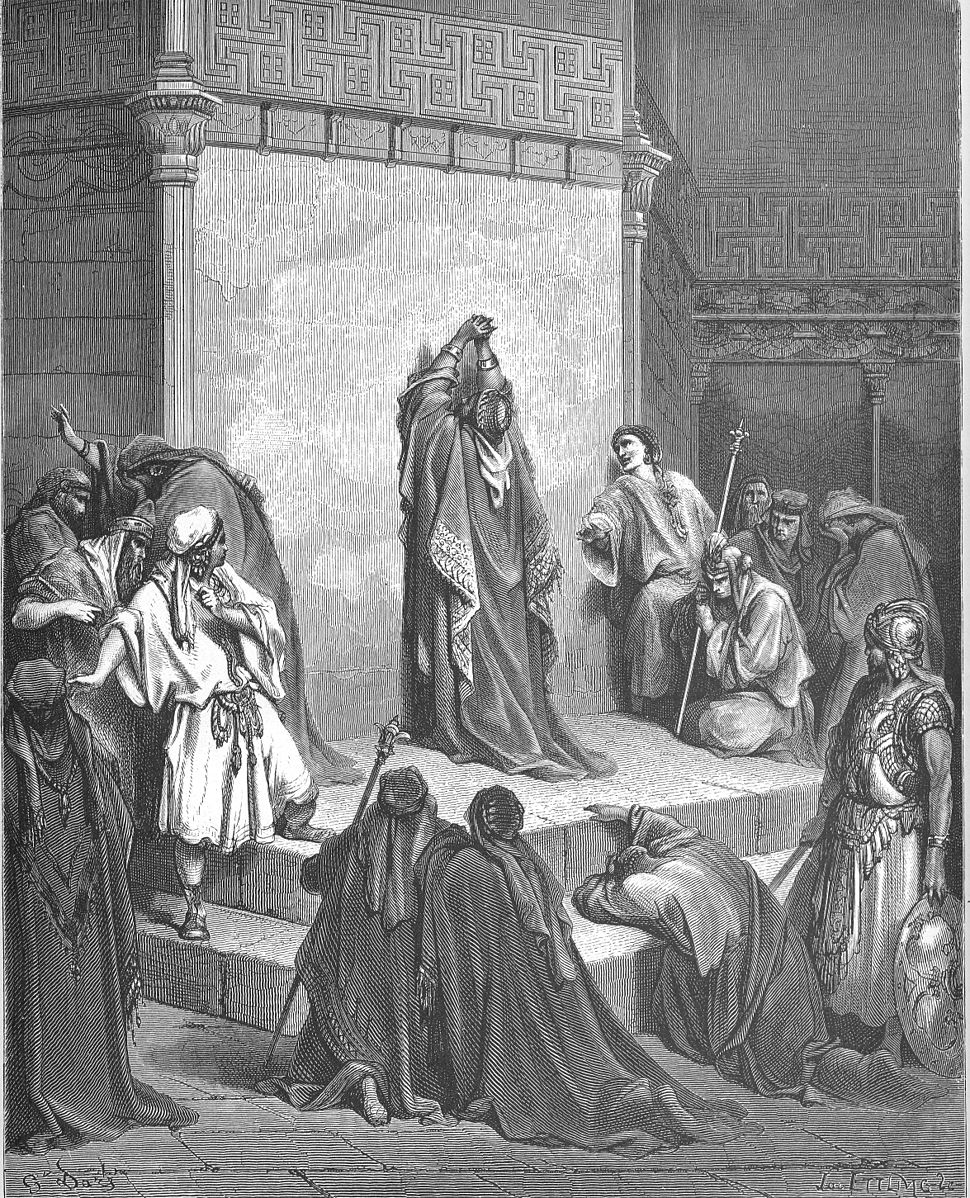
Plate 3 shows a 19th-century illustration by Gustave Doré depicting one of the most emotional moments in the Bible: King David mourning the death of his son Absalom. Though Faulkner does not explicitly reference this story, the title and the entire narrative structure of Absalom, Absalom! are directly derived from it. The story comes from 2 Samuel, chapters 13–19, beginning with terrible violence inside David’s family when Amnon, David’s son, rapes his half-sister Tamar. David is furious, but does nothing. Tamar’s full brother Absalom takes matters into his own hands and instructs his men to have Amnon killed. Afterward, Absalom flees into exile. After a period of time, David eventually allows him to return to Jerusalem, but won’t speak to him for a two years. When the two of them are finally reunited, the damage has already been sustained. Absalom begins to gather support from the people and tries to take the throne from his father by force. As a result, David must flee the city. A war follows, and Absalom is killed by Joab, David’s general, even though David had previously told his men to spare him. When David hears the news, he cries out, “O my son Absalom, my son, my son Absalom! Would I had died instead of you!” (2 Samuel 18:33).
It is significant that Absalom's motivation for killing Amnon is ostensibly a deep care for his sister Tamar, and a need for retribution as a result of Amnon's grave sin. This triad of characters, the warring brothers and the sister caught in the middle, is central to both the bible text and Faulkner's novel. Here, one should note that the progression of the story is rather quick; Amnon commits this sin, David remains silent, and Amnon is then killed. The focus is thus on the act of retribution that is spurred on by David's inaction. His silence lays the groundwork for Absalom's disordered revenge, and thus the war that ensues between him and his father. The story, then, plainly illustrates a king who cannot control his household. David is a father who fails to protect his children, and his family is a family torn apart by the results of both violence and inaction. David’s grief is deep and public, mourning not just for his son but for everything that has gone wrong in his family: his earlier sins, including the affair with Bathsheba, and the murder of her husband Uriah, which seem to ripple forward, setting the stage for this later collapse. The story of David and Absalom is about both rebellion and about the consequences of moral failure and the way personal sin leads to public disaster. David’s house survives, but it is never the same. This idea, that destruction starts inside the individual and grows outward to the family and onward, is central to Faulkner’s novel as well.
AN INTERTEXTUAL ANALYSIS
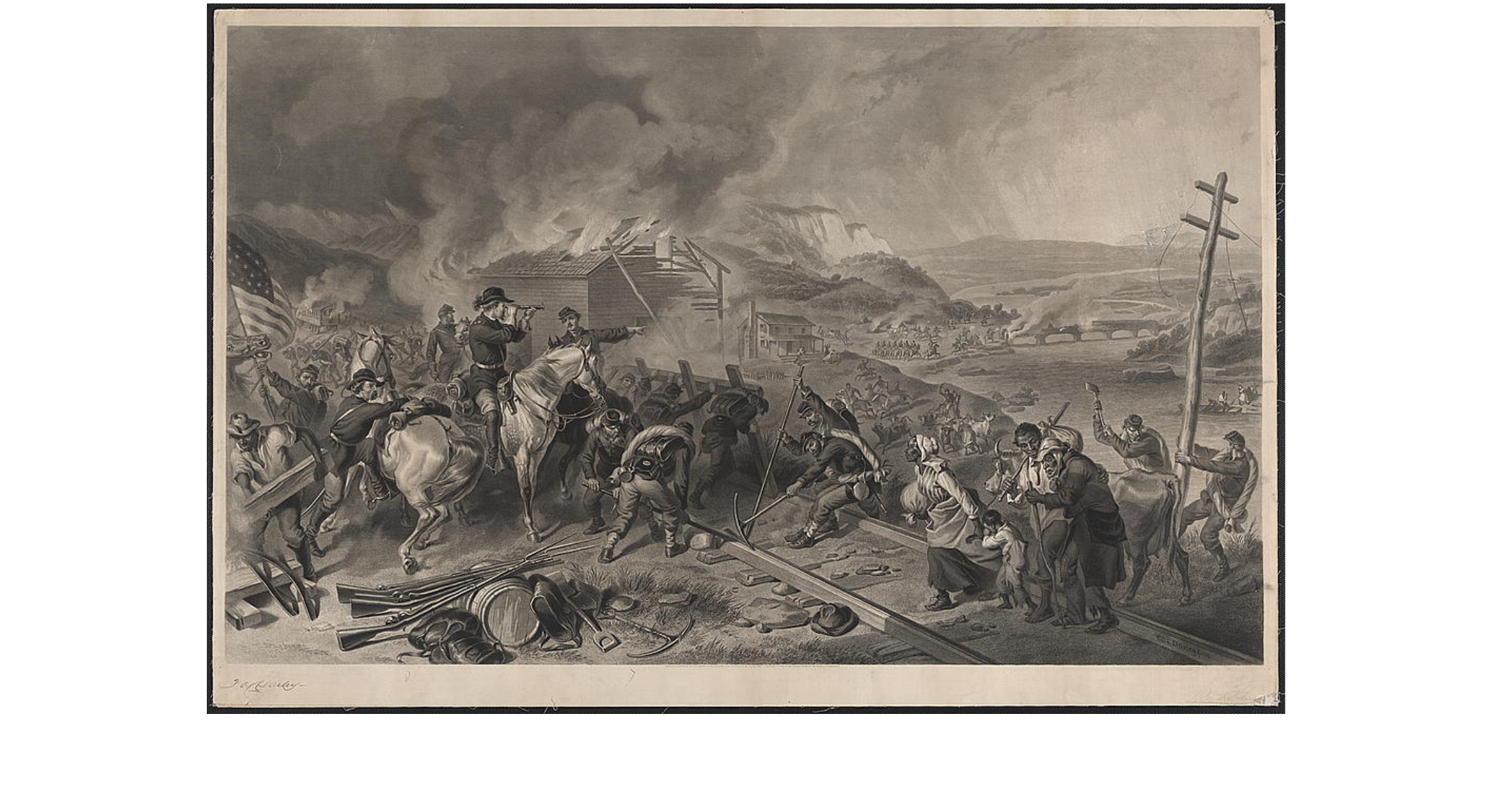
Plate 4 pictures a dramatic print drawing of Sherman’s March through Georgia, depicting Union soldiers setting fire to a Southern plantation while enslaved families flee and chaos erupts. The drawing captures in a terrifying way the violent end of the world that Faulkner writes about in Absalom, Absalom!, not just the literal end of plantations, but the deeper collapse of the South’s myths and identity. A similar chaotic collapse can be found in the story of David and Absalom. Faulkner doesn’t retell the Bible’s story of Absalom; instead, he uses it as a structure to build something new, rooted in Southern history and guilt. In the biblical story, Absalom rebels against his father David, trying to take his throne. In Faulkner’s novel, the rebellion is different. Henry Sutpen kills his half-brother Charles Bon, not because Bon committed a crime, like Amnon, but because Bon threatens the racial purity and social position of the family. Bon is revealed to be part Black, and though he returns hoping to be accepted by his father, Sutpen rejects him. The horror is that Bon is not necessarily a villain at all, per se. Instead he’s calm, mysterious, and wants connection. He’s desperate for the recognition of his father Sutpen. He even allows himself to be killed without fighting back. As a character, he is imbued with deeply human motivation. His death is thus a result of the entrenched racism of the south, making the entire situation all the more tragic and cruel. The repressed dysfunction embedded in the society of the old South leaps out in a sudden moment and spreads like a plague among the members of the family. Here though, Faulkner turns the biblical dynamic inside out: the one who should be the heir is cast out; the father figure is cold and calculating; the mourning is not public, but instead quiet and hidden. Where David weeps loudly, the Sutpens fall into silence. Where Absalom dies in battle, Henry quite simply vanishes into obscurity.
The echoes of the bible story found throughout Faulkner’s novel are clear, but they are almost reversed. Faulkner uses the Bible to demonstrate what happens when a society tells itself the wrong story, and builds itself up on false premises. In the biblical narrative, David's inaction and failures as a father enable a descending cycle of violence within his family. The South, like David’s house, was built on sin, slavery, exploitation, and denial. Thus, when Sutpen's actions- his transgressions against the South's racial codes and his failure to recognize Bon- come to light, nothing can stop the turmoil that breaks out among his kin. But unlike the biblical narrative, which ends with at least some hope of survival, Faulkner’s story ends in a jolting image of complete and total ruin. In the end, no one is left to tell the story clearly. Instead, the tale is passed down in fragments, haunted by shame, racism, and confusion. By choosing Absalom, Absalom! as the title and rewriting the biblical tragedy, Faulkner frames the story as one of grief, and more importantly, asks us to look past the narrative of the South’s past being a valiant effort and a noble loss, and instead to view it as a deeply flawed and painful legacy, built on irreconcilable ideas, that no prideful myth can redeem.
BIBLIOGRAPHY
Coogan, Michael David, et al., editors. The New Oxford Annotated Bible: New Revised Standard Version with the Apocrypha: an Ecumenical Study Bible. Oxford University Press, 2018.
Faulkner, William. Absalom, Absalom!. Vintage International, 1990.
"William Faulkner." Wikipedia, Wikimedia Foundation, 2 May 2025, https://en.wikipedia.org/wiki/William_Faulkner. Accessed 2 May 2025.
Images:
Plate 1 - Faulkner, William. William Faulkner (1924 publicity photo). 1924. PICRYL, https://itoldya420.getarchive.net/amp/media/william-faulkner-1924-publicity-photo-pipe-050041. Accessed 2 May 2025.
Plate 2 - Salter, George, designer. Absalom, Absalom! (1936 1st ed cover). 1936. Wikimedia Commons, https://commons.wikimedia.org/wiki/File:Absalom,_Absalom!_(1936_1st_ed_cover).jpg. Accessed 2 May 2025.
Plate 3 - Doré, Gustave. David Mourns the Death of Absalom. 1866. Wikimedia Commons, https://commons.wikimedia.org/wiki/File:081.David_Mourns_the_Death_of_Absalom.jpg. Accessed 2 May 2025.
Plate 4 - Darley, Felix Octavius Carr, and Alexander Hay Ritchie. Sherman's March to the Sea. 1868. Library of Congress, https://www.loc.gov/item/2003679761/. Accessed 2 May 2025.