
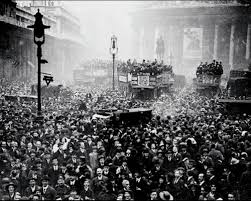
As crowds celebrated victory in Trafalgar Square, over 750,000 British veterans returned permanently disabled—many missing limbs, faces, or minds. The same society that had called them "brave heroes" and pressured them to enlist as boys now avoided eye contact with limbless veterans begging on streets. Wilfred Owen's "Disabled" written before the Armistice, captures this abandonment: his teenage soldier remembers enlisting after "a peg" for football glory and girls' attention, now sitting forever in a wheelchair while those same crowds cheer outside, forgetting the broken boys they sent to war. The celebration marked not just war's end but society's eager forgetting of its maimed youth.
BBC Newsround. “Remembrance: What Is It and Why Is It Important?” BBC Newsround, 8 Nov. 2025, www.bbc.co.uk/newsround/articles/cn51g5dw35no. Accessed 7 Dec. 2025.
Photo found at: https://www.theguardian.com/world/from-the-archive-blog/2018/nov/02/war-...