
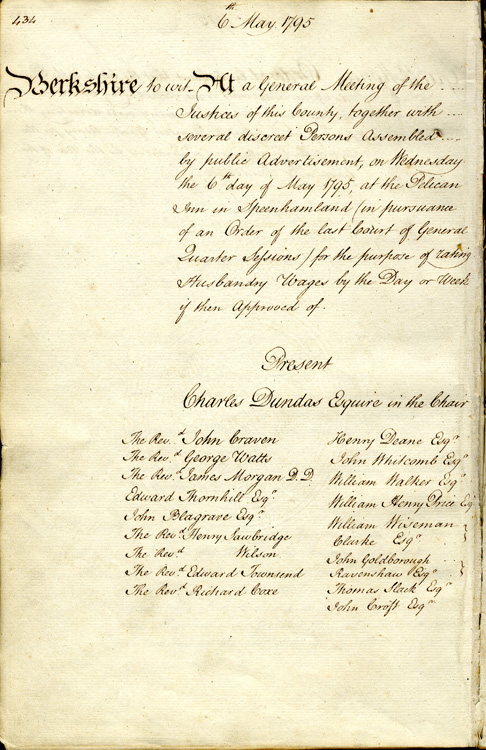
The Speenhamland System supplemented agricultural wages based on bread prices and family size, incentivizing poor families to have more children to qualify for adequate relief. This economic policy created a cruel paradox: families needed many children to survive, yet poverty ensured high child mortality rates. For families like the cottage girl's in Wordsworth's "We Are Seven," keeping dead children in the family count wasn't spiritual wisdom but economic necessity—the difference between seven and five children could mean starvation. While Wordsworth romanticized the girl's insistence that "we are seven," he missed the brutal mathematics of poverty that forced her to keep counting her dead siblings.
Glaper, Jeffry. “The Speenhamland Scales: Political Social, or Economic Disaster?” Social Service Review, vol. 44, no. 1, 1970, pp. 54–62. JSTOR, http://www.jstor.org/stable/30021619. Accessed 10 Dec. 2025.
Photo found at https://www.berkshirerecordoffice.org.uk/this-months-highlight/article/m...