
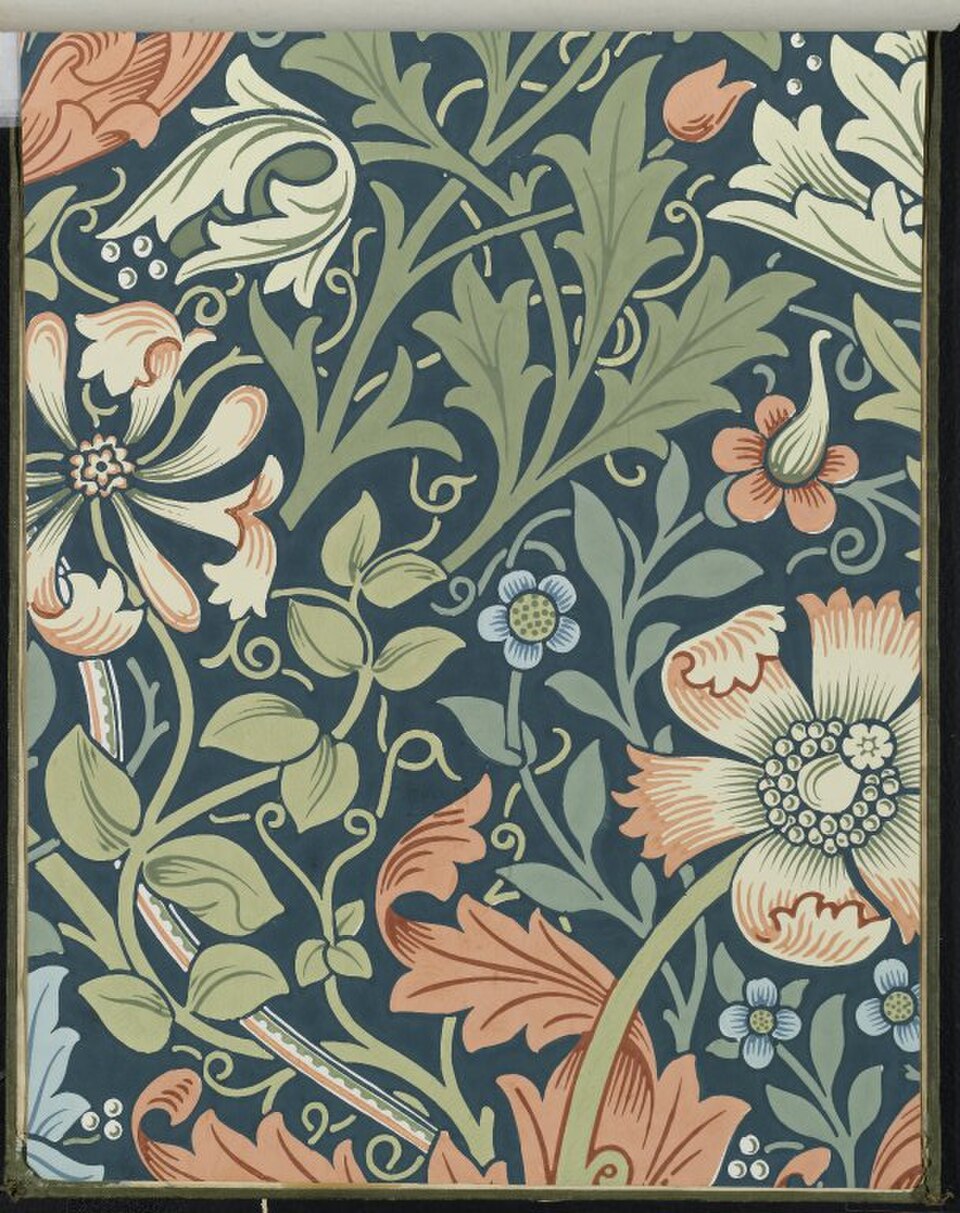
The founding of Morris, Marshall, Faulkner & Co. in 1861 marked a turning point in which Pre-Raphaelite ideals of beauty and medieval craftsmanship were transformed into decorative goods including wallpapers, textiles, furniture, and stained glass that were distributed as commodities throughout Britain and America. Morris's wallpaper designs are a prime example, remaining so iconic that they are still copied and reproduced today. As Barringer explains, Morris paired this commercial enterprise with a deeply socialist approach to labor, insisting that the production and sale of the Firm's goods honor the dignity and creativity of the individual artisan, in direct opposition to the cheap and soulless products of industrial machine manufacturing. This philosophy became the foundation of the Arts and Crafts Movement, which spread throughout Britain, America, and Europe in the latter half of the nineteenth century. The movement took local root in many places, including New Orleans, where the Newcomb Pottery, founded in 1895, embodied the same ideals of handcrafted goods made by artisans for the sake of beauty and individual expression, standing as a direct challenge to the dominance of mass produced industrial goods.