
Overview of the Event
The 1991 Economic Liberalization was a massive turning point for the nation of India. Before this year, India had a very closed economy. The government had strict rules about what could be brought into the country and what could be sold to people from other nations. This system was often called the L-license Raj because it required so much paperwork and permission from the state. However, a major financial crisis in 1991 forced the government to change its ways. They opened the doors to foreign companies and global trade. This period is known as the era of Globalization. Because of these changes, a brand new middle class was born in India. People suddenly had access to Western products, high-tech jobs, and international travel. While this brought a lot of wealth to the country, it also created a lot of tension. Many people worried that traditional Indian customs would be lost as Western styles of living started flooding into every city.
Analysis of Significance for Bride and Prejudice
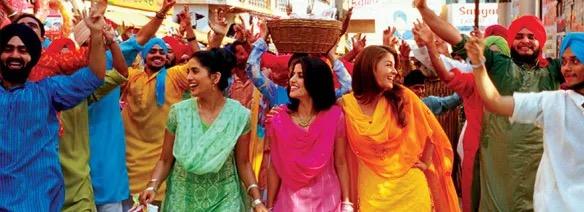
Director Gurinder Chadha uses this economic shift as the actual foundation for her movie. In the original book by Jane Austen, the story was all about land and old family money in England. In this 2004 film version, the story is moved to a world shaped by global capitalism. The arrival of the character William Darcy in the city of Amritsar is only possible because India opened its doors to Western hotel corporations. Darcy is not just a rich man but a powerful American businessman who wants to buy up local property to build luxury resorts.
Lalita Bakshi represents the skeptical side of this economic change. Her pride is actually a form of political resistance. When she first meets Darcy, she does not just see a rude person; she sees a man who wants to turn her beautiful hometown into a generic tourist trap for wealthy foreigners. Even the character of Mr. Kholi shows the impact of these economic changes. He is a man who moved to America to find success and then returned to India just to show off his new money. By moving the story across different countries like India and America, Chadha proves that the social pressures Jane Austen wrote about are now tied to global bank accounts and international flights. This makes the film a perfect example of how a classic story can be relevant in the modern world.
This shift created a new psychological confidence in the Indian middle class. As Gurcharan Das explains in India Unbound, the 1991 reforms did more than just change the economy; they "opened our minds" and allowed Indians to see themselves as "a major player on the global stage" (530). You can see this in Lalita Bakshi. Her pride is a form of political resistance. When she first meets Darcy, she sees a man who wants to turn her beautiful hometown into a generic tourist trap. Even the character of Mr. Kholi shows the impact of these economic changes. He is a man who moved to America to find success and then returned to India just to show off his new money. By moving the story across different countries, Chadha proves that the social pressures Jane Austen wrote about are now tied to global bank accounts and international flights.
Works Cited
Bride and Prejudice. Directed by Gurinder Chadha, Miramax, 2004.
Das, Gurcharan. India Unbound: The Social and Economic Revolution from Independence to the Global Information Age.Knopf, 2001.https://inspiredforias.wordpress.com/wp-content/uploads/2017/06/india-unbound-by-gurcharan-das.pdf
Timeline
Table of Events
| Date | Event | Created by |
|---|---|---|
| June 1991 | June 1991: The Crisis HitsBy the summer of 1991, India was facing a massive economic collapse. The country had almost no foreign currency left and could only afford about two weeks' worth of essential imports like oil and medicine. This was a scary time because the nation was on the verge of defaulting on its international debts. A new government was formed with P.V. Narasimha Rao as Prime Minister and Manmohan Singh as the Finance Minister. They realized that the old, closed-off way of running the country was no longer working. As Gurcharan Das notes in India Unbound, the crisis was the "catalyst" that finally forced the government to abandon its "distrust of the market" and look toward the rest of the world for help (212). Work Cited:Das, Gurcharan. India Unbound: The Social and Economic Revolution from Independence to the Global Information Age.Knopf, 2001.://inspiredforias.wordpress.com/wp-content/uploads/2017/06/india-unbound-by-gurcharan-das.pdf |
Mia Bartholomew |
| July 1991 | July 1991: Devaluing the Rupee and Ending the License RajJuly was the biggest month of all. First, the government devalued the Rupee to help sell more Indian goods abroad. Then, on July 24, Manmohan Singh gave a famous speech that ended the License Raj. This was the old system where businesses had to ask the government for permission for every little thing. By getting rid of these rules, the government allowed private companies to grow and invited global brands to come to India finally. Das says this was the moment India finally "opened its windows to the world" and let in fresh ideas and competition (225).
Works Cited:Das, Gurcharan. India Unbound: The Social and Economic Revolution from Independence to the Global Information Age.Knopf, 2001.https://inspiredforias.wordpress.com/wp-content/uploads/2017/06/india-unbound-by-gurcharan-das.pdf |
Mia Bartholomew |
| August 1991 | August 1991: The Gold Shipment and Global TrustTo prove to the world that India was a reliable partner, the government did something very dramatic. They physically packed up 47 tons of gold from the national reserve and shipped it to the Bank of England as collateral for an emergency loan. While this was a very humbling moment for a proud nation, it was necessary to win back the trust of global investors. This move showed that India was serious about its new path. According to Das, this act of "mortgaging the family gold" was the ultimate proof that the country was moving away from a "socialist dream" and toward a "global reality" (231). This new reality created the wealthy, international world that we see Darcy and Lalita navigating in the movie.
Works Cited:Das, Gurcharan. India Unbound: The Social and Economic Revolution from Independence to the Global Information Age.Knopf, 2001.https://inspiredforias.wordpress.com/wp-content/uploads/2017/06/india-unbound-by-gurcharan-das.pdf |
Mia Bartholomew |