
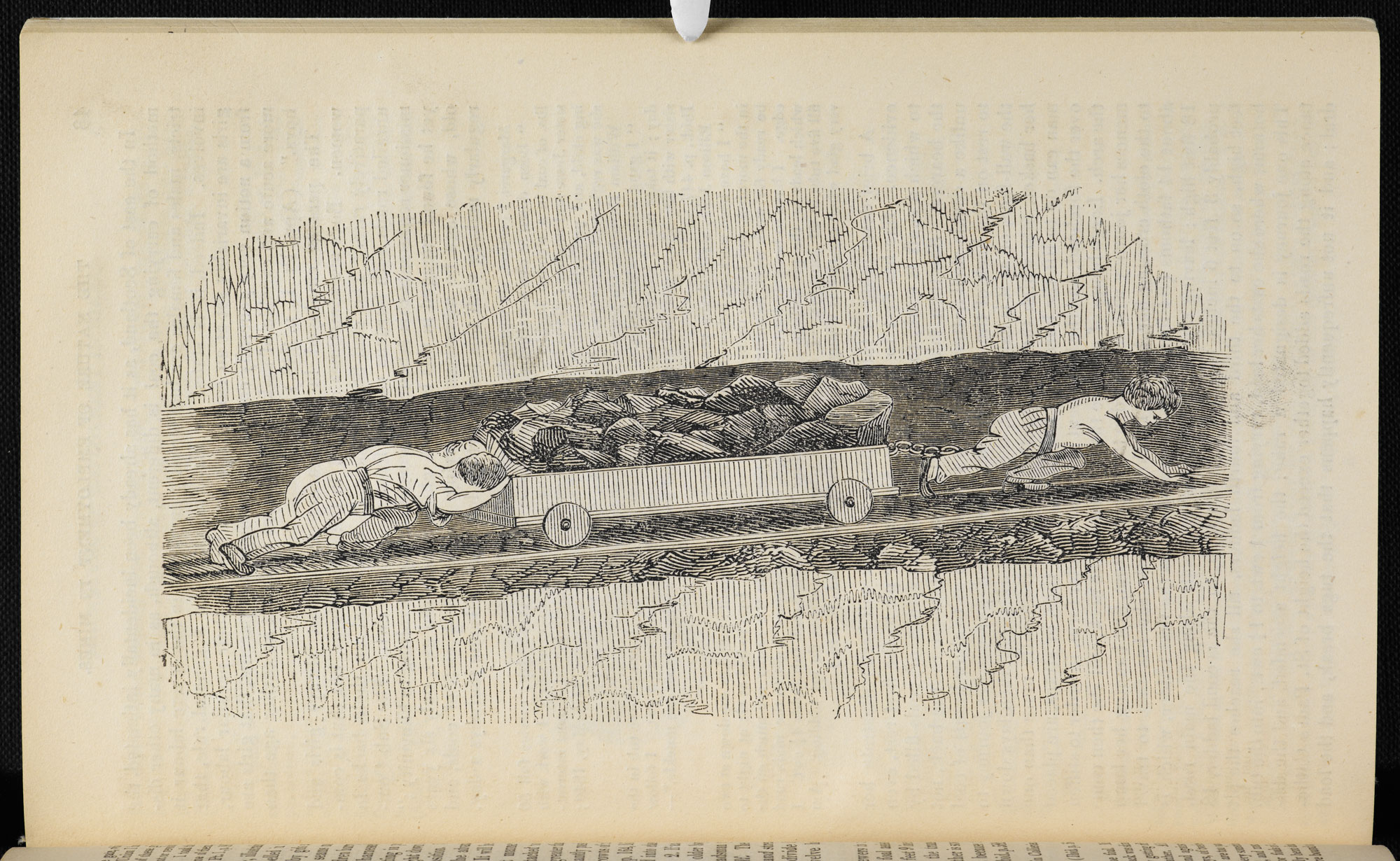
Browning was inspired by the publication of the Report of the Children’s Employment Commission by Great Britain Commissioners for Inquiring into the Employment and Condition of Children in Mines and Manufactories, which highlighted the horrendous working conditions for children during this time. Many children worked in life-threatening conditions underground in the mines, or they were responsible for collecting parts that fell under machines. As a result, the amount of work-related child fatalities skyrocketed. Additionally, Industrialization moved families from agricultural work to work like coal mining and manufacturing jobs. Children were expected to help with familial income which meant 14-hour workdays accompanied by less pay than their adult coworkers who may or may not be doing the same job as the children. (“Report”). Many businesses were interested in hiring young children who would take any job and any amount of pay because they were cheaper labor than adults. Further, the study found that “children as young as five spent twelve-hour days sitting in small tunnels deep in the dark underground, waiting to open or close ventilation doors… One seventeen-year-old boy interviewed for the Report said, ‘I never see daylight now, except for Sundays,’” (Getz). The Factory Act of 1833 attempted to protect children under the age of nine from being employed, as well as, limit the amount of hours that children were able to work in a week (Nardinelli). This was a feeble attempt at protecting children from exploitation; furthermore, these laws proved to be ineffective as there were still children under the age of nine being employed and working in deplorable conditions. Browning’s piece could be considered what is called “Protest Literature” which brings light to social injustices to invoke change. Oftentimes times protest literature appeals to the readers’ emotions by giving descriptive instances of the brutal labor conditions, conditions of asylums, etc.
Further Readings:
Council, Birmingham City. “Life for Children in Victorian Britain.” Life for Children in Victorian Britain | Birmingham City Council, Birmingham City Council, 12 Feb. 2018, www.birmingham.gov.uk/info/50139/explore_and_discover/1609/life_for_chi…;
“Elizabeth Barrett Browning.” Encyclopædia Britannica, Encyclopædia Britannica, inc., 2 Aug. 2023, www.britannica.com/biography/Elizabeth-Barrett-Browning.
“Elizabeth Barrett Browning.” Poetry Foundation, Poetry Foundation, www.poetryfoundation.org/poets/elizabeth-barrett-browning. Accessed 1 Sept. 2023.