
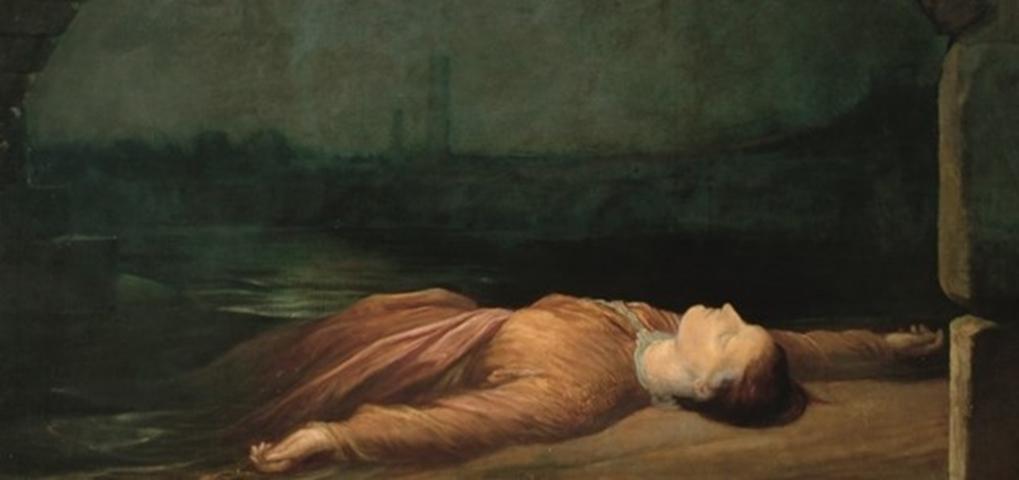

Art seems to have a way to speak to people. This painting has been seen often as of lately. I can’t help but see myself in it. Lizzie had found a copy of it one evening while she was out and brought it home. After what had happened to us, this felt like the perfect representation of what we had become. Our innocence was stripped from us so long ago over stupid ideologies such as temptation and force and it had changed our lives forever. No man, no woman or child who knew, who so much as looked as us, believed we were redeemable. That loss of our purity had deemed us fallen women. But that evening as we sat at the table and ate supper. Lizzie, my dear sister, looked me and said
O Laura, while the world sees us in such a light, I will never see you as anything less than my sister.
I adored Lizzie. She had always been there to give me this unconditional love that kept me going. I knew, however, that that would not be enough. I’m grateful to say that I was able to find a husband not long afterward. A man who was unaware of the past I had and was willing to let me accompany him to the city where we would eventually be wed and be the home to my children. Lizzie had stayed in the country and had find a banker who she would marry not long after I did. The two of us, by nothing short of a miracle were brought husbands that would bring us back to our place in society. The title of fallen women was stripped from us and we were given another chance. The women in town began to treat us a equals again as we were accepted back into society.
While I am eternally grateful for my place in society, and the relationship I have with my family, it was Lizzie who is the one who kept fighting for me all of those years, and I can not allow myself to forget her in anyway.
There are three very distinct relationships for Laura that we see within her passage to herself. The first relationship we see is with her late sister. The bond between Laura and Lizzie seems to be one that transcends the perception of their society. Both once considered fallen women, the dynamic between the sisters didn’t seem to change. Lizzie seems to declare this undeniable love for her sister that isn’t attached to her place in society or based on her relationship to a man. Lizzie was abused and assaulted by the goblin men, and faces trauma that Laura hadn’t, but we still see that her priorities are her sister. Following the events with the Goblin Men, both sisters eventually became husbands and mothers (545-546). While they had moved on and found a relationship with another man to repair themselves of this fallen woman imagery, the relationship between the two sisters still seemed intact.
The second relationship we can pick up on is between Laura and her husband. Laura comments on the idea that her husband was not aware at the time of their past. This could be meaningful to her as those who had been made aware of her past were likely to avoid her or cast her out as a result. Laura also uses words like “lucky” and “miracle”, which leads us to believe that this “fallen women” imagery and title was more often than not unavoidable. This man, unknowingly, seems to have repaired the tracks of Laura’s life without realizing. This overlaps with the brief relationship we see.
The third brief relationship that we can see in the text is the relationship between Laura and the rest of her society. We can see here that the men and women of her society had deemed her broken and unable to be “fixed”. Laura continuously describes herself in a position that is lower than that of the other women in her society. Using language depicting a “fallen” woman and then as “equals” later on, which seems to imply that Laura was lesser and had to then earn her way back up to the place of the other women in her society.
George Frederic Watts OM RA (1817-1904)
Found Drowned
c.1848 - 1850, oil on canvas