This timeline on gender, sexuality and Victorian texts will function as a space of collaborative research throughout the semester. By exploring and adding to this timeline, you are helping yourself and your classmates gain a greater understanding of our texts (and their contexts) and generate ideas for research papers.
Timeline
Table of Events
| Date | Event | Created by |
|---|---|---|
| 23 Sep 1740 | Whitechapel HospitalThe Whitechapel Hospital was founded on September 23, 1740. This hospital is the setting of chapter eighteen in The Story of a Modern Woman, where Mary and Alison meet with Dr. Dunlop Strange to become students at the hospital. It is currently located on Whitechapel Road in London. In 1990, the Queen visited for its 250th anniversary and added "royal" to the title of the hospital name as it is now known as the Royal London Hospital. |
Mary Rief |
| 1768 | 1768-Women join in the Foundation of The Royal Academy of ArtsAmong the members that were found to have petitioned to King George III for the establishment of a royal academy, were Angelica Kauffman and Mary Moser. Although both women can tie back their artistic origins to their father, they equally struggled in getting formal training and ultimately gain respect in the field. Article:https://www.royalacademy.org.uk/article/mary-moser-and-angelica-kauffman |
Andrea Lopez |
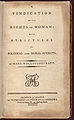
| 1 Jan 1792 | Vindication of the Rights of Woman
ArticlesAnne K. Mellor, "On the Publication of A Vindication of the Rights of Woman" Related Articles |
David Rettenmaier |
| 1798 | The Rime of the Ancient Mariner (poem publication)
Mary emphasiezes her favorite poem is titled The Rime of the Ancient Mariner in chapter 2. This poem was first published in the year 1798 and was written by Samuel Taylor Coleridge. It is a part of a series of lyrical ballads (collection of poems). |
Karis Chang |
| 1808 | The Stranger's Guide or Frauds of LondonFrom the little information we have, we know that most women who earned their living from selling sex were working class, the majority taking up with men from their own socio-economic background before going out on the streets. The more fortunate, usually in the West End and the prosperous suburbs, worked as prostitutes for a few years, while saving up to get married. One woman said as much: ‘she had got tired of service, wanted to see life and be independent; & so she had become a prostitute |
Hannah Dendy |
| 1816 | Publication of PersuasionPersuasion was written by Jane Austen in 1816. This publication discussed the complexities of love, wealth, and freedom during that time period that women faced. It discussed the social restrictions placed on women, a topic that was not commonly talked about. The story is spread out through many books but follows a character named Anne Elliot who is forced to break of an engagement that her family disapproved of. |
Olivia Koerner |
| 5 Dec 1830 | Birth of Christina Georgina RossettiChristina Rossetti was born on 5 December 1830 at 38 Charlotte Street (now 105 Hallam Street) in Marylbone, London to Gabriele Rossetti and Frances Polidori. |
Dino Franco Felluga |
| 1832 to 1832 | Tennyson's "The Lady of Shalott""The Lady of Shalott" highlights what happens when women step outside of their "zone." The Lady of Shalott is a weaver who weaves infront of a mirror and notices an image of Sir Lancelot in the mirror. She turns around, which leads to her death. This can be interpreted as temptation of sexuality and women's desire, which are characteristics not associated with women in the Victorian era. |
Andy Kao |
| The start of the month Summer 1834 | British abolish slaveryThe British empire abolishes slavery, and more than 800,000 slaves in the British Caribbean are freed. The government provides damages to slave owners, but nothing to formerly enslaved people. |
Hannah Dendy |
| 20 Jun 1837 | Accession of Queen VictoriaVictoria became Queen of the United Kingdom of Great Britain and Ireland on June, 20 1837. |
Emily Beckwith |
| 17 Aug 1839 | Act on Custody of Infants
Related ArticlesRachel Ablow, “‘One Flesh,’ One Person, and the 1870 Married Women’s Property Act” Kelly Hager, “Chipping Away at Coverture: The Matrimonial Causes Act of 1857″ Jill Rappoport, “Wives and Sons: Coverture, Primogeniture, and Married Women’s Property” |
David Rettenmaier |
| 10 Feb 1840 | Queen Victoria marries Prince AlbertQueen Victoria married her cousin, Prince Albert. They had nine children throughout their marriage, but he died of typhoid in 1861. Although Prince Albert was unpopular amongst the British people, the love between the couple was well-known. |
Kayla Nguyen |
| 1842 | Ashely's Mines Act bookAshely's Mines Act (women and children excluded from the mines). |
Hannah Dendy |
| 1843 | Publication of A Christmas CarolWritten by Charles Dickens in 1843, about a miserable man who hates Christmas. The story shows a real concern of the difference between the rich and the poor that is still relevant to this day. It was reflecting the social issues during that time, and how loneliness can affect a person, which is something that was not really discussed back then. |
Olivia Koerner |
| 16 Oct 1847 | Publication of Jane EyreIn 1847, Charlotte Bronte published the novel, Jane Eyre. This novel focuses on Jane's journey to find her own identity from her childhood years to her adult life. It emphasizes the social standings and expectations for women during the Victorian Era. Through Jane's character development, Bronte illuminates the power of women despite the patriarchal times. This novel was one of many at the time to illustrate the need for social change and advocate for women's rights. |
Gretchen Wrobel |
| 1851 | the Great Exhibition opens in London’s Crystal Palace: The brainchild of Prince Albert, the the great exibitionopens in London’s Crystal Palace, with 10,000-plus exhibitors displaying the world’s technological wonders—from false teeth to farm machinery to telescopes.. |
Hannah Dendy |
| 1852 | Publication of The English Women's Domestic MagazineWritten by Isabella Beeton for her husband's magazine, The English Women's Domestic Magazine was a huge hit in its time. This magazine contained recipes, notes on fashion, and social tips. This magazine was widely popular among women looking to fit in and keep up with societies changing times. It also contained medical tips, gardening tips, and even some sketches. There was even a portion of the magazine dedicated for women to write in and share their thoughts. |
Olivia Koerner |
| 14 Jun 1853 | Passing of the Act for the Better Prevention and Punishment of Aggravated Assaults upon Women and ChildrenThe Act for the Better Prevention and Punishment of Aggravated Assaults upon Women and Children was passed in order to protect women and children from domestic violence. However, this did not completely eliminate domestic violence against women; it only put limits on the severity of the assult by men. |
Kayla Nguyen |
| 14 Mar 1856 | Petition for Reform of Married Women’s Property LawOn 14 March 1856, presentation of the Petition for Reform of the Married Women’s Property Law, 1856. The petition began the joint effort by lawmakers and public women to grant married women control of their own wealth. ArticlesJill Rappoport, “Wives and Sons: Coverture, Primogeniture, and Married Women’s Property” Related ArticlesRachel Ablow, “‘One Flesh,’ One Person, and the 1870 Married Women’s Property Act” Anne D. Wallace, “On the Deceased Wife’s Sister Controversy, 1835-1907″ |
David Rettenmaier |
| 1857 | Mary Seacole's AutobiographyPublished in 1857 her biography was about the struggle of becoming a war nurse during the Crimean War and how she was unable to get the job because of her race. She was the daughter of a Scottish officer in the British army and a Jamaican woman. Her autobiography shows her struggles that she went through and her story. |
Olivia Koerner |
| 1857 | ‘the majority of women (happily for them) are not very much troubled by sexual feelings of any kind’: from William Acton’s medical text, The Functions and Disorders of the Reproductive Organs, 1857Women had no stance in a marriage and in this book it explains how women were not able to speak to their husbands or men if not spoken to first. The figure of the governess was unsettling, especially in books because it gave attention to the fact that not all women in the victorian age were sexless like Dr Acton had suggested. |
Hannah Dendy |
| 27 Mar 1857 | Birth of Ella Hepworth DixonElla Hepworth Dixon was born on March 27, 1857 at Essex Villa, Queens Road, Marylebone, London. She was seventh child of William Hepworth Dixon and Mary Ann MacMahon. |
Andy Kao |
| 28 Aug 1857 | Matrimonial Causes Act of 1857
ArticlesKelly Hager, “Chipping Away at Coverture: The Matrimonial Causes Act of 1857″ Related ArticlesRachel Ablow, “‘One Flesh,’ One Person, and the 1870 Married Women’s Property Act” Jill Rappoport, “Wives and Sons: Coverture, Primogeniture, and Married Women’s Property” |
David Rettenmaier |
| 1858 | English Woman’s Journal first published
Articles |
David Rettenmaier |
| 1861 | Publication of Mrs Beeton’s Book of Household ManagementMrs. Beeton’s Book of Household Management was published in 1861 by Isabella Beeton. This book not only contained over 200 recipes but contained instructions and advice for various topics like" how to choose friends and acquaintances; how to dress; how to receive morning calls or to seat guests at the dinner table..." At the time no book like this existed, and that could be why the book did so well. It was made clear in the book that most of the tasks were to be done by servants or maids. This book was known to teach the mistress of the house how to run her house by delegating other tasks. By 1868 the book sold over two million copies. |
Olivia Koerner |
| 14 Dec 1861 | Death of Prince AlbertAfter the passing of Prince Albert due to typhoid fever, Queen Victoria was devastated. For 15 years, she was rarely seen in public and because of this, her popularity among the British began to diminish. Queen Victoria's grief after his death drastically changed the rest of her reign and ultimately shaped British monarchy to this day. The whole country was significantly affected by his death. |
Kayla Nguyen |
| 1862 | Goblin MarketChristina Rosetti wrote Goblin Market in April of 1859 and it was published in 1862. This poem focuses on women's role in society at the time. Two girls, Laura and Lizzie, are tempted by the goblins to eat their fruit. This story illuminates the oppression of female sexuality and women's lack of education during the Victorian era. |
Gretchen Wrobel |
| circa. 1863 to circa. 1865 | Alice in WonderlandDuring 1863-1865 the popular children's story Alice in Wonderland was written. The author Lewis Carroll, first got the idea for the story by telling it to three young girls on a boat trip in 1862. Alice, one of the girls, adored the story and that inspired Lewis Carroll to write the story down the next year so that Alice could read it. He ended up publishing the book in 1865. |
Olivia Koerner |
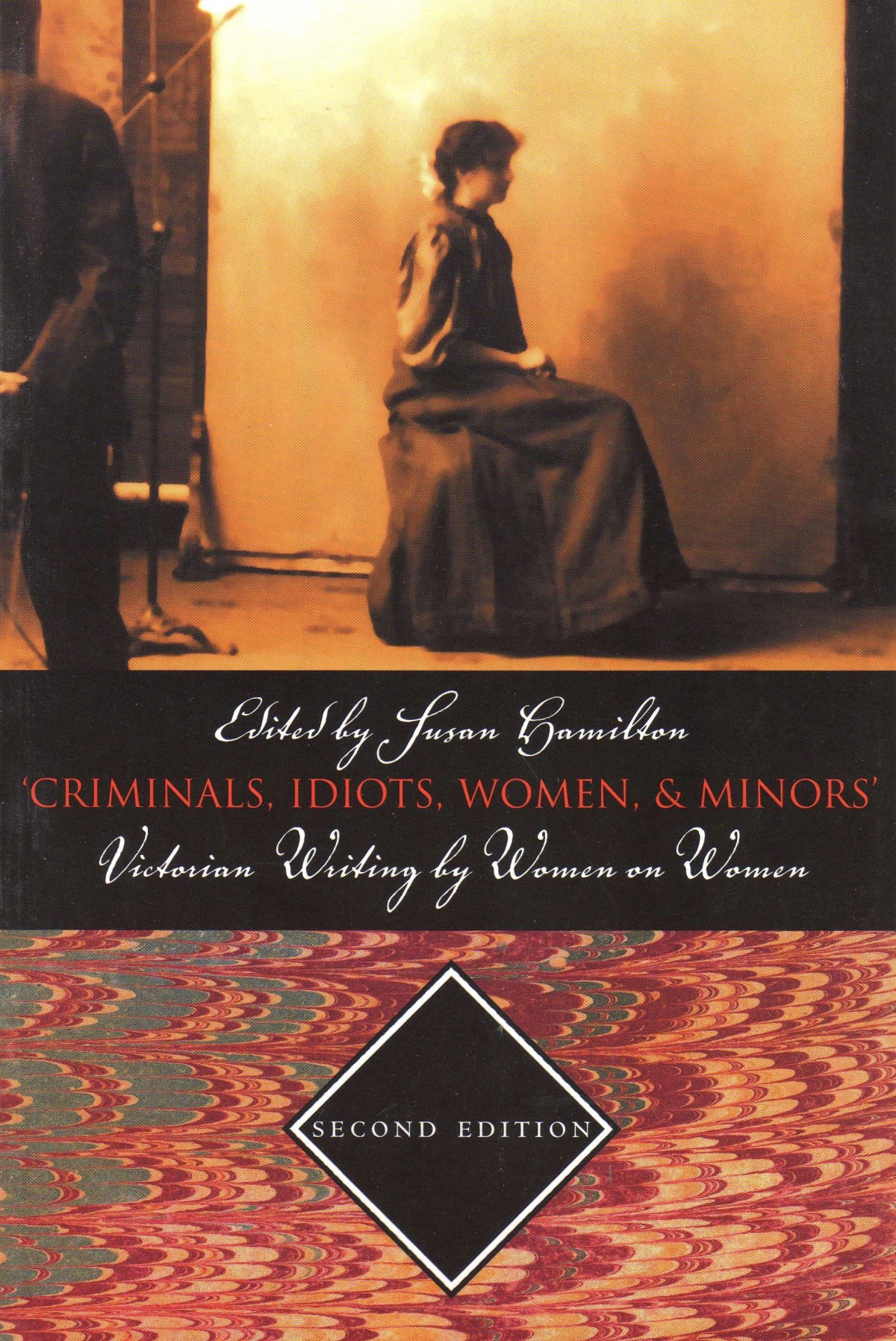
| Dec 1868 | "Criminals, Idiots, Women, and Minors"In her 1868 essay, "Criminals, Idiots, Women, and Minors," Frances Power Cobbe challenges the role of women in society and the idea that husband and wife are "one before the law." This essay sparked great controversy and debate, bringing attention to women's rights issues.
Source: http://webapp1.dlib.indiana.edu/vwwp/view?docId=VAB7044&doc.view=print |
Sarah Dyer |
| 16 Oct 1869 | First Women's College at Cambridge Founded (Girton College)Emily Davies and Barbara Bodichon founded this college and it was the first Cambridge college for women students because women could not get full degrees at Cambridge until 1948. This was a major movement for women's rights allowing them to go to school and receive degrees. |
Gretchen Wrobel |
| 9 Aug 1870 | 1870 Married Women's Property Act
This Act established limited protections for some separate property for married women, including the right to retain up to £200 of any earning or inheritance. Before this all of a woman's property owned before her marriage, as well as all acquired after the marriage, automatically became her husband's alone. Only women whose families negotiated different terms in a marriage contract were able to retain control of some portion of their property. ArticlesRachel Ablow, "On the Married Woman's Property Act, 1870" Related ArticlesKelly Hager, “Chipping Away at Coverture: The Matrimonial Causes Act of 1857″ Jill Rappoport, “Wives and Sons: Coverture, Primogeniture, and Married Women’s Property” Anne Wallace, “On the Deceased Wife’s Sister Controversy, 1835-1907″ |
David Rettenmaier |
| 1878 | Women and education rights UK has the first university for women to get a degreeWomen in the 1860s and 1870s were not allowed at Oxford and Cambridge to get degrees or at any university. Women were not allowed to get any type of degree and finally in 1878, In London the first university in the UK to allowed women to atttain a degree. |
Hannah Dendy |
| 27 Dec 1879 | Death of William Hepworth DixonMary Hepworth Dixon's father, William Hepworth Dixon, passed away on December 27, 1879. This was a very significant event in Mary's life that shook her world for years to come. She even wrote about her father's death in some of her works, including The Story of a Modern Woman. |
Ashley Rutledge |
| 1 Jan 1883 | 1882 Married Women's Property Act
ArticlesJill Rappoport, “Wives and Sons: Coverture, Primogeniture, and Married Women’s Property” Anne Wallace, “On the Deceased Wife’s Sister Controversy, 1835-1907″ Related ArticlesRachel Ablow, “‘One Flesh,’ One Person, and the 1870 Married Women’s Property Act” |
David Rettenmaier |
| 1883 | Primrose LeagueIn the "Story of a Modern Woman" , Lady Jane mentions having been a member of this league whilst also introducing Mary to a journalist who was also a member. The Primrose league was founded by Benjamin Disraeli during the era of Queen Victoria. It was created to: " 1. To Uphold and support God, Queen, and Country, and the Conservative cause; 2.To provide an effective voice to represent the interests of our members and to bring the experience of the Leaders to bear on the conduct of public affairs for the common good; 3.To encourage and help our members to improve their professional competence as leaders 4.To fight for free enterprise" (Primrose League). It was essentially made to uphold conservative values, and became widely popular once women were allowed into the realm. Winston Churchill would later be a part of this organization and detail it in one of his books. |
Andrea Lopez |
| 14 May 1884 | Passing of Married Women's Property ActThe Married Women's Property Act was passed in 1884. This allowed women to own her own separate property regardless of her marital status. This act also permitted women to sue and be sued in their own name. This was a key factor in changing the role of women in society. |
Kayla Nguyen |
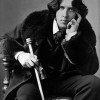
| 1888 | Ella Hepworth Dixon Starts here careerIn 1888 a young Ella Dixon accepted an offer from Oscar Wilde to the editor of "The Women's World". This was a magazine for women that was very popular at the time. |
Emma Craddock |
| Aug 1888 to Sep 1889 | Jack the Ripper murdersFrom August 1888 to September 1889, the serial killer known as the Whitechapel Murderer or Jack the Ripper stalked women living in the East End of London. Related ArticlesHeidi Kaufman, “1800-1900: Inside and Outside the Nineteenth-Century East End” |
David Rettenmaier |
| 1894 | "New Aspect of the Woman Question"In March 1894, Sarah Grand's “The New Aspect of the Woman Question” was published. The essay in North American Review, vol.158, no.448, March 1894, pp.270–6 has been credited with identifying the "New Woman." ArticlesMeaghan Clarke, “1894: The Year of the New Woman Art Critic” |
David Rettenmaier |
| May 1894 | Story of a Modern WomanIn May 1894, Ella Hepworth Dixon's The Story of a Modern Woman was published. It is the best-known New Woman novel and draws on Dixon's own experiences supporting herself as a journalist.
ArticlesMeaghan Clarke, “1894: The Year of the New Woman Art Critic” |
David Rettenmaier |
| 29 Dec 1894 | Death of Christina RossettiChristina Rossetti died on 29 December 1894 and was buried in the Rossetti family plot, alongside her parents and Elizabeth Siddal. |
Dino Franco Felluga |
| Apr 1895 to May 1895 | Trials of Oscar Wilde
ArticlesAndrew Elfenbein, “On the Trials of Oscar Wilde: Myths and Realities” |
David Rettenmaier |
| 1898 | Foundation of Central London School of Art and DesignThe Central London School of Art and Design was founded in 1898. It later merged with the Central Saint Martins College of Art and Design in 1989. They believe in the "fundamental importance of learning through making and were known for their radical approach to art and design" (https://www.arts.ac.uk/colleges/central-saint-martins/about-csm).
|
Karis Chang |
| 22 Jan 1901 | Queen Victoria DiesQueen Victoria dies at age 81 on the Isle of Wight. Her death signified the end of the Victorian Era. Her oldest son, Edward VII, succeeded her. |
Gretchen Wrobel |
| 28 Aug 1907 | Deceased Wife's Sister's Marriage Act
ArticlesAnne Wallace, “On the Deceased Wife’s Sister Controversy, 1835-1907″ |
David Rettenmaier |
| 1913 | Eric Wood - "The Boy's Book of Battles"In 1913, Eric Wood published the text, "The Boys Book of Battles", which focused on different important military battles throughout the early century history. In "The story of a Modern Woman", young Mary mentions her male childhood friends and their obsessions with the story of Blake, Von Thompson, and Monk. This story is found in the chapter, " When Blake whipped the seas", and is essentially on the success of an Englishman in battle compared to a Dutch. It is important to note the patriotism at the time and how Mary herself although wanted to be the victor, did not care so much for the idea of patriotism itself. https://www.heritage-history.com/index.php?c=read&author=wood&book=batt… |
Andrea Lopez |
| 2 Jul 1928 | Equal Franchise Act of 1928The Representation of the People (Equal Franchise) Act of 1928 was passed by Parliament of the United Kingdom. It gave men and women equal voting rights. It gave all women over 21 the ability to vote regardless of property ownership. |
Gretchen Wrobel |
| 12 Jan 1932 | Death of Ella Nora Hepworth DixonElla Hepworth Dixon, the author of The Story of a Modern Women, died on January 12, 1932. Dixon died of a respiratory disease at the Savoy Court Hotel in London, but her impact on uncovering the different perspectives and complexities of femininity is still remembered today. |
Mary Rief |