
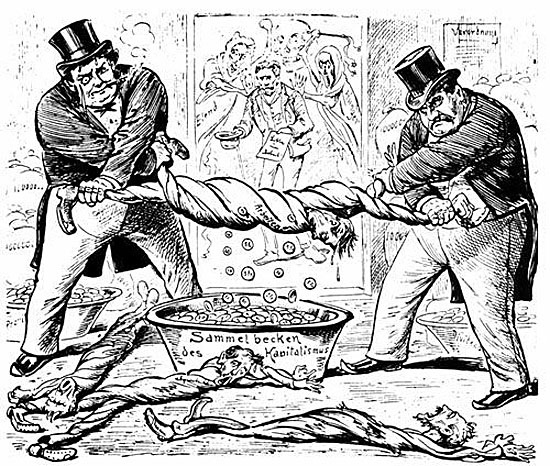
Sir Isaac Newton’s third law of motion, a fundamental principle of physics, can provide us with a profound insight into the dynamics of not just physical objects but also societal and economic systems. This law posits that for every action, there is an equal and opposite reaction. This concept can be applied metaphorically to the societal shifts witnessed during the Victorian era, particularly in the wake of the Industrial Revolution.
The Industrial Revolution, a momentous and transformative force in history, can be seen as the “action” in this analogy. It was characterized by a rapid and unprecedented surge in technological advancements and industrialization, leading to the mass production of goods, urbanization, and a significant shift in labor patterns. As the factories churned out goods and new industries emerged, there was an accumulation of capital and means of production in the hands of a select few, creating a significant disparity between the classes.
To illustrate this, consider the emergence of textile mills in Victorian England. These mills revolutionized the production of textiles, resulting in increased efficiency and output. However, the benefits of this industrialization were not equally distributed. Factory owners and capitalists gained enormous wealth and power, while the working class, or the proletariat, often endured deplorable working conditions, long hours, and meager wages. This growing gap between the affluent bourgeoisie and the struggling proletariat exemplified Newton’s third law in a societal context.
Karl Marx and Friedrich Engels, influential philosophers and economists of the time, observed this stark divide and they postulated that, as a reaction to the entrenched inequality and exploitation, the working class would eventually unite and rise against the bourgeoisie, leading to a revolution. This theory, known as Marxism or communism, envisioned a society where the means of production would be collectively owned, eliminating the disparities of wealth and power.
In essence, Newton’s third law of motion can serve as a lens through which we can analyze the societal repercussions of historical events like the Industrial Revolution. It reminds us that profound societal actions, such as this industrial transformation, inevitably generate reactions, often in the form of social movements, political ideologies, or revolutions, as people respond to the consequences of these changes in an effort to restore balance and justice.
Further Reading Suggestions:
https://ilostmyprayerhanky.com/2017/09/17/communist-manifesto-part-1/
https://ilostmyprayerhanky.com/2017/09/24/cm2-capitalists-workers/
https://ilostmyprayerhanky.com/2017/10/07/objections-communism-manifesto-3/