
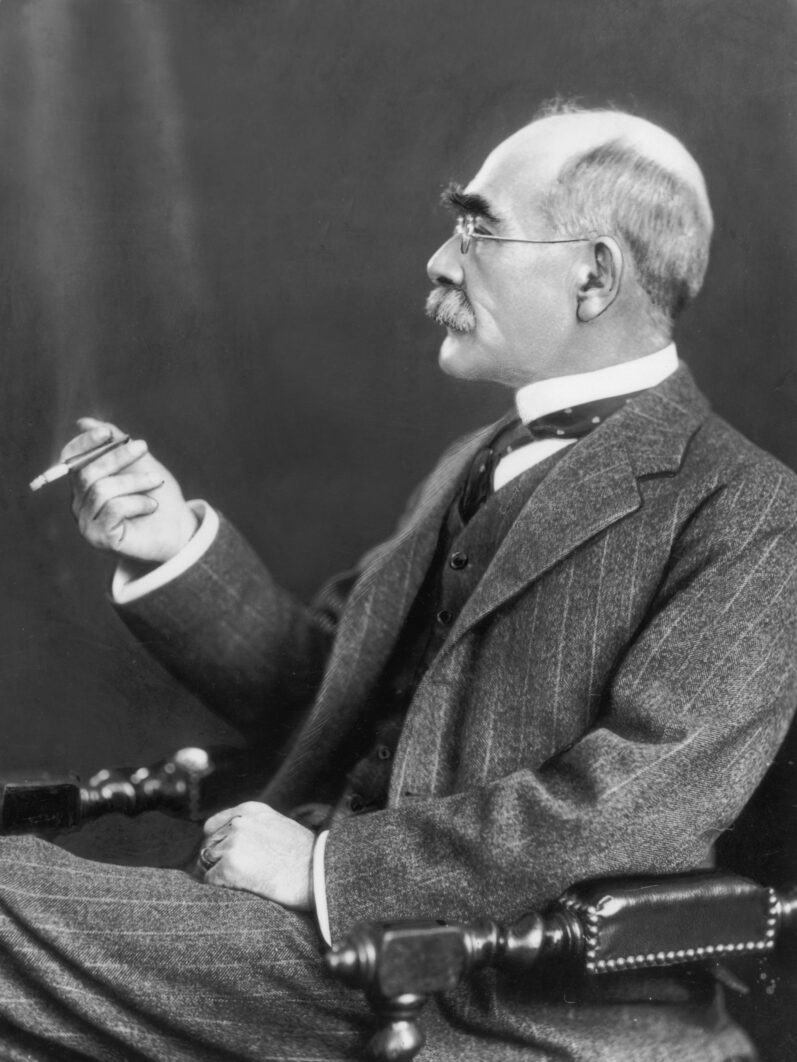
Joseph Rudyard Kipling was born in Bombay on December 30, 1865. He was exiled to England as a young boy but moved back later in life when it was decided he would not be able to attend Oxford. Kipling wrote many poems and short stories such as “The Law of the Jungle” which would go on to become “The Jungle Book”. In all of Kipling's writings he would use racist metaphors and other language to show how “uncivilized” people of color are. In most cases he would talk about Indian, Egyptian and Filipino people. In 1899 he released one of his most offensive poems “The White Man's Burden”. The poem was quickly responded to and parodied with other poems such as “The Brown Man’s Burden” written by Henry Labouchere and “The Black Man's Burden: A Response to Kipling" written by H.T Johnson; which were both written in the same year as the poem.
One of the many writers that Kipling looked up to and revered was Mark Twain. Kipling would go on an expedition across the United States, starting in California and ending in New York, to meet Twain. They would sit, converse and smoke cigars together. At the time Twain was very fond of Kipling. However, 2 years after Kipling published “The White Man’s Burden”, Twain would release a response entitled “To The Person Sitting In Darkness” which was a factual satire of the colonization mission. While Kipling never responded it is believed that he was embarrassed by his idol's response.
Sources:
If: The Untold Story of Kipling’s American Years