A timeline of events significant to both early and late Romantic writers.
Timeline
Table of Events
| Date | Event | Created by |
|---|---|---|
| 1773 | Anna Laetitia Larkin Barbauld writes "On The Pleasure Derived from Objects of Terror"Anna Barbauld, born in 1743, wrote her essay, "On the Pleasure Derived from Objects of Terror" in 1773. This essay on the terrifying genre of horror in Gothic literature, argues that the strange and terrifying often thrills the reader and makes them unaware of any pain or horror. Barbuald writes, "Passion and fancy cooperating elevate the soul to its highest pitch; and the pain of terror is lost in amazement." (Barbauld) However, we are not always enjoying the process of experiencing the terrifying, Barbauld writes, but the terror leads us to want to know and discover more. She says a child who is entranced while listening to a horror story is like "a poor bird which is dropping into the mouth of the rattlesnake." (Barbauld) Furthermore, all readers of horror stories are like these children who have no choice but to be curious of what may happen next. |
walker smith |
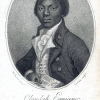
| Jan 1789 | Interesting Narrative of the Life of Olaudah Equiano
Articles |
David Rettenmaier |
| 5 May 1789 to 10 Nov 1799 | French Revolution
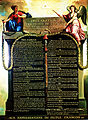
On 5 May 1789, the Estates-General, representing the nobility, the clergy, and the common people, held a meeting at the request of the King to address France’s financial difficulties. At this meeting, the Third Estate (the commoners) protested the merely symbolic double representation that they had been granted by the King. This protest resulted in a fracture among the three estates and precipitated the French Revolution. On 17 June, members of the Third Estate designated themselves the National Assembly and claimed to represent the people of the nation, thus preparing the way for the foundation of the republic. Several pivotal events followed in quick succession: the storming of the Bastille (14 July), the approval of the Declaration of the Rights of Man and of the Citizen (26 August), and the march on Versailles that led to the enforced relocation of the royal family to Paris (5-6 October). These revolutionary acts fired the imagination of many regarding the political future of France, and, indeed, all of Europe. The republican period of the revolution continued in various phases until 9-10 November 1799 when Napoleon Bonaparte supplanted the government. ArticlesDiane Piccitto, "On 1793 and the Aftermath of the French Revolution" |
David Rettenmaier |
| 5 Sep 1793 to 27 Jul 1794 | Reign of Terror
On 5 September 1793, the National Convention, France’s ruling body from 1793 to 1795, officially put into effect terror measures in order to subdue opposition to and punish insufficient support for the revolution and the new regime. From the autumn of 1793 until the summer of 1794, thousands of people across the country were imprisoned and executed (including the Queen) under the ruthless leadership of Maximilien Robespierre. The guillotine, particularly the one in Paris’s Place de la Révolution, served as the bloody emblem of the fear tactics that began to manifest themselves first in the formation of the Committee of Public Safety (6 April 1793) and subsequently in the implementation of the Law of Suspects (17 September 1793). The Terror ended on 27 July 1794 with the overthrow of Robespierre, who was guillotined the next day. ArticlesDiane Piccitto, "On 1793 and the Aftermath of the French Revolution" |
David Rettenmaier |
| 1795 | Hannah More writes "The Sorrows of Yamba: or The Negro Woman's Lamentation"Born in 1745, Hannah More, in 1795, wrote her poem "The Sorrows of Yamba: or The Negro Woman's Lamentation". This poem tells the story of Yamba, a black woman who was taken from her home in Africa by white men to be sold into slavery overseas. Yamba was a wife and a mother, and, while on the ship being taken as a slave, her baby dies, which Yamba takes as a blessing. Yamba's slave master was so cruel that Yamba wished for death and strayed "Far from home", saying "Death itself I long'd to taste, Long'd to cast me in and Die" (More). "Upon the strand" Yamba encounters a missionary, who shares the gospel with her, which Yamba is greatly impacted by (More). She quickly understands the power of forgiveness, and writes that all the slaves whose master's beat them are also sinful. So, Yamba states, "So forgive your Massas' sin" (More). Yamba concludes that even when she is on the brink of death, her hope is that Africa will one day be free. This poem exemplifies the abolitionist movement happening at the time; and, More, as a female writer, was especially impactful, even as she faced opposition. |
Emilie Nannenga |
| 10 Sep 1797 | Death of Wollstonecraft
ArticlesAnne K. Mellor, "On the Publication of A Vindication of the Rights of Woman" |
David Rettenmaier |
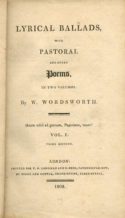
| 1802 |
|
David Rettenmaier |
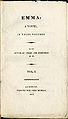
| Dec 1815 | Emma
ArticlesAnne Wallace, “On the Deceased Wife’s Sister Controversy, 1835-1907″ |
David Rettenmaier |
| Apr 1823 | Joanna Baillie, A Collection of Poems
Articles |
David Rettenmaier |
| 1832 | Establishment of Reform BillThe establishment of the Reform Bill was introduced into the House of Commons in 1832 of March by John Russell. It worked to reform the electoral system of Britain. This occurred by the redistribution and changing conditions of the franchise. From the establishment of the Reform Bill, English boroughs lost their representation, there was the creation of new English boroughs, and the total electorate increased. With these new changes, the new middle classes were able to share in the responsibility of the government. This then worked to lessen the political agitation. This relates to the Romantic period because it began the shift to freedom from authority and tradition. For example, votes were given to workingmen. There was an increase in equalized presentation. With that, there was also a redistribution of seats. Overall, the loss of the representation of the English boroughs led to the freedom from authority and tradition. Image Source: Encyclopedia Britannica. Britannica, The Editors of Encyclopaedia, 28 May. 2022,https://www.britannica.com/event/Reform-Bill. Accessed 29 January 2023. Article Source: Encyclopedia Britannica. Britannica, The Editors of Encyclopaedia, 28 May. 2022,https://www.britannica.com/event/Reform-Bill. Accessed 29 January 2023. |
Rebekah Pinedo |
| 1 Aug 1834 | Slavery Abolition Act 1833This act abolished all slavery in all British dominions in 1833. The Act however did not go into effect until August 1st, 1834. The full bill title was, "An Act for the Abolition of Slavery throughout the British Colonies; for promoting the Industry of the manumitted Slaves; and for compensating the Persons hitherto entitled to the Services of such Slaves". It was passed with Royal assent due to the increasing pressure from abolitionists to abolish slavery. |
London Smith |