

Display Explanation:
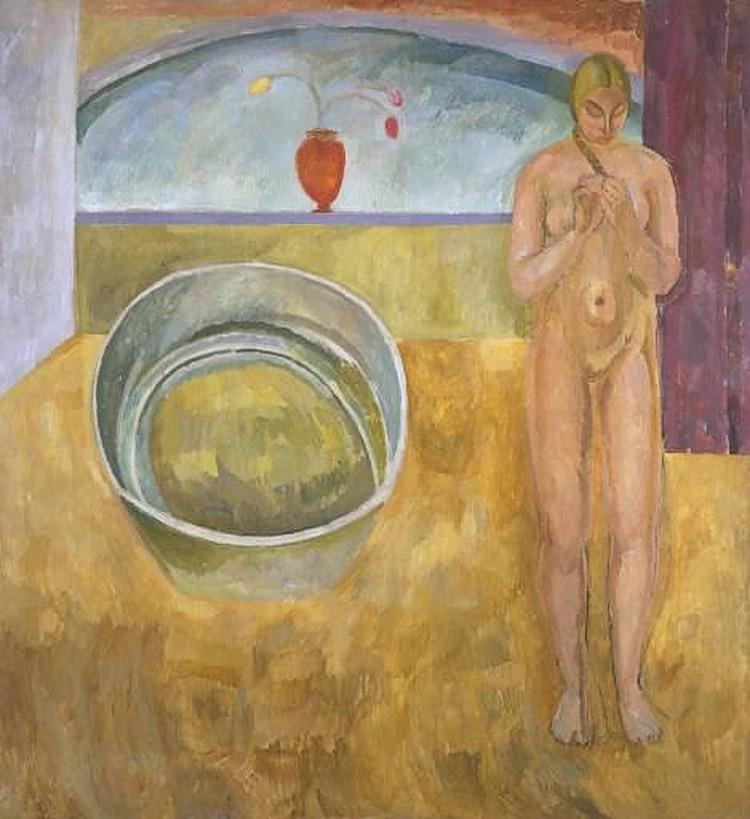
For my display, I envision a small room with its walls and ceiling painted with soft pastel colors and shapes to match the style of the three paintings. I imagine that the three paintings would be arranged each on their own walls of the room with light amber frames, also with information about the piece and a small biography of the painter being written on a plaque next to each painting. I believe that the display would also have warm light shining on each painting and biography to make them pop out against the room's walls; also small trails of painted vines, hair, and waves of water that both link all of the paintings together, but also portray a shared theme amongst them all.
My main intent with my display is to make the viewer experience a similar feeling of comfort and relaxation that all of the women painted feel. In the center of the room, I would include a large circular table that would house plaques of historical analysis and explanations for the many different Women's Rights Movements that were occurring when these pieces of art were painted; also a major part of the display would also be showing audiences how pieces of art like these were viewed differently by conflicting groups when they were introduced to the world. I believe that knowing the full context how the paintings were created and viewed can give someone another reason to appreciate and love the pieces and can lead to a deeper analysis on each painting and their meanings.
Installation Note:
My imagined installation is designed to make the viewer relaxed and comfortable, I believe that this method can make people think about the paintings much more deeply. I also chose this method of display because it matches a shared theme of relaxation that is shared between the three paintings. I believe that giving each painting their own wall and biography would work well in making each art piece both stand out on their own, while the items and threads painted on the wall would subtly draw your attention to and connect the art pieces. The circular table in the middle of the room is intended to act as a small glimpse into the era that these pieces were created in and highlight how in even in the most turbulent of times, beautiful and inspiring art can still be created and can even be used to spark a flame in other people to fight for what they believe in the most. I believe that "The Tub', 'Woman Bathing (La Toilette)', and 'Bather Arranging her Hair' should also be viewed and analyzed separately at first, before reading about them and their artists. After the first viewing, I recommend reading about the piece's artist and history, and then analyzing them again. This method of viewing is designed so that a museum guest can create two separate impressions on each piece and hopefully become more interested in theorizing a possible deeper meaning behind them.
[Sources]:
Bell, Vanessa. The Tub. 1917. Tate Museum, London. https://en.wikipedia.org/wiki/Vanessa_Bell#/media/File:The_Tub_(1917).j…
.jpg)
Cassatt, Mary. Woman Bathing (La Toilette). 1890 - 91. Art Institute of Chicago, IL. https://commons.wikimedia.org/w/index.php?curid=57854233.
Renoir, Pierre-Auguste. Bather Arranging her Hair. 1893. National Gallery of Art, Washington, DC. https://www.wikiart.org/en/pierre-auguste-renoir/bather-arranging-her-h…