
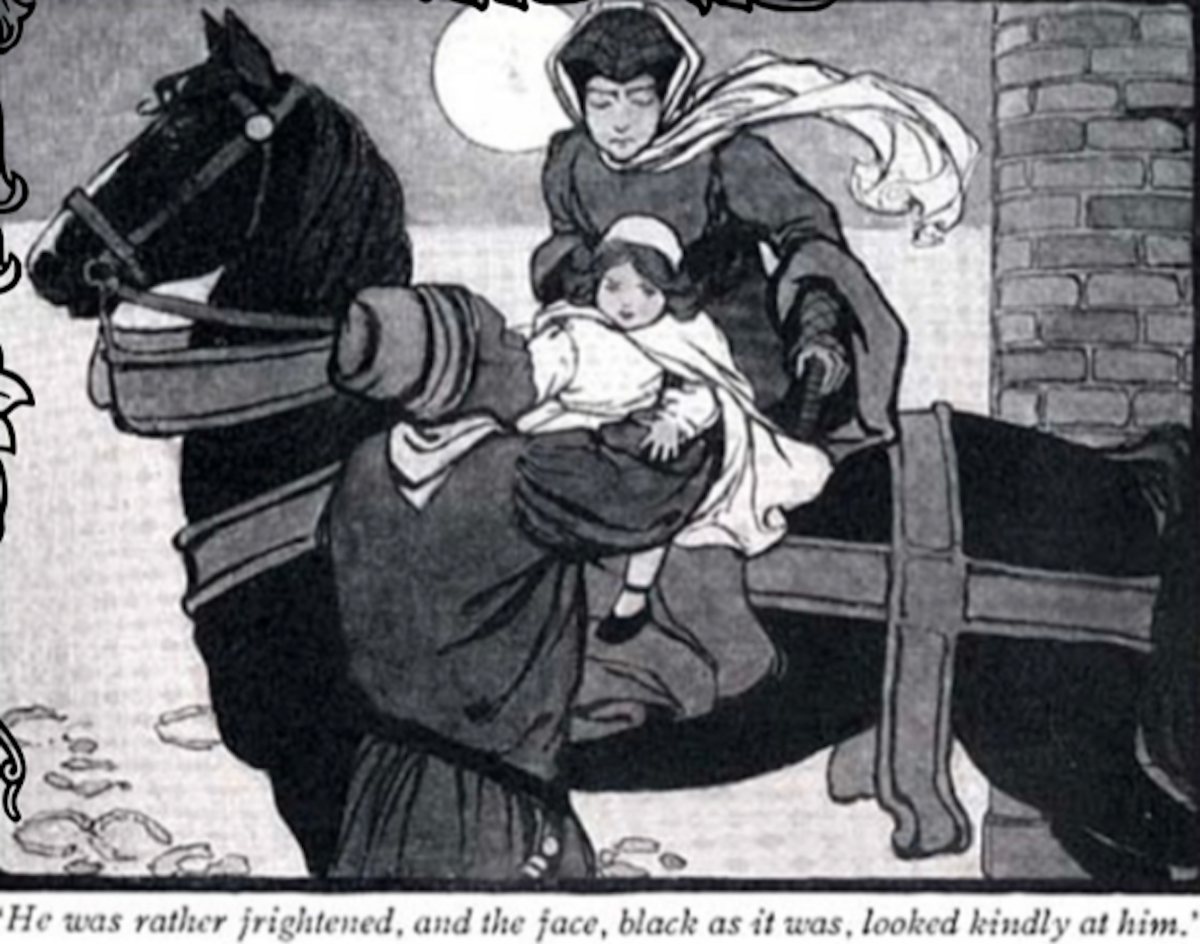
Craik, Dinah Maria Mulock. The Little Lame Prince. Illustrated by Rand McNally, Daldy,
Isbister and Co., 1909. Image description: “He was rather frightened, and the face, black as it was, looked kindly on him.”
In this illustration, we see how the complexities of masculinity take shape. The thieves who bring the child to the tower show an unexpected degree of kindness and empathy—qualities not typically associated with their role or situation. One man in particular, embodies a form of positive masculinity through his gentle care and tenderness. His actions, combined with his racial identity, suggest that masculinity can transcend racial boundaries and challenge traditional norms. This moment of compassion offers a glimpse into a more nuanced and humane form of masculinity and invites us to reconsider how we define and understand masculine behaviour more broadly. By allowing male characters to exhibit these traits, Craik is showing audiences an alternative to the physically strong and stoic masculine ideal that was being portrayed during this period. Male characters in this story challenge typical masculinity and allow for an acceptance of emotional intelligence from men that was often ignored.