A timeline of the events relevant to the Victorian Age.
Timeline
Table of Events
| Date | Event | Created by |
|---|---|---|
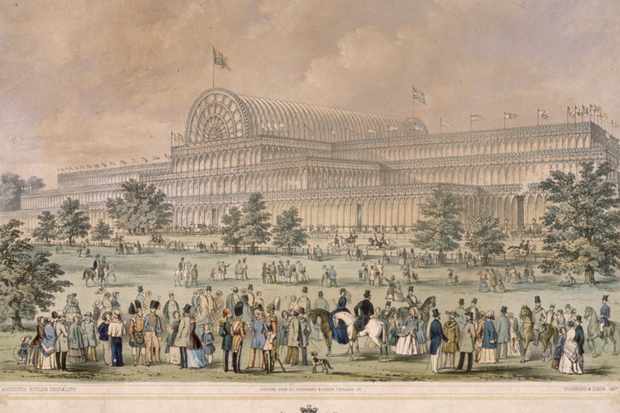
| 1851 |
|
David Rettenmaier |
| May 1781 | Sunday Observance Act
Passage of this Act, formally titled “Act for Preventing Certain Abuses and Profanations on the Lord’s Day, Called Sunday,” had a powerful, repressive effect on British society and culture for more than a century-and-a-half, as noted by both its proponent (Bishop Beilby Porteus) and its many Victorian critics, among them John Stuart Mill in On Liberty. ArticlesChristopher Lane, "On the Victorian Afterlife of the 1781 Sunday Observance Act" |
David Rettenmaier |
| 2 Mar 1815 | Corn Law Act
The Corn Law Act of 1815 prohibited the importation of grain when the prices in the domestic market were high. The Act was repealed on 25 June 1846. Articles |
David Rettenmaier |
| 18 Jun 1815 | Battle of Waterloo
Related ArticlesSean Grass, “On the Death of the Duke of Wellington, 14 September 1852″ Mary Favret, "The Napoleonic Wars" Frederick Burwick, “18 June 1815: The Battle of Waterloo and the Literary Response” |
David Rettenmaier |
| 16 Aug 1819 | Peterloo massacre
Related ArticlesJames Chandler, “On Peterloo, 16 August 1819″ Sean Grass, “On the Death of the Duke of Wellington, 14 September 1852″ |
David Rettenmaier |
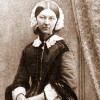
| 12 May 1820 | Birth of Florence Nightingale
ArticlesLara Kriegel, “On the Death—and Life—of Florence Nightingale, August 1910″ Related Articles |
David Rettenmaier |
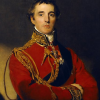
| 9 Jan 1828 | Wellington made Prime Minister
ArticlesSean Grass, “On the Death of the Duke of Wellington, 14 September 1852″ |
David Rettenmaier |
| 9 May 1828 | Sacramental Test Act
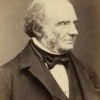
Introduced by Lord John Russell and passed in 1828, the Sacramental Test Act repealed the Corporation Act of 1661 and the Test Act of 1673. Those Acts had required individuals who held municipal, civil, or military office to take communion in the Church of England and to declare that they did not believe in transubstantiation. Initially aimed at keeping Catholics out of public office, these Acts ended up restricting Protestants who were not Anglicans. However, in the century and a half following the passage of the Test and Corporation Acts, the growing social power of Dissenting religions in England gradually eased those strictures. Articles |
David Rettenmaier |
| 1 Apr 1829 | Roman Catholic Relief Act
The Catholic Relief Act of 1829 allowed Catholics to become Members of Parliament and to hold public offices, but it also raised the property qualifications that allowed individuals in Ireland to vote. The passage of the Catholic Relief Act marked a shift in English political power from the House of Lords to the House of Commons. The Act was led by the Duke of Wellington and passed despite initially serious opposition from both the House of Lords and King George IV. ArticlesRelated ArticlesCarolyn Vellenga Berman, “On the Reform Act of 1832″ Sean Grass, “On the Death of the Duke of Wellington, 14 September 1852″ |
David Rettenmaier |
| 15 Sep 1830 | Opening of Liverpool & Manchester Railway
Articles
|
David Rettenmaier |
| 29 Aug 1833 | Slavery Abolition Act
Articles |
David Rettenmaier |
| 29 Aug 1833 | Factory Act
ArticlesRelated Articles |
David Rettenmaier |
| 9 Sep 1833 to 25 Jan 1841 |
|
David Rettenmaier |
| 14 May 1842 | The Illustrated London News launched
Articles |
David Rettenmaier |
| 24 May 1843 | Pusey’s Oxford Sermon on the Eucharist
ArticlesLaura Mooneyham White, "On Pusey's Oxford Sermon on the Eucharist, 24 May 1843" Related ArticlesBarbara Charlesworth Gelpi, "14 July 1833: John Keble's Assize Sermon, National Apostasy" |
David Rettenmaier |
| 9 Oct 1845 to 9 Oct 1845 |
|
David Rettenmaier |
| 25 Jun 1846 | Repeal of Corn Laws
ArticlesAyse Çelikkol, "On the Repeal of the Corn Laws, 1846" Related ArticlesPeter Melville Logan, “On Culture: Matthew Arnold’s Culture and Anarchy, 1869″ |
David Rettenmaier |
| Feb 1848 | Roman villa discovered
Articles |
David Rettenmaier |
| 4 Mar 1848 | Illustrated London News's "The French Revolution"
ArticlesJo Briggs, “1848 and 1851: A Reconsideration of the Historical Narrative” |
David Rettenmaier |
| 14 Sep 1852 | Death of Wellington
ArticlesSean Grass, “On the Death of the Duke of Wellington, 14 September 1852″ |
David Rettenmaier |
| 28 Mar 1854 | Britain declares war against Russia
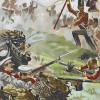
On 28 March 1854, Britain declares war against Russia, thus entering the Crimean War. Image: Russo-British skirmish during Crimean War (anonymous plate). This image is in the public domain in the United States because its copyright has expired. In 1854, in defense of the Turks and of British access to eastern trade routes, Britain entered into war in the Crimea. The two-year campaign represented the nation’s first major military engagement since the end of the Napoleonic wars. It thus sheds light on mid-Victorian attitudes towards national identity, offering a counter-narrative to views of the 1850s dominated by responses to the Great Exhibition of 1851. As literary and visual representations of the war reveal, reactions to this conflict were both more nuanced and more ambivalent than our preconceptions about Victorian jingoism might anticipate. ArticlesStefanie Markovits, "On the Crimean War and the Charge of the Light Brigade" |
David Rettenmaier |
| 10 Jun 1854 | Sydenham Crystal Palace opens
Opening of the Crystal Palace at Sydenham on 10 June 1854. Image: The Crystal Palace on fire (30 November 1936; author unknown). This image is in the public domain in the United States because its copyright has expired. The resurrection of the Crystal Palace of 1851 in its new setting at Sydenham, with an expanded architectural complex and enhanced functional brief, embodies the Victorian emphasis upon visuality as a means of acquiring and conveying knowledge. In addition, the new Crystal Palace was shaped by prevailing concepts of rational recreation and beneficial commerce that insisted that private and public interests could be simultaneously satisfied and lead to a stronger nation and even Empire. ArticlesAnne Helmreich, "On the Opening of the Crystal Palace at Sydenham, 10 June 1854" Related ArticlesAudrey Jaffe, "On the Great Exhibition" Aviva Briefel, "On the 1886 Colonial and Indian Exhibition" Anne Clendinning, “On The British Empire Exhibition, 1924-25″ |
David Rettenmaier |
| 1855 |
|
David Rettenmaier |
| 1855 |
|
David Rettenmaier |
| 17 Nov 1855 | Men and Women
Robert Browning’s Men and Women was a major literary event in nineteenth-century Britain in its shift of emphasis from the private, atemporal and generally non-social genre of Romantic lyricism to the ironies and enigmas of human awareness and social relationships, to dramatic action in human speech. His men and women are presented overtly as speech acts, grounded in psychological and cultural origins, and in the ambiguities of linguistic processes. Readers often found Browning’s mode of writing obscure, but its methods and implications consistently engage with other domains of Victorian thought, in religion, biology, and psychiatry. While the status of this publication was not widely understood at the time, its value is manifest in its reception history, in the discussion and representations that constitute its ongoing existence as a historical event. Articles |
David Rettenmaier |
| 25 May 1857 to 25 Jun 1857 | Pre-Raphaelite Art Exhibit
Related Articles |
David Rettenmaier |
| 9 Jul 1860 | Nightingale Home and Training School for Nurses opened
ArticlesLara Kriegel, “On the Death—and Life—of Florence Nightingale, August 1910″ Related Articles |
David Rettenmaier |
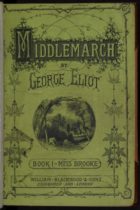
| 1871 to 1872 | George Eliot Published Middlemarch George Eliot's Middlemarch: A Study in Provincial Life published in 8 installments, 1871-72.
Articles |
David Rettenmaier |
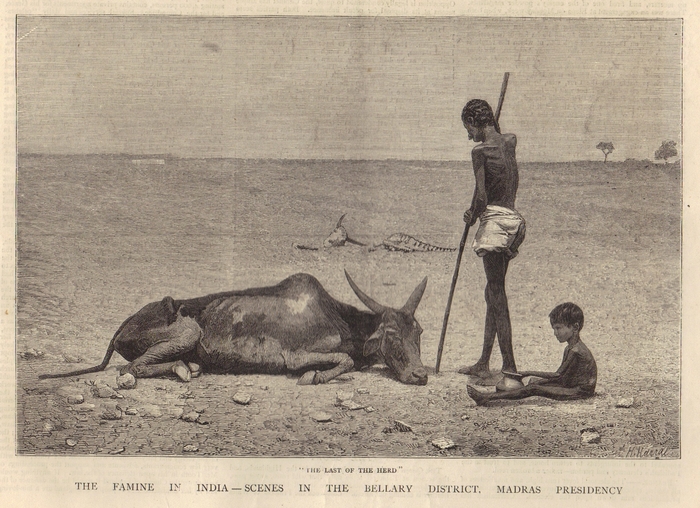
| 1 Jun 1876 to 1 Jun 1878 | Great Indian Famine of 1876–78[caption id="attachment_3198" align="aligncenter" width="700"] These estimates are taken from: Related Articles |
David Rettenmaier |
| 4 May 1886 to 14 Oct 1886 | Colonial and Indian Exhibition
Featuring extravagant displays from British colonial holdings, the exhibit was organized by the Prince of Wales as an “imperial object lesson” in England’s power and grandeur. ArticlesAviva Briefel, "On the 1886 Colonial and Indian Exhibition" Related ArticlesAudrey Jaffe, "On the Great Exhibition" Anne Helmreich, "On the Opening of the Crystal Palace at Sydenham, 10 June 1854" Anne Clendinning, “On The British Empire Exhibition, 1924-25″ Erika Rappaport, “Object Lessons and Colonial Histories: Inventing the Jubilee of Indian Tea” |
David Rettenmaier |
| 1 Nov 1887 | Bloody Sunday
ArticlesFlorence Boos, “The Socialist League, founded 30 December 1884″ |
David Rettenmaier |
| 27 Jun 1894 | End of the 3-Volume Novel
ArticlesRichard Menke, “The End of the Three-Volume Novel System, 27 June 1894″ |
David Rettenmaier |