
Display Explanation:
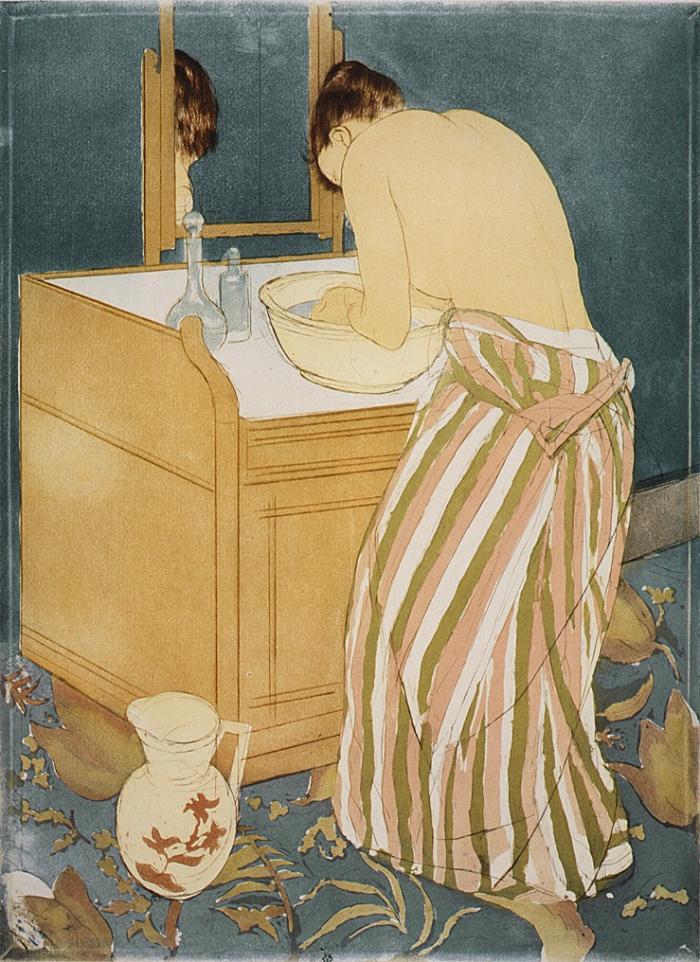
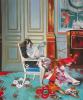
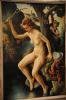
Once you enter the installation the spectator will immediately notice that the floor and ceiling are mirrors. Mirrors reflects the surface appearance of people. However, it also reflects the truth. Meaning that the visitor will have to see themselves regardless of where they look. In that way, the spectator is able to see both their outer and inner persona. Once they do and read the brochure provided by the gallery, they will be able to unintentionally think about their persona’s and it will become an experience for them through art. They will follow the signs and see the first painting: Woman Bathing (La Toilette) 1890-91, by Mary Cassatt. They will feel connected with this image because it is a very personal experience that they do every day. Then they will continue to the next painting: Girl Reading in a Salon, 1876 by Giovanni Boldini. Once again the spectator will feel identified. Finally, they will see the last painting: Susanna and the Elders, 1938 by Thomas Hart Benton. The first thing they will notice is a woman bathing alone and then see the two men staring at her. Invading her privacy and taking away the pureness of the act. I decided to put the images in this order because I want the visitor to leave the installation with a message: society defines gender as an influencial factor that affects every aspect of one’s experience and people show their true self when alone. At the end of the installation the spectator will pass through a dark hallway and find themselves in front of a grand mirror with the words “Who are you, really?” written in bold letters on it.
Installation Note:
These three images suggest that women's bodies and agency over themselves create an internal questioning of how society defines gender as an influencial factor that affects every aspect of one’s experience. All three paintings displayed in this installation demonstrate the instance when women are their trueselves since all three moments are private and intimate. Women are shown doing quotidian experiences: basic, everyday activities (bathing and reading). Women have a side of themselves they show to the world ( how they act around people) but these paintings portray the vulnerable side. They have an everyday routine which involves being themselves when they lack company and expectations to accomplish. The whole criticism of the idea that women should serve men and never evolve above that role is forgotten through the first two paintings: Woman Bathing (La Toilette) by Mary Cassatt and Girl Reading in a Salon by Giovanni Boldini because they show human beings doing something genuine and feeling comfortable doing so. The first two images portray how the social phenomena that constantly indicates unrealistic goals for women, leads them to adopt two personas; one for society and one for themselves. Nevertheless, in Susanna and the Elders by Thomas Hart Benton, two men are quietly observing the women take a bath, which makes her look like a victim of men and society's expectations and malice. Stereotypes about women’s role in society will never end but artists do capture good and bad aspects of these sterotypes through their work. I hope you enjoy the installation.
MLA Entries:
Cassatt, Mary. Woman Bathing (La Toilette). 1890-91. Metropolitan Museum of Art. Accessed February 21, 2022. https://commons.wikimedia.org/w/index.php?curid=57854233.
Boldini, Giovanni. “Girl Reading in a Salon, 1876.” Www.wikiart.org, 1 Jan. 1876, Accessed February 21, 2022. https://www.wikiart.org/en/giovanni-boldini/girl-reading-in-a-salon-1876
Benton hart, Thomas. Susanna and the Elders, 1938, Fine Arts Museums of San Francisco, Accessed February 21, 2022.
https://biblioklept.org/2017/07/21/susanna-and-the-elders-thomas-hart-benton/