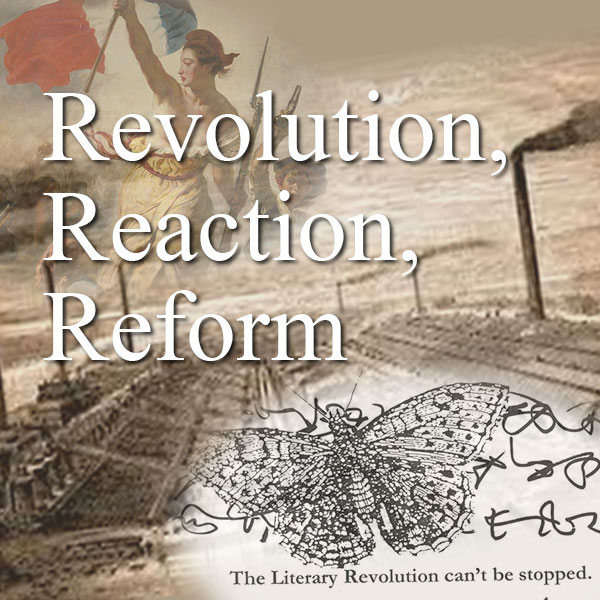
 British Literature II: Revolution, Reaction, Reform examines British literature from the late eighteenth century to the present, a period that witnessed the American and French Revolutions, slave revolts such as the Haitian Revolution, a “revolution in female manners,” the Industrial Revolution, the twentieth-century revolutionary wave in Europe, as well as World War I and World War II, and, of course, artistic revolutions. We will consider how the authors and literary works of this period might be reacting to change, advocating for reform, or participating in literary revolutions—whether revolution is understood in the sense of “revolving” or of “revolting,” going full circle to return to a previous (more perfect?) time or experiencing/effecting a great alteration or rupture.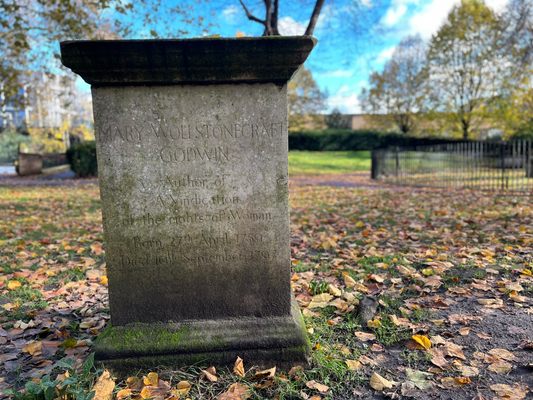
Old St. Pancras, located in what is now the London Borough of Camden, was an area with rich historical and cultural significance during the late 1700s. This ancient church, believed to be one of the oldest sites of Christian worship in England, was a focal point of the area. The churchyard became a notable burial site, with many prominent figures interred there, including Mary Wollstonecraft. Her grave became a site of pilgrimage for admirers of her work and those inspired by her advocacy for women's rights.
“Tomb of Mary Wollstonecraft.” Atlas Obscura, 15 Feb. 2024, www.atlasobscura.com/places/tomb-of-...
more