
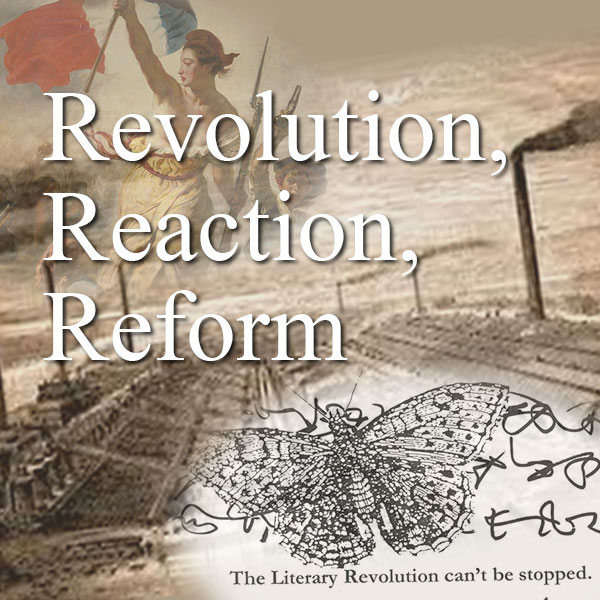
 British Literature II: Revolution, Reaction, Reform examines British literature from the late eighteenth century to the present, a period that witnessed the American and French Revolutions, slave revolts such as the Haitian Revolution, a “revolution in female manners,” the Industrial Revolution, the twentieth-century revolutionary wave in Europe, as well as World War I and World War II, and, of course, artistic revolutions. We will consider how the authors and literary works of this period might be reacting to change, advocating for reform, or participating in literary revolutions—whether revolution is understood in the sense of “revolving” or of “revolting,” going full circle to return to a previous (more perfect?) time or experiencing/effecting a great alteration or rupture.
Highgate, located in North London, was a notable area during the late 1700s. Highgate was known for its fine houses and wealthy residents. It attracted noblemen and rich merchants who built grand homes with splendid views over London. The name "Highgate" comes from the tollgate that was established at the highest point of the neighborhood. Highgate in the late 1700s was a blend of historical charm, affluent residences, and evolving urban development, making it a significant part of London's landscape.

A P Baggs, Diane K Bolton, M A Hicks, R B Pugh. "Hornsey, including Highgate: Highgate". A History of the County of Middlesex: Volume 6, Friern Barnet, Finchley, Hornsey With Highgate. Ed. T F T Baker, C R Elrington (London, 1980), British History Online...
more

