
20 Northmoor Road, North Oxford
Tolkien lived here when he wrote the first two volumes of The Lord of the Rings. After the success of the books, Tolkien had to move to a new house due to obsessive fans standing outside his house to gawk and people calling his house at 4 a.m. to ask him questions about the book.

Wolvercote Cemetery, Oxford
Tolkien died on September 2nd, 1973. He was buried at Wolvercote Cemetary with his wife.
Oxford University
Tolkien took a position at Oxford University, where he would eventually give his lecture Beowulf: The Monster and the Critics. While there he also formed a social group called The Inklings, referencing the fact that everyone in the group were writers, with one notable member being C.S. Lewis. Tolkien published several other works during this time, including the poem The Adventures of Tom Bombadil in the Oxford Magazine.
The River Somme
The River Somme is a river in France where the Somme Offensive took place in World War I. Tolkien was a soldier deployed to the front lines of the Somme. After a few months in and out of trenches he was sent home to Britain with Trench Fever.
Zermatt, Switzerland
While on his trip through Switzerland, Tolkien stayed in Zermatt, which is near the Matterhorn mountain. It is thought that the view from where he stayed would eventually serve as the inspiration for the Misty Mountain in The Hobbit.
Cambridge
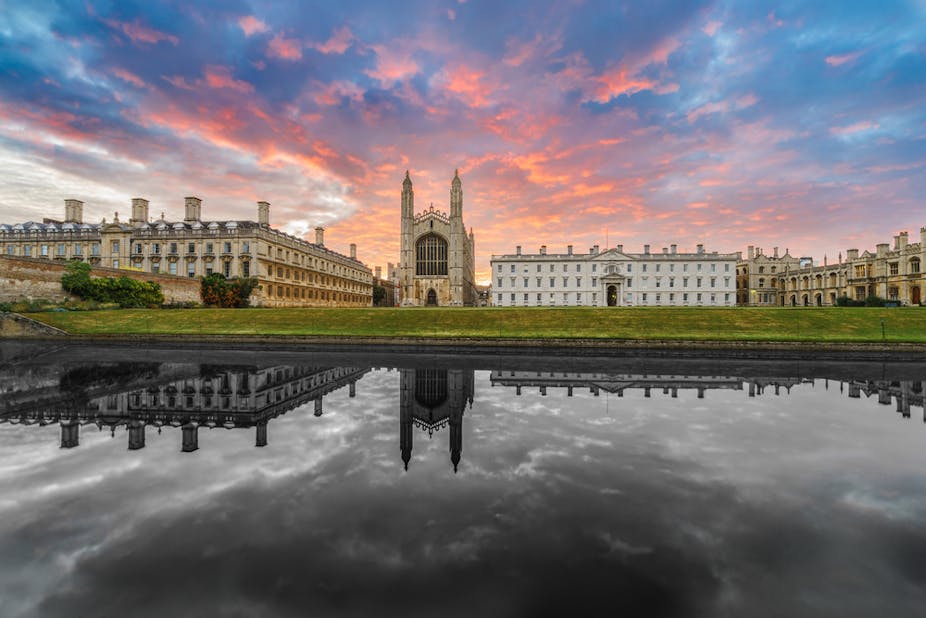
Historically, Cambridge University in Cambridge, England, was generally considered the second-best university in the country, after Oxford, which its founders split from ca. 1209. (Enyclopedia)
Bloemfontein, South Africa
Tolkien was born in Bloemfontein, South Africa. His father and mother moved there before he was born. His father worked as a banker and moved to South Africa as the positions there offered a better chance for promotion. Tolkien was born here on January 3rd, 1892 and his family moved back to Britain after his father died in 1896.
Significant Places in Tolkien's Life
The following are significant places to Tolkien's life and writing.