
-
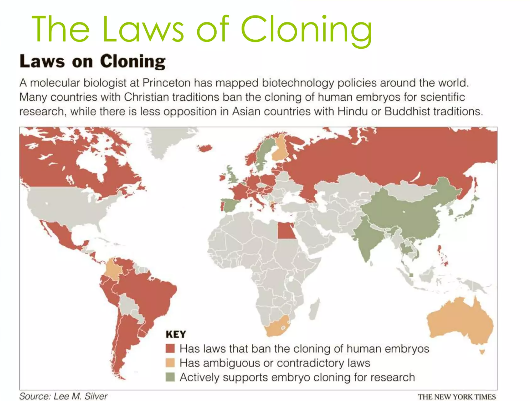
When the birth of Dolly the Sheep was announced in 1996, it confirmed that cloning was possible and sparked a widespread fear over the possibility of human cloning. The global backlash was an immediate response. In the US, President Bill Clinton issued a five year ban on federal funding for any research involving human cloning. Additionally, several other nations began to ban or severely restrict cloning, but they were mostly focusing on human cloning while leaving the door open for "therapeutic cloning" which is creating embryos to research. This marked the global attempt to set a moral boundary that is completely opposite of that we see in the novel.
-
This rush to issue a ban in 1997 shows that the world viewed the creation of cloned humans as something to fear, and something morally and ethically violating and took immediate action to prevent it. In Never Let Me Go, the cloning happens in the late 1990s. The existence of the clones represents a scenario where a narrative society contrasted and ignored the real-world 1997 reactions to cloning both legislative and socially. This suggests the novel served to show what a world might look like with the existence of clones not through a scientific lens, but through a perspective that shows human, ethical, societal, and emotional functions of a world with clones.
- Textual Information:
Roos, Dave. “How Dolly the Sheep Sparked Debate over Cloning | HISTORY.” HISTORY, 25 Sept. 2024, www.history.com/articles/dolly-the-sheep-cloning.
Image: Human cloning with an emphasis on reproductive cloning | PPTX