 Kazuo Ishiguro's novel Never Let Me Go takes place in an alternative "England, late 1990s". While some elements of setting are richly imagined, there is little connection to the places and events of the "real world." This timeline invites us to explore historical events that might have informed Ishiguro's writing or our interpretation of Never Let Me Go.
Timeline
Table of Events
| Date | Event | Created by |
|---|---|---|
| 1810 | Industrialization of Printing PressWhile creativity is a general phrase and humans have always shown forms of creativity throughout history, there were some huge events in the past that have supported human creativity and made it more widespread. One example of a historical even like this is the industrialization of the printing press. The use of the printing press, “a machine that obtained an impression by rolling paper attached to a cylinder over the bed of type,” has made the incorporation of creativity into regular, everyday life easy as it could print 1,100 papers per hour. With the widespread use of the printing press, it became easy to print many pieces of work in a shorter period of time. This ultimately allows more people to access the different works and encourages creativity by allowing people to push the boundaries of their own ideas. Because creativity was something that’s very important and valued within the novel “Never Let Me Go” by Kazuo Ishiguro, I think the industrialization of the printing press is a very important event in history that relates to the novel. Colclough, Joanna. “Printing Newspapers 1400-1900: A Brief Survey of the Evolution of the Newspaper Printing Press | Headlines & Heroes.” Webpage. The Library of Congress, 21 Apr. 2022, https://blogs.loc.gov/headlinesandheroes/2022/04/printing-newspapers-140.... Koenig’s double cylinder press made specially for the London Times from A Short History of the Art of Printing in England by Arthur C. J. Powell, 1877. From HathiTrust. |
Spencer Cobb |
| 1939 to Summer 1945 | Bombing of Hiroshima and Nagasaki
Overall, while there aren't many references to war in Never Let Me Go, Ishiguro has done multiple other books about life in Japan after the bombings of Hiroshima and Nagasaki. These books include An Artist of the Floating world, When We Were Orphans, and A Pale View of Hills. While this doesn't specifically show up in Never Let Me Go, deeper research on the life and works of Ishiguro reflect his attention to detail and subtle elements of fate and belonging in this work. Sources: Britannica: Atomic Bombings of Hiroshima and Nagasaki Aftermath of Bombings of Nagasaki and Hiroshima (Previous Knowledge about WWII from High School History Classes). |
Aubrey Costello |
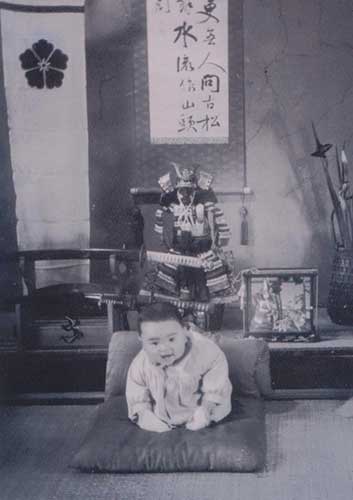
| The start of the month Winter 1954 to The start of the month Winter 1954 | Ishiguro's BirthOn November 8th, 1954, the author Kazuo Ishiguro was born in Nagasaki, Japan. Shizuko Michida and Shizo Ishiguro are his parents. Ishiguro and his family continued to live in Nagasaki for the next 5 years of his life. The 1950s in Japan were very different. In the year 1945, Japan had surrendered to end World War II, so the years following were years of change and rebuilding. Even up to the year Ishiguro was born, Japan was still reconstructing. In the picture inserted at the bottom is a picture of him as a baby. You can see that the home he was born in is a traditional Japanese home. This specific home was a 3-generation home with his grandfather being the head of the family at the time. The famliy had been in the city of Nagasaki when a bomb dropped. Ishiguro went to kindergarten there in Nagasaki, also where he learned hiragana. Hiragana is one of the main writing systems used in Japan. At the age of 5 in April 1960, Ishiguro, his parents, and his oldest sister moved to Britain. They moved to England because of his father, who got a job there as an oceanographer with the British government. Kazuo would not return to Japan until 1989, when he was 35, but he always kept the Japanese culture and traditions alive and in memory. His early years in Japan and Britain after World War II have a connection to the the book in the aspect of mortality, progress and humanity. His move to Britain could have given him the outsider feeling that also plays a part in the book with them always getting treated differently.
This image is in Nagasaki of baby Ishiguro in 1955
https://www.ebsco.com/research-starters/literature-and-writing/kazuo-ish... https://www.nobelprize.org/prizes/literature/2017/ishiguro/biographical/ https://www.theatlantic.com/photo/2014/03/japan-in-the-1950s/100697/ |
Allyn Reyes |
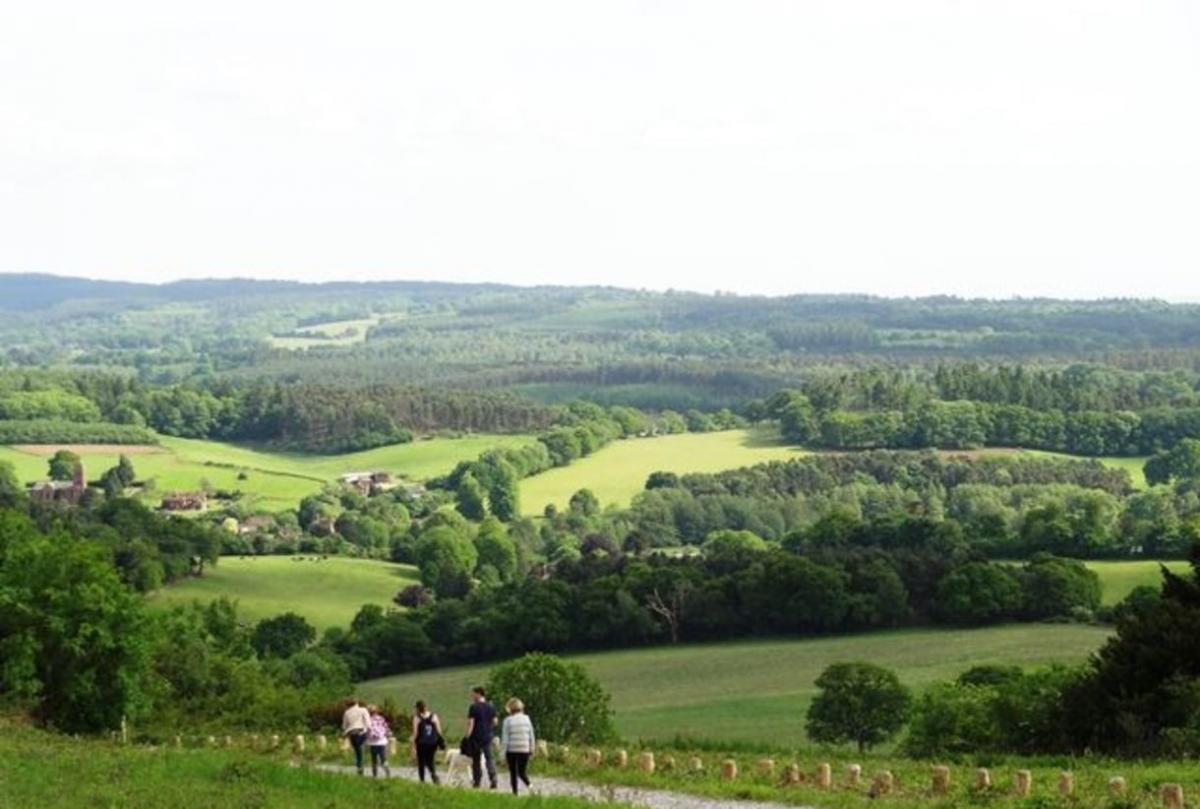
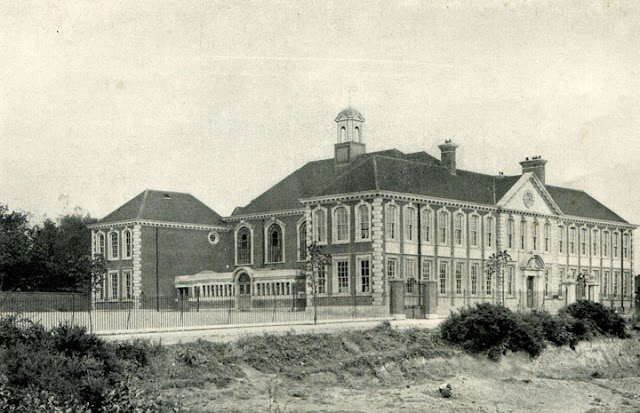
| 1965 | Kazuo Ishiguro Attends Woking County Grammar SchoolKazuo Ishiguro started to attend Woking Grammar School for Boys located in a small county in Surrey, England in 1965 when he was 11. He continued his education at this traditional English school until he went onto university at the University of Kent at Canterbury, and later at University of East Anglia to obtain his master’s in creative writing. Woking Grammar School was not a boarding school like depicted in Never Let Me Go, however its influence lives on throughout the novel. The novel starts with children being raised in a boarding style school, where they are raised from infancy into young adulthood, very similar to Ishiguro's own experience with traditional schools in England. Never Let Me Go 's staple indoctrination of the clones fits withing the strict regimen of a proper English school. Additionally, Surrey, England is part of the countryside and is very rich in natural landscape which is often depicted in Kathy H.'s driving thought monologues. This scenery provides a contrast of beauty and life in a world where clones are being harvested for their vital organs. We see images of Ishiguro's childhood of school and the countryside through Kathy's eyes as she contemplates life, love and the most precious time. Knowing this gives almost an additional layer of creepy dystopian reality knowing her fantastical descriptions were based off real tangible places.
Image: Surrey Hills from Visit Surrey website. Image Source: https://www.visitsurrey.com/listing/newlands-corner/40472101/
Image: Woking Grammar School in 1918 Image Source: https://wokinggrammar.blogspot.com/2012/09/ Works Cited: “Newlands Corner.” Visit Surrey, https://www.visitsurrey.com/listing/newlands-corner/40472101/. Accessed 18 Nov. 2025. Nobel Prize. “Kazuo Ishiguro – Biographical.” NobelPrize.org, The Nobel Prize, www.nobelprize.org/prizes/literature/2017/ishiguro/biographical/ Temple, Clive. “Woking County Grammar School for Boys: September 2012.” Woking County Grammar School for Boys Blog, 30 Sept. 2012, wokinggrammar.blogspot.com/2012/09/
|
Abby Green |
| 3 Dec 1967 | First Human Heart TransplantDr. Christiaan Barnard performed the world's first human-to-human heart transplant in South Africa. The recipient was Louis Washkansky, a 53-year-old grocer, and the donor was 25-year-old Denise Darvall, who had been declared brain dead after a car accident. This pioneering surgery revolutionized organ transplantation and raised profound ethical questions about organ donation, medical advancement, and the definition of death. This event provides historical context for the novel's exploration of organ "donation" and the medical establishment's treatment of donors, making it highly relevant to understanding the dystopian medical system Ishiguro creates. The transplant marked humanity's ability to extend life through organ replacement, but Ishiguro's novel asks: at what moral cost? It introduced the concept of "brain death" as the medical/legal standard for organ harvesting, eerily paralleling how the clones are kept alive through multiple donations until they "complete." The novel essentially asks: what if the organ shortage that followed Barnard's breakthrough was "solved" by creating purpose-built humans? This historical event provides the medical foundation for the novel's dystopian premise. |
Grace Testerman |
| 3 Dec 1967 | First Human Heart TransplantDr. Christiaan Barnard performed the world's first human-to-human heart transplant in South Africa. The recipient was Louis Washkansky, a 53-year-old grocer, and the donor was 25-year-old Denise Darvall, who had been declared brain dead after a car accident. This pioneering surgery revolutionized organ transplantation and raised profound ethical questions about organ donation, medical advancement, and the definition of death. This event provides historical context for the novel's exploration of organ "donation" and the medical establishment's treatment of donors, making it highly relevant to understanding the dystopian medical system Ishiguro creates. The transplant marked humanity's ability to extend life through organ replacement, but Ishiguro's novel asks: at what moral cost? It introduced the concept of "brain death" as the medical/legal standard for organ harvesting, eerily paralleling how the clones are kept alive through multiple donations until they "complete." The novel essentially asks: what if the organ shortage that followed Barnard's breakthrough was "solved" by creating purpose-built humans? This historical event provides the medical foundation for the novel's dystopian premise. |
Grace Testerman |
| The start of the month Jan 1970 to The end of the month Dec 1979 | Doing “What Feels Good”As many people know, the 1970s were the decade for doing everything possible to feel good in the moment. This meant that the decade was filled with pop culture such as music, drugs, arcades, cars, sex, and many other activities people enjoyed. This whole idea of making the most of the moment consumed a very popular span of time in history and will continue to go down as one of the craziest and most fun decades. LorLinda. “Pop Culture in the Seventies.” HubPages, 27 Mar. 2020, https://discover.hubpages.com/education/pop-culture-in-the-seventies. “70s Disco Era Collage: A Fusion of Glitz & Glamour | AI Art Generator.” Easy-Peasy.AI, https://easy-peasy.ai/ai-image-generator/images/70s-disco-era-collage-gl.... Accessed 18 Nov. 2025. |
Spencer Cobb |
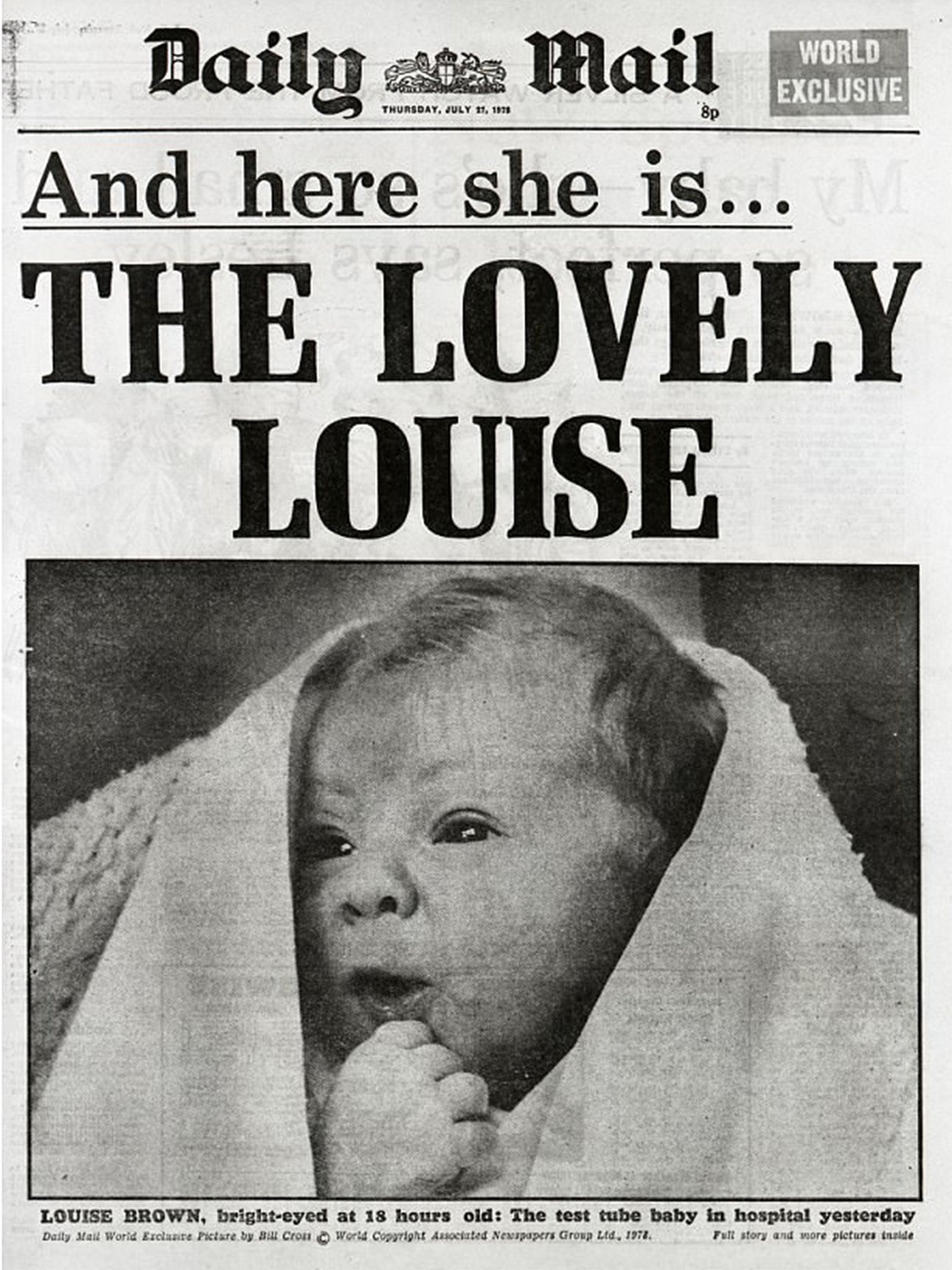
| 25 Jul 1978 | The First "Test Tube" Baby- Louise Brown
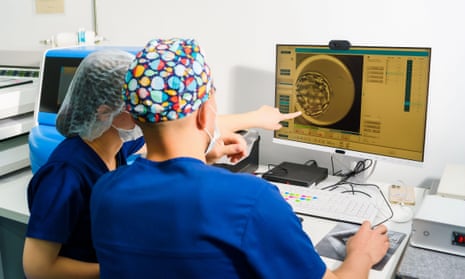
Louise Brown, newborn, Oldham General Hospital, 1978. Photo. Licensed as Public Domain/CC0 via Wikimedia Commons. On July 25th, 1978 Louise Brown was born via c-section as the world's first baby conceived through in-virto fertilization. IVF was created as a treatment for women who were unable to conceive naturally. This offered real medical hope for those facing infertility during a time with very few options. Her birth was unlike anything the world had seen before. This moment marked a shift in history: the idea that human conception could be created in a lab rather than through a traditional biological process, and it started to become more widely accepted. In Never Let Me Go, we see Kathy yearn for motherhood. Kathy imagines holding a baby at a young age, rocking the infant back and forth to the music of her cassette tape. While she is too young to completely understand why she is experiencing these feelings she allows herself to sit in the comfort of the moment, like it is an instinct. Then we find out the heartbreaking reality that Kathy can never have children becuase of the biological engineering of the clones. That moment connects to the history of IVF which began as a way to give people who struggle with infertility a chance at having a child. In today's world reproductive technology was created to bring new life and new possibilities to families. However in the novel, similar scientific advances are used to limit life instead of expanding it. IVF represents science trying to solve the pain of infertility, while Kathy's infertility shows science being used to create it in order to control who can reproduce. These two uses of reproductive science, when looked at side by side, show how the same kind of technology that can offer hope in our world becomes a source of loss in Kathy's world. Looking back at the scene with this information in mind, it makes the idea of longing for a child feel exponentially more tragic. Citations: Kamel, Remah Moustafa. “Assisted Reproductive Technology after the Birth of Louise Brown.” Journal of Reproduction & Infertility, vol. 14, no. 3, July 2013, pp. 96-109. PubMed Central, https://pmc.ncbi.nlm.nih.gov/articles/PMC3799275/. Dow, Katharine. “Looking into the Test Tube: The Birth of IVF on British Television.” Medical History, vol. 63, no. 2, Apr. 2019, pp. 189-208. PubMed Central, https://pmc.ncbi.nlm.nih.gov/articles/PMC6434648/.
|
Emily Moore |
| 1 Jul 1979 | Sony Releases the WalkmanJuly 1, 1979 (launched in Japan as the "Walkman") Released in the UK/US in 1980 as the "Sony Soundabout" (US) and "Sony Stowaway" (UK), though the "Walkman" name was soon adopted globally. It was the first portable stereo cassette player that let people listen to music through lightweight headphones while walking/moving. Kathy's most treasured possession is her cassette tape of "Never Let Me Go" by Judy Bridgewater, which she plays repeatedly on her tape player. The Walkman revolutionized how people experienced music privately and personally - just as Kathy uses her tape for private emotional comfort and identity formation. The Walkman didn't just play music; it created personal, portable worlds - perfect for understanding how Kathy uses her cassette tape as an anchor for her identity and humanity in a world that denies both. The technology was already nostalgic by the late 1990s, adding another layer to the novel's meditation on things (and people) becoming obsolete. https://www.ebsco.com/research-starters/history/sony-introduces-walkman |
Grace Testerman |
| 1980 to 1990 | Illegal Organ Trade1. In the 1980s and 1990s, illegal international organ trade was exposed as a growing event. This trade involved wealthy patients buying kidneys and other organs from donors in poverty and less developed nations. Journalism is what initially exposed the event and reports such as those in the UK press in the early 1990s described disturbing cases where vulnerable people were financially influenced into selling their organs for a fraction of the price the patient paid. This raised many questions about global health inequality and the exploitation of the poor to solve the organ shortage crisis in Western parts of the world. 2. The illegal organ trade is an example of the real-world horror that the novel represents as the clones and donor program as a whole. The novel's society creates the clones as a controlled program for a supply of organs, which allows the "normal" people in society to feel morally and ethically safe, knowing they aren't relying on exploited poor, foreign donors. This helps highlight the critique that Ishiguro is making that the creation of clones, no matter how "safe", is just a substitution of one form of exploitation of the poor for another of the genetically engineered. The problem of a lack of organ donors being solved through the exploitation of the marginalized remains the ethical issue and fear. 3. Textual Information: Crane, Jenny. “Organ Donation, a Cultural History.” People’s History of the NHS, peopleshistorynhs.org/encyclopaedia/organ-donation-and-the-nhs/. Image: Harrowing photos capture the chilling underground world of the illegal organ trade - Mirror Online |
Kennedy Williams |
| 1990 to 2003 | Human Genome Project
The Human Genome Project (also known as the HGP) was started in 1990 and ended in 2003. The main goals of this project were to try and decipher the structure of DNA sequencing and how DNA sequences affected different individuals' health. This project was multifaceted and included researches from across the globe. There was a large amount of involvement of gathering and interpreting data from countries like Canada, Nigeria, the United States, the United Kingdom, and Japan. Scientists who were involved in looking at the comparative geonomics found that there were between 20,000 to 25,000 ways that DNA could be sequenced which allowed for a huge breakthrough in medical advancements. Scientists and doctors were able to see which sequencing of genes caused diseases and were able to start modifying genes to help people with the diseases. While there were many people who were in favor of this project, there were also many individuals who were not. Dr. Martin Rechsteiner from the University of Utah, School and Medicine, was a driving figure in the effort to stop the funding for this project. He-as well as 55 other scholars from 33 different universities-thought that the project was a waste of funding and thought that the research as, “immoral.” While many scientists, professors, and politicians sought out to stop the project from happening, it prevailed. While doing research for this project, I found that there were a lot of different medical advancements being made during this time. The HGP was one of many that focused on health and the modification of the human body. While many individuals were excited about these medical findings, a lot of people were very frightened as well. After reading Never Let Me Go, I think a lot of audiences can see the reflection of both the fear, excitement, and wonder reflected in Ishiguro’s piece. I believe that this novel reflects the essences of the medical advancements being made during this time and show how it was impacting people. I think that this research also helped me realize why Ishiguro structed the novel the way he did and why the characters are so complex with issues surrounding their personal autonomy and said state of, “exsolution,” from what we as the audience understand to be natural life. Sources: Human Genome Project - Genome Mapping, DNA Sequencing, Genomics | Britannica Human Genome Project Fact Sheet |
Aubrey Costello |
| Aug 1990 | Human Fertilisation and Embryology Act 1990 (HFE Act 1990)
In the UK, the rules and legal framework pertaining to embryos, fertility treatments, and reproductive technologies are referred to as HFE, or Human Fertilization and Embryology. It became significant in the 1990s when IVF and other forms of assisted reproduction became more widespread. The goal of HFE law was to make sure that generating and preserving embryos while employing them happened safely, ethically, and with proper consent. The 14-day limit, which permitted researchers to examine embryos for no more than two weeks following fertilization, was one well-known regulation. Approval is essential to reproduction and research since the 1990 law also required written approval from anyone whose sperm, eggs, or embryos were utilized. The HFE method strikes a compromise between technological advancements and moral considerations regarding the treatment of human embryos. I feel like knowing this helps with the spooky, haunted vibe of the book and helps me to understand just how deep the story really is. https://www.legislation.gov.uk/ukpga/1990/37/contents https://www.hfea.gov.uk/about-us/how-we-regulate/ HFEA
|
Makayla French |
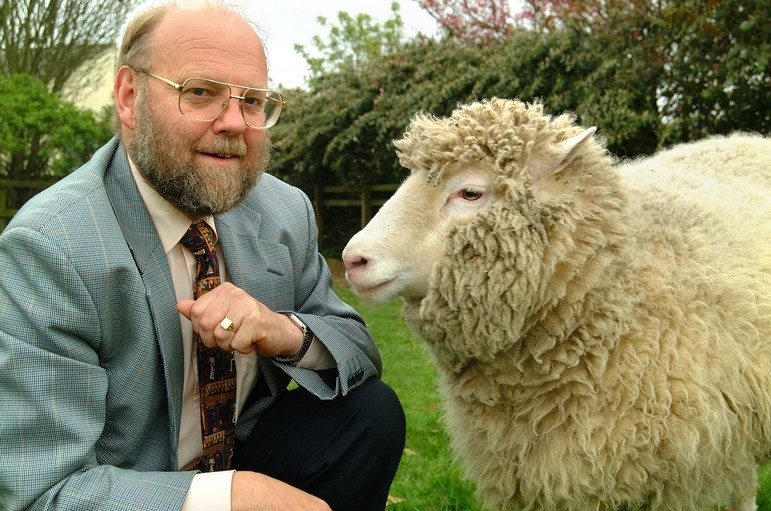
| 5 Summer 1996 | First Mammal Ever Cloned - Dolly the SheepDolly the Sheep, sweetly named after Dolly Parton, was a revolutionary development in the science community, with her being the first ever mammary clone. Born from the Roslin Institute's research team led by Professor Sir Ian Wilmut, Dolly's birth was life-altering, as her cells that she was developed from were taken from adult cells which were originally believed to only have one purpose, not containing enough genetic material to clone, yet her birth proved that science was incorrect. She was born via surrogate mother and went on to live a relatively normal life, even having six baby lambs, but eventually developed health issues. Due to inexplainable reasons, was aged faster than her living age, and developed a disease caused by a virus that caused tumors in the lungs and was terminal. After this discovery, it was decided that Dolly should rest forever and not awaken from her anesthetics to diminish any suffering she could obtain by living. The novel, Never Let Me Go, is centered around the lives of clones, ultimately created for scientific purposes also. Their existence is controversial, just like Dolly's. After the announcement of Dolly being created, the Roslin Institute received upwards of 3,000 calls to discuss the dangers and excitement that revolve around cloning. The discomfort the public felt in regard to Dolly's arrival is like that of Madam and Miss Emily's curiosity and disgust they both discussed around their personal feelings, as well as the general public’s opinions regarding clones. This alludes to the novel well, making it feel more and obtainable, while still being dystopian. Never Let Me Go revolves around the questions of existence and purpose, while also questioning morality in multiple overlays including developments in the science community.
Dolly the Sheep with Professor Sir Ian Wilmut Photo Source: https://www.nms.ac.uk/discover-catalogue/the-story-of-dolly-the-sheep Sources: National Museums Scotland. “The Story of Dolly the Sheep.” National Museums Scotland, nms.ac.uk, www.nms.ac.uk/discover-catalogue/the-story-of-dolly-the-sheep. University of Edinburgh, The Roslin Institute. “The Life of Dolly.” The Roslin Institute, Royal (Dick) School of Veterinary Studies, 2 Sept. 2024, vet.ed.ac.uk/roslin/about/history/dolly/facts/life-of-dolly
|
Abby Green |
| Summer 1997 to Summer 1997 | Global Cloning Debate Post-Dolly
|
Kennedy Williams |
| 4 Sep 1998 | Google Is Founded
Google LLC. Google 2015 Logo (vector version). SVG file, Wikimedia Commons, 13 February 2016, upload.wikimedia.org/wikipedia/commons/2/24/Google_2015_logo.svg. Public Domain. As we all know, love, and use every day, Google's founding changed the way people interact with information forever. Larry Page and Sergey Brin, two Stanford students, founded Google on September 4th, 1998 in a garage in California. For the first time, everyday users could now type in a question and instantly find answers from all over the world. This was a huge shift for how people learned, communicated, and understood the world around them. While Ishiguro was writing this book, the rise of instant knowledge swept the world. However, in Never Let Me Go, the students at Hailsham were isolated and only given the information that the guardians allowed them to have access to. The real world was expanding curiosity and independent learning, while the clones lived in a controlled environment where the truth about their lives was hidden from them. I think that this shows just how shocking their isolation really is, and it makes the novel feel more real when you think about how things could've looked differently if they had access to the same information as the outside world. Citation: Hart, David. “On the Origins of Google.” National Science Foundation, 17 Aug. 2004, www.nsf.gov/news/origins-google. |
Emily Moore |
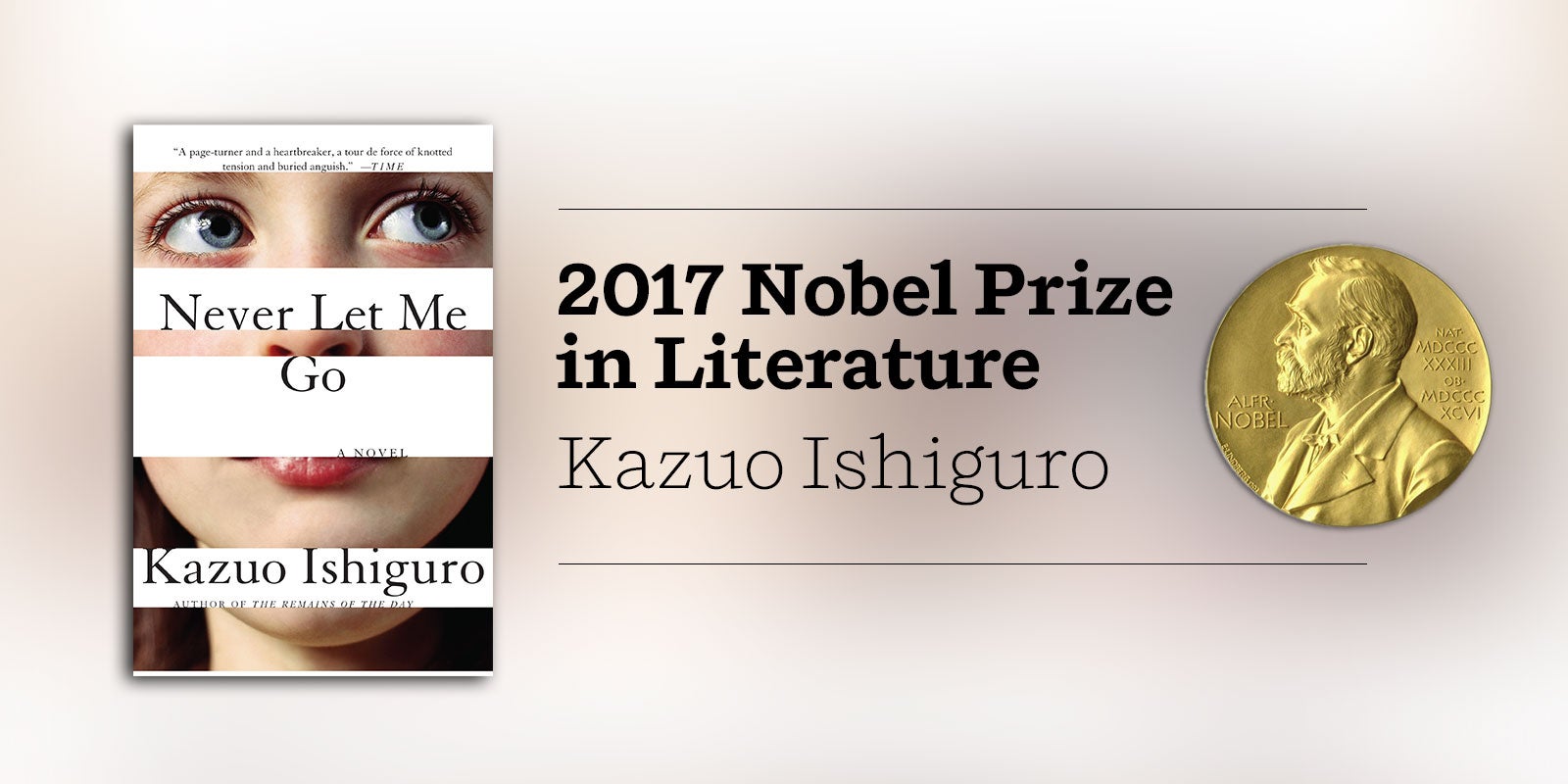
| The start of the month Autumn 2017 to The start of the month Autumn 2017 | Ishiguro wins the Nobel Prize in LiteratureOn October 5th, 2017, Kazuo Ishiguro won the Nobel Prize for Literature. The process of winning the Nobel Prize is that no person can nominate themselves, the names of the nominees can not be revealed until 50 years later, all nominations are collected in one archive, and process all starts in September of each year. It can range from academies, university professors, scientists, and previous Nobel prize laureates. The categories for a Nobel prize are the Nobel prize in physics, chemistry, medicine, literature, economic sciences, and lastly the Nobel peace prize. The Literature prizes are chosen by the Swedish Academy. Ishiguro was chosen for his illusory sense of connection with the world, his exploration of memory, time, and his concern for human dignity. What really surprised me was that he was not really chosen because of the book Never Let Me Go. The book was one of the major works that helped his career and influenced the Swedish Academy's decision to pick him. I found this important for the timeline in the book because it shows how good the book is. Ishiguro winning the Nobel Prize shows his talent, and it shows the literary importance. Ishiguro made a masterpiece that is emotional and shows moral visions at the same time.
https://www.britannica.com/art/Winners-of-the-Nobel-Prize-for-Literature... https://www.nobelprize.org/the-nobel-prize-organisation/prize-awarding-i... |
Allyn Reyes |