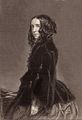
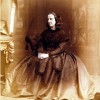
Sense of cultural shifts in women's roles over course of 19th century.
I have pre-filled our Timeline with a few items from the COVE database, just to get things started (Frankenstein, Manchester Suffrage League, etc.) but YOU should add YOUR group work as new entries.
-- Dr. H
Timeline
Table of Events
| Date | Event | Created by |
|---|---|---|
| 1760 to 1840 | The Industrial RevolutionDuring the Industrial Revolution, women who did not belong to wealthy families had to join the workforce to help their families maintain their finances. They had no choice, but to defy the gender norms of the 19th century however, this had still come at a price. Women tended to receive between one-third to half the salary that a man would receive This pay gap became an area of exploitation for employers to hire women in exchange for cheap labor. Women were also subjected to long work hours ranging from 11-12 hours sometimes going without food or a break. Women often found themselves in textile mills, cotton factories, or coal mines in dangerous conditions and watched their male counterparts be beaten for not doing well enough though they were spared. We see this in our image depicting a woman working on a Power Loom Weaving in 1835 at a cotton factory . Upon their return home, the women were expected to maintain the role of being the homemaker adding to their tiring and stressful day. These women were forced to make their own living unlike Jane and Catherine who found a man to marry and live off of their wages If the loves of these women were a novel like the three that we’ve covered this semester, their story would not be considered a “silly novel” by George Eliot. In her work, 'Silly Novels by Lady Novelists', Eliot describes the typical “...heroine is usually an heiress, probably a peeress in her own right, with perhaps a vicious baronet, an amiable duke, and an irresistible younger son of a marquis as lovers in the foreground, a clergyman and a poet sighing for her in the middle distance, and a crowd of undefined adorers dimly indicated beyond….” (Eliot,1) These women more often than not were not from the high status of being an heiress or peeress rather someone whose family was barely able to financially make ends meet. They also were away for so many hours a day that they did not get the chance to fraternize with potential suitors the way we saw our female main characters in Northanger Abbey, Jane Eyre, and Mill on the Floss. For more info: https://foundations.uwgb.org/womensroles/#:~:text=Throughout%20the%20In… Bibliography Burnette, Joyce. “Women Workers in the British Industrial Revolution.” EH.net, https://eh.net/encyclopedia/women-workers-in-the-british-industrial-rev…. Eliot, George. “'Silly Novels by Lady Novelists.'” Westminster Review, October 1856. “Women’s Roles in the Industrial Revolution.” Foundations of Western Culture: Industrial Revolution. |
Maria Gatto |
| 1 Jan 1818 | Frankenstein; or, The Modern PrometheusMary Shelley releases the first edition of Frankenstein. The more popular modern version was released on October 31, 1831, which includes the introduction that explains the novel's origins at Villa Diodati. Frankenstein follows many tenets of Romanticism and takes much influence from Milton's Paradise Lost, which is quoted to open to novel and is read by Frankenstein's monster during the events that take place. The novel focuses on a number of themes, one of the most prominent of which is the idea of "nature against nurture" (itself a key idea of Shelley's mother Mary Wollstonecraft's Vindication of the Rights of Women). Contrary to thinking in oral or even medieval societies, Romanticism, where characters are unchanging, readers are encouraged to ask the question on what would have happened to the monster had Frankenstein not screamed and ran away from it. The monster shows the ability to be a monster, but it also shows the ability to show empathy and care. The scientist Frankenstein himself worries constantly about the wholly unnatural creature that he has brought into the natural world and what should happen if he gives the monster what it wants - someone to love. Much like the thought of Romanticism that perhaps Satan was the party in the right during Paradise Lost, the monster's growth mentally and emotionally with his own deeply flawed Maker in Frankenstein invites to question the rights of the individual. The vivid descriptions of nature and the thought-provoking themes of the novel make it a standout of the Romantic era and a phenomenal story to this day. |
Mark Magurany |
| 20 Jun 1837 | Queen Victoria's Ascension to the ThroneQueen Victoria’s ascension to the throne (June 20, 1837) marked the beginning of the Victorian Era, where women’s sexuality remained a taboo topic, but women were gradually deemed more and more capable of performing the same tasks that men could. At this time, women were seen as completely at the will of their husbands, and their main function in life was to please their husbands by taking care of all things domestic. Victoria took the throne, unmarried, at 18, and became the most powerful and superior being in the United Kingdom. Upon marrying Albert, her duties changed—it was her duty to be subservient to her husband, but by law, he was required to listen to her. Pregnant women in this era were often looked down upon for being sexual in the first place, and Victoria had to maintain the respect of the people she ruled and those she worked with over the course of her nine pregnancies (Arildsen, 2018). Victoria’s success in both the domestic and political spheres lead to a question of women’s rights and the nature of their sexuality. As prostitution became more of a prominent issue towards the 1860s, women started to hold men accountable for their “sinful” actions—though women were forced to be monogamous to their husbands and only were sexual out of necessity, it was common practice for men to sleep with whoever they wanted, whenever they wanted to (Marsh, n.d.). Women also began to argue that they were capable of working since the Queen herself was able to have and raise nine children all while ruling the nation. Strangely enough, one of the biggest opponents of the women’s liberation movements was Queen Elizabeth herself, who actively spoke out against them by saying that women should not want more rights because they were proven inferior. Regardless, Victoria’s success made her one of the key figures in proving that women could work and have families. By the end of the Victorian Era, women were still widely perceived as inferior to men, but they had been deemed competent enough to do work and many of their “wifely duties” had diminished greatly—most notably in the emergence of a much smaller familial unit (Marsh, n.d.). More Information: http://www.vam.ac.uk/content/articles/s/sex-and-sexuality-19th-century/ http://www.vam.ac.uk/content/articles/g/gender-ideology-and-separate-spheres-19th-century/ |
Grace Coyne |
| 17 Aug 1839 | Act on Custody of Infants
Related ArticlesRachel Ablow, “‘One Flesh,’ One Person, and the 1870 Married Women’s Property Act” Kelly Hager, “Chipping Away at Coverture: The Matrimonial Causes Act of 1857″ Jill Rappoport, “Wives and Sons: Coverture, Primogeniture, and Married Women’s Property” |
David Rettenmaier |
| 1842 | 1842 Mines and Collieries Act (Group 7 - worked on by Joseph Orlando and Selena LaPorta)In 1842, the U.K. Parliament passed the Mines Act. Aimed at alleviating some of the most horrid byproducts of England’s rapid transformation from an agrarian economic model to an industrial economic model, the law disallowed women of any age from seeking employment in the mining industry, and set the minimum age for prospective male employees at ten years old. While the act was a certainly a triumph for social progress as it pertained to the exploitation of children’s labor, it also had the less – intended consequence of denying middle – class and poverty stricken families with multiple sources of income in many cases. Consequently, women in Victorian society were compelled to seek other, less regulated employment opportunities. Among the most common of alternative employment options for 19th century women who had been denied access to the more traditional contemporary labor markets by virtue of industrial – era reform efforts was prostitution. As has been made apparent during our semester studying Victorian female literature, and examining what that literature reveals about the socio – political realities of 19th century life for women, the Victorian society tended to encourage female domestication. It is ironic then that a legislative effort that was intended in part to keep women out of the workforce and encouraged domestication resulted in the widespread embrace by women of a far less puritanical occupation than coal – mining. In a sense, the adoption of prostitution by a considerable number of Victorian women was a definitive rejection of the limitations imposed upon them and the superficial nature of Victorian gender roles. Furthermore, it is emblematic of the larger imperative stressed by progressive female minds of the day for women to attain a sense of financial and practical autonomy, so as not to be wholly dependent on men. It also serves as a pre – cursor to the repudiation of conservative notions regarding female sexuality that would animate the feminist movement of later generations. Sources: https://www.theodysseyonline.com/victorian-era-prostitution https://miningactof1842.weebly.com/the-mining-act-of-1842.html |
Joseph Orlando |
| Summer 1848 to 1848 | The Seneca Falls Convention/ Suffrage . Matthew and JamieThe Seneca Falls Convention which took place in July of 1848 was the first women’s rights convention in the United States of America. The convention set in motion the women’s suffrage movement. It was originally known as the Woman’s Rights Convention. The Seneca Falls Convention fought for the social, civil and religious rights of women. The meeting was held from July 19 to 20, 1848 at the Wesleyan Chapel in Seneca Falls, New York. The convention was organized by Lucretia Mott and Elizabeth Cady Stanton, two abolitionists who met at the 1840 World Anti-Slavery Convention in London. Elizabeth Cady Stanton was an early leader of the women's rights movement, writing the Declaration of Sentiments as a call to arms for female equality. Stanton was an abolitionist and leading figure of the early women's movement. Lucretia Mott was a 19th century feminist activist, abolitionist, social reformer and pacifist who helped launch the women’s rights movement. The women who organized The Seneca Falls Convention also active in the abolitionist movement, which called for an end to slavery and racial discrimination. Until well into the 1800s, women were “disenfranchised.” Their property became that of their husband when they married. Very few had a formal education. Even the wages they earned belonged to their husband and they did not have the right to vote. In comparing The Seneca Falls Convention to a work we read in class, Jane Eyre fits this comparison. In the novel, feminism plays a major role in the everyday life of women in this Victorian Time Period. Women, especially Jane, were held to a higher standard and had to fit the criteria for the “The ideal Victorian Woman” and were suppressed if they did not fit this idea of how women were meant to look and act. In the following years the right for women’s rights for freedom continued and after many years of struggling for rights, in 1920 women finally achieved the right to vote. In comparing another work to feminism, slavery, and The Seneca Falls convention, “The Runaway Slave at Pilgrim’s Point” by Elizabeth Browning Barrett portrays the life of women, more specifically black enslaved women, and how they were treated during the mid 1800’s. The poem depicts the lives of enslaved women during this time period regarding the problems and abuse they faced both physically and mentally. This just shows that during this time period, the English were thinking about slavery in America. Call for Suffrage at Seneca Falls. (n.d.). Retrieved November 16, 2020, from http://www.crusadeforthevote.org/seneca-falls-meeting History.com Editors. (2017, November 10). Seneca Falls Convention. Retrieved November 16, 2020, from https://www.history.com/topics/womens-rights/seneca-falls-convention Seneca Falls and Suffrage. (n.d.). Retrieved November 16, 2020, from https://www.womenshistory.org/resources/lesson-plan/seneca-falls-and-su… |
Jamie Romano |
| circa. 1849 | Tuberculosis as a Fashion Statement: Group IV - Science/Medicine/Technology“Consumption, I am aware, is a flattering malady.” Charlotte Bronte, 1849. When tuberculosis, commonly known as consumption, swept across Britain in the mid-19th century, the disease brought more than just a medical transformation to Victorian women. The 1840s represented a peak in the tuberculosis epidemic, causing its victims to slowly wither away with pale skin and thin frames as their appetites slowed and the infection of the lungs worsened. The disease became romanticized by upper class women who sought to replicate the thinness of patients with tight corsets set on their lower waists, and to achieve the rosy skin of the infected by applying bright red makeup to enhance the cheeks and the lips. Exposed collar bones and wide eyes, indications of weight loss and a low-grade fever, now represented the aesthetic fashion choice of respectable women. Tuberculosis even demonstrated class status since females of the upper class were more prone to delicate health and fragile beauty, and strong muscles or coarse skin were indicative of a lower-class woman. This “consumptive-chic” or “tubercular chic” appearance shaped Victorian fashion trends, and soon became the ideal of beauty throughout the middle of the century. Not only did consumption shape the fashion trends of the 19th century, the disease also became romanticized within literature as well. Both of Charlotte Bronte’s sisters succumbed to tuberculosis at the end of the 1840s, and the glorification of the sickness plays a vital role towards the end of Jane Eyre’s beginning chapters. To perish from tuberculosis within literature often suggests that the character was a good or godly person, too good to remain a part of the corporeal world. Helen Burns represents an angelic figure in comparison to Jane Eyre’s own angry personality, and her tragic affliction with the disease leaves her saint-like in the reader’s eyes. Helen’s heavenly disposition and trust in God portrays her as a good and devout character even in death, and her withering body at the end of her life suggests a sense of great peace rather than suffering. By romanticizing women even in sickness, the 1840s Victorian Era created a dangerous expectation that placed women on an even higher pedestal than ever before. Not only are they domestic goddesses within the home, they are now saints in death. The explosion of the tuberculosis beauty ideal, as well as its Christian appearance in literature, demonstrates a feminine standard that portrayed women as infallibly good. Consumption flattered its victims physically and launched a nationwide trend for more than a decade, glorifying a malady through class position and gender. Bibliography Meier, Allison. “How Tuberculosis Symptoms Became Ideals of Beauty in the 19th Century.” Hyperallergic, 29 Dec. 2017, hyperallergic.com/415421/consumptive-chic-a-history-of-beaty-fashion-disease/. Mullin, Emily. “How Tuberculosis Shaped Victorian Fashion.” Smithsonian.com, Smithsonian Institution, 10 May 2016, www.smithsonianmag.com/science-nature/how-tuberculosis-shaped-victorian-fashion-180959029/. “Tuberculosis Became the Victorian Standard of Beauty.” HistoryCollection.com, 12 Sept. 2018, historycollection.com/tuberculosis-became-the-victorian-standard-of-beauty/. Additional Link: https://www.youtube.com/watch?v=V9sdGVyY1B4 |
Francesca Vultaggio |
| circa. 1849 | The Founding of Bedford College for Women (1849)(Group 2) Education for women during the 19thcentury was rare, but evolving. In the early 19thcentury in England, about 60% of women were illiterate. This had much to do with the lack of formal education opportunities for women, as instead women often learned specific boast-worthy skills, like drawing, playing piano, etc., instead of receiving an actual meaningful education. This injustice in terms of education is brought up in Mary Wollstonecraft’s A Vindication of the Rights of Women, which was originally published in 1792 and in which Wollstonecraft directly addresses the stark difference between education of women and men and how women were at an extreme disadvantage. She pointed out how women's education had no promise or emphasis on futurity and instead was solely about attracting suitors. The inequality of education is also pointed at in Charlotte Bronte's Jane Eyre, in which Jane recounts her years at Lowood's school for girls. Jane says, “My world had for some years been in Lowood: my experience had been of its rules and systems; now I remembered that the real world was wide, and that a varied field of hopes and fears, of sensations and excitements, awaited those who had courage to go forth into its expanse, to seek real knowledge of life amidst its perils.” (Bronte pg. 101) From this, we see that her time in education is considered seperate from "real knowledge" and world experience. We know Jane received education to be a governess, but did not have much opportunity past this. By the 19thcentury, people began becoming a bit more proactive in terms of education for women, and many positive turning points for women’s education in England occurred. In 1849, Elizabeth Jesser Reid founded Bedford College, which is one of the earliest records of a higher education college for women in the United Kingdom. Before this, colleges in England were only made available to male students, denying women the ability of higher education. The forming of the college was considered revolutionary and radical because it extended past previous educational training of women to be governesses. The opening of the college marked women’s opportunity for thorough education to prepare them for their actual independent futures and possible careers- increasing both culture and literacy for women in the 19thcentury. The founding of the college does pay respects to Wollstonecraft’s call for women’s education reform. Though the college started out small, it soon expanded vastly and became a part of the University of London. George Eliot, author of Mill on the Floss, was among one of Bedford College’s first students. After the college was founded in 1860, the national illiteracy rate among women in England had decreased from 60% to 40%, showing how the creation of higher education positively affected the women of the 19thcentury. More Information: https://youtu.be/vkJJFX8Qn90 https://www.oxford-royale.com/articles/history-womens-education-uk/#aId… Bibliography: “A History of Women's Education in the UK.” Oxford Royale Academy, 27 Jan. 2020, www.oxford-royale.com/articles/history-womens-education-uk/. Brontë, Charlotte. Jane Eyre (Penguin Classics). Penguin, 2011. Editors of Encyclopedia Britannica. “University of London.” Encyclopædia Britannica, Encyclopædia Britannica, Inc., 2013, www.britannica.com/topic/University-of-London. Oldfield, Sybil. “Reid [Née Sturch], Elizabeth Jesser (1789–1866), Slavery Abolitionist and Founder of Bedford College, London.” Oxford Dictionary of National Biography, 2020, www.oxforddnb.com/view/10.1093/ref:odnb/9780198614128.001.0001/odnb-978…. Wollstonecraft, Mary. A Vindication of the Rights of Women. CreateSpace Independent Publishing Platform, 2016. |
Julia Timpone |
| 15 Nov 1856 | Aurora Leigh
ArticlesMarjorie Stone, “The ‘Advent’ of Aurora Leigh: Critical Myths and Periodical Debates” |
David Rettenmaier |
| 1857 to 1857 | The Matrimonial Causes Act of 1857Group 3 Marriage Entry 2 During the nineteenth century, obtaining a divorce was difficult and frowned upon in society. The Matrimonial Causes Act of 1857 helped men and women obtain divorces but the process was still unequal. In the article, “Marriage in the 19th century,” John Simkin notes: “The Matrimonial Causes Act of 1857 gave men the right to divorce their wives on the ground of adultery. However, married women were not able to obtain a divorce if they discovered that their husbands had been unfaithful.” The only grounds a woman could obtain a divorce on was by proving that her husband had been unfaithful AND cruel. This imbalance made marriage a societal convention that leaned toward male authority and domination. In 1857, Parliament believed that wives who committed adultery could break families by introducing offspring from an affair which made their offense of adultery more serious than men’s. This excuse played upon the reproductive elements of women which they sought to believe should act as a deterrent for women. Men did not have to abide by these beliefs and could break the contract of their marriage by having clandestine affairs. The legality and economics of marriage favored men which never fared well for women. This complex presentation of divorce within 19th century marriage law is strongly presented in Jane Eyre through Mr. Rochester and Bertha. Mr. Rochester, though legally married to Bertha, seeks both a relationship and marriage with Jane Eyre. Bertha, his lawful wife, is confined in a locked room on the third floor of Mr. Rochester’s house, with no interaction with anyone other than her caregiver Grace Poole. While Bertha is trapped within cruel conditions, her husband seeks new relationships and love, both of which would fulfill the Matrimonial Causes Act of 1857 as grounds for her divorce. Yet, the act has not yet been passed and so she is confined to this permanent isolation and unable to ever escape her marriage. Even so, Brontë makes sure to depict Bertha as a savage and insane character, who acts more animalistic than human. Brontë states, “What it was, whether beast or human being, one could not, at first sight, tell: it grovelled, seemingly, on all fours; it snatched and growled like some strange wild animal…” (Brontë 338). This depiction of Bertha may have served to only further Brontë’s commentary on gender inequality by portraying Bertha in such a way to further oppress her. Unsurprisingly, researcher Kate Summerscale notes how medical manuals of the time contributed women’s sexual desire to insanity. Perhaps then Brontë was not merely making Bertha the image of a “madwoman” but instead creating the married woman who has all the reasons to become divorced and be free of the tyrannical rule of her husband, but is cast aside and labeled insane for simply having the same drive to pursue sexual desires as her husband. Thus, Brontë seems to use Bertha as a symbol of the issues with marriage laws of the time and how even within harsh and cruel conditions, those of which would later be fully legal grounds for divorce, Bertha remains powerless to the power Mr. Rochester has over her and himself. In fact, it is only Jane Eyre herself who refuse to marry Mr. Rochester in accordance with the laws of marriage, permitting only one wife at a time. Brontë’s depiction of the relationship between Mr. Rochester and Bertha therefore shows the issues that pushed 19th century England to establish laws like the Matrimonial Causes Act of 1857. Though this law did not make it possible for any women to obtain a divorce easily, it did start to pave the way for future equality in marriage and served as a direct answer to women’s anxieties concerning marriage as seen almost ten years prior in the work of Charlotte Brontë.
Bibliography Bailey, Martha.“The Marriage Law of Jane Austen's World " JASNA, 2015, http://www.jasna.org/publications/persuasions-online/vol36no1/bailey/ Brontë, Charlotte, and Stevie Davies. Jane Eyre. London: Penguin, 2007. Print. UK Parliament. “Divorce.” UK Parliament, www.parliament.uk/about/living-heritage/transformingsociety/private-liv…; Simkin, John. “Marriage in the 19th Century.” Spartacus Educational, Spartacus Educational, Jan. 2020, spartacus-educational.com/Wmarriage.htm. Summerscale, Kate. “Kate Summerscale: Victorian divorce law rested on a double standard.” Youtube, uploaded by Bloomsbury Publishing, 1 May 2012, https://www.youtube.com/watch?v=lI1pLKw8V3E&feature=emb_title Additional Links: |
Anna Kosofsky |
| 1858 | English Woman’s Journal first published
Articles |
David Rettenmaier |
| 1864 | The Contagious Diseases ActGroup 1: Prostituton and Sexuality In the nineteenth century, England was embracing a shift toward technological jobs following the Industrial Revolution. Women of all ages started to procure jobs outside of their homes, working in factories, textile mills, and more. However, these jobs were incredibly demanding and gave little pay for their work, so many women were forced to turn to prostituton to provide for themselves and their families (Aiken, n.d). As prostitution became more common, so did sexually transmitted diseases. Between 1864 and 1896, three versions of The Contagious Diseases Act were created. The acts allowed the government to “stop and detain any woman identified as a prostitute and force her submission to an examination with the intent of identifying whether the woman in question suffered from a venereal disease” (Aiken, n.d.). Women who were identified as having the disease were held in the hospital until the disease was cured. While some construed this as an attempt to protect women in prostituion, others claimed the forced examinations were a violation of basic human rights. The Ladies’ National Association, led by social reformer Josephine Butler, created a strong protest movement against the acts (UK Parliament, n.d.). The group “condemned the acts and fought hard for a repeal against them” and “rallied together to speak out against the acts” (Aiken, n.d). In 1886, the act was finally appealed thanks to the protestors. The acts versus protestors show a great shift in attitudes at the time. While recognizing prostitution, the government was trying to limit it and take control over women’s bodies. This fits into the more traditional mold of the time, where women are supposed to be sexless beings that stay at home. However, with more agency as workers, women are starting to take more agency over their own rights, as well. This huge movement shows the shift from traditional values to more progressive ones. While prostiution was, and still is, stigmatized, women were starting to speak out for their own rights and get action from it. More info: https://www.bl.uk/romantics-and-victorians/articles/gender-roles-in-the… Aiken, Diane. “Victorian Prostitution.” British Literature Wiki, sites.udel.edu/britlitwiki/victorian-prostitution/. UK Parliament. Regulating Sexual Behaviour: the 19th Century. www.parliament.uk/about/living-heritage/transformingsociety/private-liv…; |
Rebeka Humbrecht |
| The middle of the month Winter 1867 | Establishment of the Manchester Society for Women's SuffrageIn the booming 1860's of Manchester, a collection of men and women saw an opportunity to mobilize local working class women by forming a society: specifically, the Manchester Society for Women's Suffrage. Their environment was one where women already had a sense of independence - the burgeoning cotton fields and textile plants were employed largely by women, and it was their callused hands and weary eyes looking over some of the first suffrage petitions to be presented to Parliament. Originally founded by Elizabeth Wolstenholme-Elmy, Lydia Becker, and a handful of men including Richard Pankhurst (future husband of Emmeline Pankhurst, another key member in the development of the Manchester Society for Women's Suffrage and more widespread campaign groups such as the Women's Social and Political Union). While overshadowed historically by the more famous London suffrage movements, the Manchester Society for Women's Suffrage survived well into the 20th century under a variety of names. Even from the beginning, their existence was crucial to the establishment of other organizations and largely encouraging working class women to join the movement, which led to the ultimate success for suffrage. Manchester was a notable hub for the textile industry, and held a large working-class population of men and women who were politically inclined. While there are few online records available, there exists a series of records from the time which briefly cover the meetings. In these, one can notice some of the names mentioned above, as well as a synopsis of the group discussions on motivation and success. A series of examinations into the MSWS' beginnings and their lesser known players by Jill Liddington, titled "Rediscovering Suffrage History", endeavours to look at the lives of contributors whose names are seldom the focus of history: Eva Gore-Booth and her partner Esther Roper, Selina Cooper, Sarah Reddish, and so on. Liddington, Jill. “Rediscovering Suffrage History.” History Workshop, no. 4, 1977, pp. 192–202 "Manchester Society for Women's Suffrage". Women's Signal, vol. 6, no. 149, 1896. |
Carly Nordaby |
| 1870 | The Elementary Education Act (1870)Entry (2/2): The passing of the Elementary Education Act (1870) GROUP 2 https://www.bl.uk/collection-items/synopsis-of-the-forster-education-ac… http://www.educationengland.org.uk/documents/acts/1870-elementary-education-act.htm In terms of women’s education in the nineteenth century, the Elementary Education Act of 1870 in England opened up doors for young women, although there was still much work to be done. Also known as the Forster’s Education Act, it set a precedent for all children, both boys and girls, to be educated from the ages of five to twelve. Although the Forster’s Education Act was not created directly for women and young girls, it still benefits them. In the Victorian era, many women could not afford an education, and those who could afford it did not get a very well-rounded education that was equal to a male. An example of girls and boys not receiving an equal education can be found in George Eliot’s The Mill on the Floss through the characters of Maggie and Tom. Tom had the opportunity to get a very in-depth academic education so that he could get a well-paying job. Maggie, on the other hand, loved learning but was not afforded that same right because of her gender. Evidence of how women’s education and intelligence was viewed can be seen when Maggie’s father talks about her: “Too ‘cute for a woman, I’m afraid,’ continued Mr. Tulliver, turning his head dubiously first on one side and then on the other. ‘It’s no mischief much while she’s a little un, but an over ’cute woman’s no better nor a long tailed sheep - she’ll fetch none the bigger price for that''(Eliot, 15). Women were only taught the skills that would help them in the home, so any smart woman would never be recognized as such. With the passing of the Forster’s Education Act, schools began to get more public funding, which improved them, although parents still had to pay for their child's education unless they could not afford to. It also brought about the idea of certain educational standards being met by children in order to complete school, as well as brought more supervision to the education system as a whole. Compulsory attendance was also emphasized. This act also put into effect the idea of non-denominational teaching, where people could opt out of a religious education. This caused a lot of controversy between the church and the government, the church feeling that they would lose power over schools. Many people at that time also feared mass education because they thought it would bring about indoctrination and rebellion. Before this act was passed, more than half of the children in England were not getting any education at all. Although we see this as the bare minimum effort for female education, it was a big step for the time.
Bibliography: Eliot, George. The Mill on the Floss. Penguin Classes, 1979. “Synopsis of the Forster Education Act 1870.” The British Library, The British Library, 1 May 2014, www.bl.uk/collection-items/synopsis-of-the-forster-education-act-1870. The History of Education in England, www.educationengland.org.uk/documents/acts/1870-elementary-education-ac…. |
Sophia Amoroso |
| 1882 to 1882 | Married Women's Property Act of 1882Group 3 Marriage Entry 1 The 1882 Married Women's Property Act gave women the same rights over their property as unmarried women; therefore allowing a married woman to preserve ownership of any kind of property she might have acquired through inheritance or by their own earnings. Before this law was passed, a woman's property would have automatically turned over to her husband's estate when they got married. The law was passed under the 1880 elect Prime Minister William Gladstone, who promised to introduce legislation that would reduce the legal inequalities between a man and a woman. This law actually replaced the Married Women's Property Act of 1870, which allowed women to keep their wages and investments liberated from their husbands. This act also allowed women to hold property, inherent small sums, and even predisposed both parents to their children. While this law was a step towards women's rights, it did not give married women full financial independence, as most of their finances and property were still legally dominated by their husbands. In addition, this law did not apply to pre existing marriages, so women who were already married did not gain anything from the passing of this law. Thankfully, this law did not satisfy women's rights activists, like Millicent Garrett Fawcett, whose continuous campaigning for women’s financial autonomy eventually resulted in the fabrication and installation of the 1882 Married Women's Property Act. Although written before the Married Women’s Property Act of 1882 was passed, George Eliot displayed the hardships and anxieties women had regarding property and marriage throughout her novel The Mill on the Floss. This is particularly seen through Mrs. Tulliver’s reaction to Mr. Tulliver losing the court feud with Mr. Wakem, forcing them to sell almost all of the family’s possessions to pay off their newly acquired debts. Mrs. Tulliver cries, as her possessions are included in what must be sold, and is completely agonized at the fact that she is parting with items she had since she was younger and unmarried. Eliot states, “and the poor woman was shaking her head and weeping, with a bitter tension of the mouth, over the mark, “Elizabeth Dodson,” on the corner of some tablecloths she held in her lap…’Oh, my boy, my boy!’ she said, clasping him round the neck. ‘To think as I should live to see this day! We’re ruined—everything’s going to be sold up—to think as your father should he’ married me to bring me to this! We’ve got nothing—we shall be beggars—we must go to the workhouse——’” (Eliot 213). Here, Mrs. Tulliver reveals two factors about a woman’s role in marriage that lead to the creation of laws such as the Married Women’s Property Act of 1882. Firstly, she had no control over what was sold, her husband sold any item he wanted to, including her tucked away keepsakes. These items not only meant so much to her, but were given solely to her, and not her husband. Yet, her husband was able to sell them even when facing opposition from his wife, as they were legally considered his property. Secondly, Mrs. Tulliver also shows her financial dependence on Mr. Tulliver. She explains how Mr. Tulliver has led her down this path where they will now be beggars and extremely impoverished. This alone shows how dependent she was on her husband, not only in terms of their financial well being, but on her personal well being as well, and how his financial decisions cared not for her feelings.
Bibliography Eliot, George, and A. S. Byatt. Mill on the Floss. London: Penguin, 2003. Print. Loudermelk, Shana. “Married Women's Property Act, 1870 and 1882.” Towards Emancipation?, hist259.web.unc.edu/marriedwomenspropertyact/. Simkin, John. “1882 Married Women's Property Act.” Spartacus Educational, Spartacus Educational, Jan. 2020, spartacus-educational.com/Wproperty.htm. Additional links: https://www.history.com/news/england-divorce-18th-century-wife-auction |
Anna Kosofsky |
| 1884 to 1885 | The Berlin Conference of 1884-1885Group V Colonialism/Imperialism/Slavery Entry 1/2: Arpit Nagra & Michael Howell
The Berlin Conference of 1884-1885 was a moving force in its role in the colonization of Africa. It included 13 European powers (Austria-Hungary, Belgium, Denmark, France, Germany, Italy, Netherlands, Ottoman Empire, Portugal, Russia, Spain, Spain, Sweden- Norway, United Kingdom) and the United States. The purpose of the conference was to establish guidelines for international powers in the acquisition of African territory, marking the peak of the “Scramble for Africa.” Though this conference appeared to divide Africa in a peaceful manner, African representatives were not present nor invited to this conference, and it provided minimal say for African natives regarding the partitioning of their homelands. In fact, it led to subsequent disease, enslavement, and the stripping away of the culture of African peoples. Not only did the conference legitimize the use of Africa as a colonial playground, but it forcibly reinvented traditional African customs and practices through a European lens that substantiated pseudo-scientific eugenic practices that believed in the innate superiority of the white race. Native African women especially faced the intersectional struggles of womanhood and colonialism as a result of Europe’s imperialist practices. As their cultural traditions were controlled and reorganized at the hands of colonists, native women were also often raped and abused. Their homelands were stripped of resources and they were stripped of their identities. In Charlotte Brontë’s Jane Eyre, we meet Mr. Rochester’s locked away wife, a once beautiful Creole woman named Bertha who has become violently deranged. Hidden away in a secret room, Bertha represents Britain’s fears at the height of its imperialism. Physically and psychologically estranged, Bertha represents the colonial “other” that European powers suppressed during the “Scramble for Africa.” Her culture and past are stripped away by Rochester, who represents the European colonist whose sole duty was to exploit her for her wealth and riches. Once he is able to do so, Bertha is locked away as her internal well being and overall mental state slowly deteriorate. She becomes feral and crazy due to her imprisonment, which is representative of colonists’ fears of revolt as explored by Meyer’s Figurative Strategy of Jane Eyre. Bertha serves as a physical manifestation of British colonialism, where native women often suffered the greatest both physically and mentally.
Related Information: Shepperson, George. “The Centennial of the West African Conference of Berlin, 1884-1885.” Phylon. https://www.jstor.org/stable/274944?seq=1
Bibliography “The Berlin Conference.” South African History Online, www.sahistory.org.za/article/berlin-conference. David, Dr Saul. “History - British History in Depth: Slavery and the 'Scramble for Africa'.” BBC, BBC, 17 Feb. 2011, www.bbc.co.uk/history/british/abolition/scramble_for_africa_article_01…; Gathara, Patrick. “Berlin 1884: Remembering the Conference That Divided Africa.” Africa | Al Jazeera, Al Jazeera, 15 Nov. 2019, www.aljazeera.com/opinions/2019/11/15/berlin-1884-remembering-the-confe…; “Story Map Journal.” Arcgis.com, www.arcgis.com/apps/MapJournal/index.html?appid=6df9eef17b93493da8a1353777aa2a88.
|
Arpit Nagra |
| circa. 1895 | Women's Mental Health and Psychology as the "Sexist Science"- Group IV pt.2In the Victorian Era, women’s mental health was often overlooked, as the standards for women during this time were held at an all high level. Many women were driven to illness by the lifestyles pushed upon them in a form of oppression and societal expectations. With the need to be mothers, wives, caretakers and homemakers, the stress on women during this time also led to the idea that women were more susceptible to disease and mental illness. This was the basis for the diagnosis of insanity in many female patients in mental hospitals and insane asylums in the 19th century. It was common for women to be diagnosed with hysteria, depression and anxiety, on the basis of Victorian gender norms and expectations that women had to live by. Another issue was psychiatry being deemed a “sexist science” and contributing to women being issued into mental hospitals simply for rebelling against male desires or wishes. While psychology is now one of the most important fields we study, it wasn’t until the late 1870s that it was recognized as a study separate from philosophy; it was only during the mid-1800s that we even began to consider the relationship between the health of the mind and the physiology of the body and that the two were interconnected. Hysteria was a large motivating factor behind the study of psychology and heavily influenced the research of Sigmund Freud and other prominent figures that were beginning to investigate the mind as it relates to external forces. Women were viewed as more prone towards psychiatric abnormalities due to their “weaker” composition and because of this, diagnosis of hysteria was far more common in women than in men. Before it was recognized as a distinct field of study, these ideas were still being explored, naturally particularly by women that had passionate opinions on the standards of gender roles. Jane Austen’s Northanger Abbey is a form of study on the psychology of middle-class women and a time capsule of the habits of the English upper classes. Forced into monotony by the necessity to rely on husbands often had a negative impact on the mental health of higher society women who felt an extreme pressure to conform to the female identity. Depression and anxiety ran rampant among them as their lives centered on maintaining their reputation of being pleasing to a man as suitable wives, mothers, and homemakers while men also controlled most aspects of their outside life. Things of “feminine” quality, such as novels (the idea of novels being feminine foolishness is proliferated in both Northanger Abbey and Jane Eyre), were to men, according to John Thorpe in chapter 7, “full of nonsense… they are the stupidest things in creation.” Women in general were believed to be more “stupid” than men. Women were to be paraded around and chatted with about easy niceties because they were believed to fall outside the realm of reason and logic. Women as homemakers were believed to be separate from the corrupt outside world and because of this, were seen as more delicate, emotional, and sensitive. This led to a disproportionate diagnosis of insanity and hysteria in women. As noted in The Atlantic article, “How Victorian Women were Oppressed Through the Use of Psychiatry,” Carroll Smith-Rosenberg says the psychiatrists of the 1800s “‘all had very definite ideas about how women ought to behave. There were general feelings of what caused abnormal behavior, and usually this was a refusal of traditional gender roles.’” Charlotte Brontë’s Jane Eyre is also a great example of the consequences of breaking gender roles. In the first few chapters, Jane is villainized by her foster family for her more “masculine” energy of fighting back. Immediately, they make references to her as animalistic in her behavior and make references towards sanity. Bessie in chapter 2 says Jane's "mad like a cat” while trying to subdue the upset child. Jane is ultimately sent away to a home, much in the way women that were viewed as “abnormal” in their behavior were often sent away to asylums. Women were disproportionately affected by this largely in part due to their lack of autonomy. In many states, husbands could send their wives away without showing proof of insanity. Women that were “fallen,” or had "given in” to the sin of sex outside of marriage, were also disproportionate victims of these asylums as these institutions were viewed, as noted in “The Hysterical Female,” “as a way to save these women, restore their respectability, and prepare them for a return to society in an acceptable female role.” Bibliography: Restoring Perspective: Life & Treatment at London's Asylum, www.lib.uwo.ca/archives/virtualexhibits/londonasylum/hysteria.html. “How Victorian Women Were Oppressed Through the Use of Psychiatry.” The Atlantic, Atlantic Media Company, www.theatlantic.com/sponsored/netflix-2017/how-victorian-women-were-oppressed-through-the-use-of-psychiatry/1607/. Fauvel, Aude. “Crazy Brains and the Weaker Sex: the British Case (1860-1900).” Clio. Women, Gender, History, Belin, 15 Apr. 2014, journals.openedition.org/cliowgh/352. Wallace, Wendy. “Sent to the Asylum: The Victorian Women Locked up Because They Were Suffering from Stress, Post Natal Depression and Anxiety.” Daily Mail Online, Associated Newspapers, 16 May 2012, www.dailymail.co.uk/home/you/article-2141741/Sent-asylum-The-Victorian-…. Bertha Mason's Madness in a Contemporary Context, www.victorianweb.org/authors/bronte/cbronte/iwama8.html. Additional Links https://scholarworks.wm.edu/cgi/viewcontent.cgi?article=2464&context=honorstheses |
Francesca Vultaggio |