
As we read the novels of Jane Austen, make note of what locations we travel to over the course of her oeuvre. Let's add them to this map to discern how some characters rarely leave their homes while others see far-off parts of the world. In addition, you can add places where film adaptations of the Austen novels took place, connecting Austen's time to our own time. Make sure to include your name, so we can ask you about your contribution and know who to credit.
"Jane Austen," EN 354R, Skidmore College Dashboard
Description
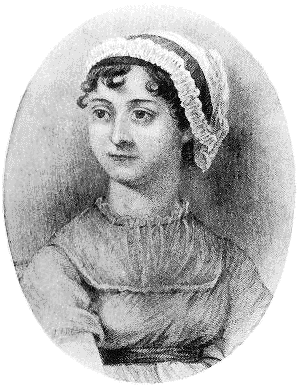
It is a truth universally acknowledged that Jane Austen (1775-1817) is a keenly satiric writer whose work, deeply rooted in her time, resonates in ours. In this research-enriched course, we will read Austen’s six novels in their order of publication: Sense and Sensibility (1811), Pride and Prejudice (1813), Mansfield Park (1814), Emma (1816), Persuasion (1818), and Northanger Abbey (1818). Through virtual excursions and close reading, we will enter Regency ballrooms, country estates, and genteel parlors as we examine Austen’s voice as a writer and pressing issues that she actively critiqued, such as the economics of marriage, social class stratification, primogeniture, entailment, and slavery. To situate Austen in her historical moment, students will write four of six briefs (short papers on each Austen novel). Working in the IdeaLab, Students will also complete a case for a virtual exhibition on material culture in the novels of Jane Austen; the virtual exhibition will be displayed on the Collaborative Organization for Virtual Education (COVE). The course will culminate in a 10-12-page research paper on two or three Austen novels. Students should be prepared to read deeply, craft critically (for the IdeaLab component), participate actively, research deeply, and write analytically.
We will ground the novels of Jane Austen in her Regency world by practicing critical crafting and creating a gallery of our material objects on the Collaborative Organization for Virtual Education (COVE). Our two galleries will be on material objects of the Regency age--letter writing and silhouettes. Letters play a key role in most of Austen’s novels, but particularly in Pride and Prejudice and Persuasion. Using antique and reproduction pens from my personal collection and materials from the IdeaLab, students will use dip pens to write with ink, practice cross-writing (a cost saving measure where one turns a letter 90 degrees and writes over it), fold a letter (rather than use an envelope), and affix a wax seal. Like letters, portrait miniatures were popular Regency tokens of affection for Jane Austen’s family and her characters, who cherish, display, flaunt, and envy these items. Using materials in the IdeaLab, we will craft a portrait miniature/silhouette, which features prominently in Sense and Sensibility and Persuasion. To transform these tokens of affection into lasting mementos of our study of Jane Austen, we will turn to COVE. We will create two gallery exhibits—one on letter writing and another on portrait miniatures/silhouettes. Each student will design a virtual “case” for one of these two galleries.
Galleries, Timelines, and Maps

"Fanny Austen Knight" by Cassandra Austen, from Jane Austen's World
Today we communicate through texting, email, FaceTime, What's App, and telephones. Writing a letter may seem quaint to us, but in the nineteenth century, letters were the chief form of communication. Unsurprisingly, letters play a key role in all of Austen’s Regency novels, but most memorably in Pride and Prejudice (1813) and Persuasion (1818). Using antique and reproduction writing implements from my personal collection and materials from the IdeaLab, students will practice writing with dip pens and ink, cross-writing (a cost saving measure where one turns a letter 90 degrees and writes over it), folding a letter (rather than use an... more

Traditional Silhouette of a Male, dating to the late 18th century, Wikipedia
The silhouette--a profile typically done in black and mounted on white--was a popular art form during the 18th and 19th centuries. Indeed, the Regency era when Jane Austen was publishing her novels is the recognized golden age of the silhouette. The term "silhouette" derives from a mid-18th-century French finance minister named Étienne de Silhouette, known to cut paper shadow portraits. The silhouette, a personal memento, became fashionable among genteel patrons of 18th- and 19th-century Europe and America. Portrait miniatures, which often took the form of silhouettes, were also popular Regency tokens of affection for Jane Austen’s family and her... more
Individual Entries
In Persuasion, Anne, Mary, Henrietta, Louisa, Charles, and Captain Wentworth travel to Lyme. (Paige Goodsell)