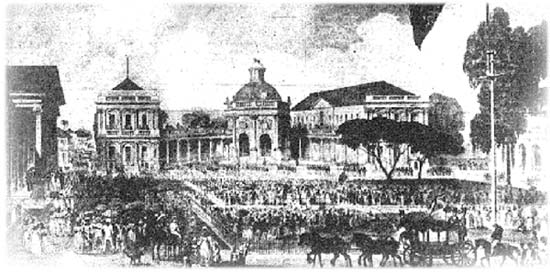
Bury St. Edmunds Jail
Bury St. Edmunds Jail was opened in 1787 and closed 1878, in the middle of the Victorian period. It was located in Southgate Green, near London, in Suffolk County. Bury St. Edmunds was one of the many prisons to hold many public executions in its day. However, with the decline of the approval of public executions during the Victorian period, that number decreased. Dissatisfaction began to grow as people started to express deep concerns about these horrific events. Despite this growth, public executions were still held with thousands in attendance.
Location of Harper Lee's Childhood Home
Now the location of Mel's Dairy Dream, this was the address of Harper Lee's childhood home in Monroeville, Alabama. A couple of miles down the road are the remains of the Faulk home, the house where Truman Capote, the inspiration for the character of Dill, stayed with his cousins in the summer. Many scholars have noted biographical similarities between Harper Lee and Scout. One such connection is between Monroeville and Maycomb, the setting of To Kill a Mockingbird.
Gaskell in Knutsford, England
Knutsford is a small English town where Elizabeth Gaskell was raised by her aunt, Mrs. Lumb, and on which her fictional village of Cranford was based.
Newgate Prison
Reconstructed several times from the Middle Ages to the 20th century, Newgate Prison in London housed many types of criminals from debtors to female/male convicts during the Victorian era. Newgate prison existed across from the Old Bailey—a criminal court. In Victorian England, Newgate prison was known for its harsh living arrangements and unsanitary conditions. Cells were packed with prisoners—up to thirty at a time—and vermin ran rampant.
Explorations Timeline
Here you'll find (and can add!) useful information relevant to our period.