This is the timeline we will populate with entries pertaining to John Stuart Mill and Haimabati Sen
Timeline
Table of Events
| Date | Event | Created by |
|---|---|---|
| 1571 to 1824 | The Thirty-Nine ArticlesThe Thirty-Nine Articles, which were made a legal requirement by the English Parliament in 1571, were finally repealed in 1824. These articles codified the essential beliefs of the Anglican church and rejected Catholic beliefs such as the sacrifice of the Mass and transubstantiation with the ultimate aim of highlighting the difference between the Church of England and the Roman Catholic Church. Prior to their repeal, the Test Act of 1673 required that individuals holding civil office in England adhered to these articles. The repeal of these articles removed a potential roadblock in Mill’s election to Parliament in 1865, but he still avoided questions about religion in his campaign: “On one subject only, my religious opinions, I announced from the beginning that I would answer no questions; a determination which appeared to be completely approved by those who attended the meetings” (Mill 208). Sources: Hanson, Marilee. “The 39 Articles of Religion.” English History, englishhistory.net/tudor/39-articles-religion/. Ross, David. “The 39 Articles of Religion.” Britain Express, www.britainexpress.com/History/tudor/39articles.htm. “Thirty-Nine Articles.” Encyclopædia Britannica, Encyclopædia Britannica, Inc., www.britannica.com/topic/Thirty-nine-Articles. “Thirty-Nine Articles.” New World Encyclopedia, www.newworldencyclopedia.org/entry/Thirty-nine_Articles. |
Jordan Taha |
| 1600 to 1873 | The Office of the Examiner of Indian CorrespondenceThe Office of the Examiner of Indian Correspondence was one of the most important departments of the East India Company (which was in existence between 1600 and 1873). The primary duty of the office was to prepare dispatches to the central administration of India. The Chief Examiner and his three senior assistants exerted considerable influence in determining the substance of the dispatches, but before any dispatch could be sent it had to be approve by Court of Directors of the company and then by the Board of Control, representing the authority of Parliament. Mill entered the Examiner's Office in 1822 at the age of 17. He was the "chief conductor of correspondence" in the most important Political Department which dealt with affairs of native states (independent territories ruled by native chiefs but where the British had jurisdiction over some matters). During his career, he drafted over 1,700 dispatches, most of which were sent. Under his father's training, Mill acquired the habit of forming independent judgements by impersonal and rational analysis. He held a firm belief in men's ability to see and accept truth under the force of rigorous logic. But the duty of an admisnistrator required the cultivation of other dispositions, among which were the attitude towards cooperation, the habit of consultation and compromise, and the skill of presentation. As his career progressed, Mill recognized the importance of these dispositions, describing them as a necessary condition that enabled him to "effect the greatest amount of good compatible with his opportunities".
Source: Harris, Abram L. “John Stuart Mill: Servant of the East India Company.” The Canadian Journal of Economics and Political Science / Revue Canadienne D'Economique Et De Science Politique, vol. 30, no. 2, 1964, pp. 185–202. JSTOR, www.jstor.org/stable/139555. Accessed 19 Feb. 2021 |
Zephyr Xu |
| 1686 to 1690 | Anglo-Mughal WarThe Anglo-Mughal War or Child’s War in the late 17th century occurred between the British East India Company and the Mughal Empire in India. After trade negotiations between the two ended poorly, the Company blockaded the western Indian coast and captured Mughal trading ships. However, the conflict came to an embarrassing end for the British, who were forced to pay the Mughals millions of dollars in restitution and apologize for their disrespect and conduct. In Sen’s work, the Mughal empire is referenced at the beginning of her history, as she describes her generational relation to Maharaja Pratapaditya. He was a powerful regional landowner who fought against Mughal annexation of Bengal until his death planning another attack against the Mughal empire. Some decades later, the Anglo Mughal War would occur, but this historical background demonstrates Sen’s high class heritage and positioning within India society. Sources: Eaton, Richard M. The Rise of Islam and the Bengal Frontier, 1204-1760. Berkeley: University of California Press, c1993 1993. http://ark.cdlib.org/ark:/13030/ft067n99v9/ Hunt, Margaret, and Philip Stern. The English East India Company at the Height of Mughal Expansion. Bedford/ St. Martin's, 2015.
|
Gabrielle Smith |
| 1772 to 1774 | Warren Hastings consolidated control of IndiaWarren Hastings was the first and most famous of the British governors-general of India, who dominated Indian affairs from 1772 to 1785 and was impeached (though acquitted) on his return to England. His view of the role of the British in India was later to be regarded as a very conservative one. He saw no “civilizing” or modernizing mission for them. Bengal was to be governed in strictly traditional ways, and the life of its people was not to be disturbed by innovation. To ensure good government, however, he felt that the British must actively intervene. In what was to be the most constructive period of his administration, from 1772 to 1774, Hastings detached the machinery of the central government from the nawab’s court and brought it to the British settlement in Calcutta under direct British control, remodeled the administration of justice throughout Bengal, and began a series of experiments aimed at bringing the collection of taxation under effective supervision. Recounting her experiences in Calcutta and Bengal, Haimabati Sen was living in the aftermath of Hastings’ consolidation of control. Sources: “Warren Hastings”. Encyclopedia Britannica. https://www.britannica.com/biography/Warren-Hastings Sen, Haimabati. Because I am a Woman. |
Sophie Shi |
| 1787 to 1799 | The French RevolutionThe French Revolution is historically known as one of the most violent and universally significant revolutions to this day. It began in 1787, reached a climax in 1789, and ultimately ended in 1799. There are several reasons cited for the origins of the Revolution but all unitarily rest in the shortcomings of the French monarchy. For one, the bourgeoisie, or working class of France, resented their lack of representation in the nation's politics and the monarchy did little to appease their requests for positions of honor. Secondly, French peasants were unhappy with their destitute state,which the monarchy did little to address, especially due to the nation’s bankrupt state following their participation in the American Revolution. And thirdly, France was going hungry after the crop failures in the country in 1788 that the monarchy largely ignored. Indeed, Marie Antoinette, the wife of King Louis XIV and XV who ruled France at this time, is known for her famous quote, “Let them eat cake” after being told that the peasants of her country had no bread to eat. The Revolution ultimately ended in 1799 when Napoleon Bonaparte led a coup d’etat to overthrow the French consulate and assert himself as the nation’s new leader. Many of JS Mill’s acquaintances mentioned throughout his Autobiography had connections to the French Revolution. Notably was his acquaintance M. Say who was described as “a man of the later period of the French Revolution, a fine specimen of the best kind of French Republican, one of those who had never bent the knee to Bonaparte though courted by him to do so; a truly upright, brave, and enlightened man” (pg 36). Source: Britannica, T. Editors of Encyclopaedia. "French Revolution." Encyclopedia Britannica, September 10, 2020. https://www.britannica.com/event/French-Revolution. |
Angelina Torre |
| 1789 | French RevolutionThe French Revolution is recognized as the most violent and the most universally significant of late 18th-century Western revolutions. During the period in France, an increasingly prosperous bourgeoisie class aspired to political power, and land-owning peasants hoped to remove the last vestiges of feudalism to acquire full landowner rights. Growing population density, crop failures, economic crises, and heavy governmental expenditures served as catalysts. Enlightenment thinkers such as Montesquieu, Voltaire, and Rousseau provided theoretical foundation for the French Revolution. The Estates-General met in 1789, with the Third Estate (the non-clerical, non-aristocratic class) demanding vote by head rather than estate. The political unrest led to the gathering of troops around Paris, resulting in the Parisian crowd’s seizure of the Bastille. The National Constituent Assembly issued the Declaration of the Rights of Man and of the Citizen. In subsequent years, the National Constituent Assembly enacted a series of reforms, including abolishing feudalism, expanding suffrage, and nationalizing the land of the Church. After the war with counterrevolutionaries in 1792-1794 and the Reign of Terror in 1793-1794, Napoleon Bonaparte seized power in 1795 and proclaimed the end of the Revolution. The French Revolution was a rich theoretical resource for J. S. Mill. Reading the history of the Revolution for the first time, Mill was astonished that the principle of democracy, then insignificant in most parts of Europe, had held sway in France. Later, he wrote in defense of early French Revolutionists against the Tory misrepresentation, and pondered writing a history on the Revolution. Even in launching the Westminster Review and forming a circle around radicalism, Mill aimed to imitate the French philosophes. Sources: “French Revolution”. Encyclopedia Britannica. https://www.britannica.com/event/French-Revolution Mill, John Stuart. Autobiography.
|
Sophie Shi |
| 1799 to 1835 | Robert Owen’s Socialist MovementRobert Owen was an industrialist who initiated a comprehensive program of social and educational reforms, including the introduction of the first infant school, a creche for working mothers, free education for all of his child laborers and children of laborers, universal healthcare for his workers, and evening classes for adults. In 1825, Owen bought around 30,000 acres of land in Indiana. He called it ‘New Harmony’ and tried to create a cooperative workers’ utopia, but the cooperative community fragmented and then stagnated. He had more success in founding socialist and cooperative groups, such as the Grand National Consolidated Trade Union of 1834 and the Association of All Classes of All Nations in 1835, cementing his credentials as an early socialist. Owenites regarded political economists as their archenemy. Mill and his friends had a series of debates with a society of Owenites called the Co-operative Society, dismissing the belief as irrational. Later, when Mill was acquainted with St. Simonian socialism, he evaluated it against Owen’s socialism and decided that St. Simonianism was more desirable. Sources: MacEwen, Terry. “Robert Owen, Father of British Socialism.” Historic UK. https://www.historic-uk.com/HistoryUK/HistoryofWales/Robert-Owen-Father-British-Socialsm/ Mill, John Stuart. Autobiography. |
Sophie Shi |
| 1800 | The Act of Union of 1800The Act of Union of 1800 led to the merging of Great Britain and Ireland and resulted in the creation of the United Kingdom of Great Britain and Ireland. The union between Britain and Ireland was not smooth, as Ireland’s Christian values explicitly conflicted Britain’s Protestant values. Under this union, Ireland suffered a widespread famine. This contrasted with how Scotland and Britain’s union in 1700 was successful, as evidenced by the expansion of imperialistic conquests of the British Empire during the 1700s. In Scotland, as the Jacobites lost power, the Scottish viewed British nationalism as the embodiment of Protestant ideals, and the Scottish asserted that the Scottish Enlightenment played a pivotal role in the Glorious Revolution of 1688-1689, the union of Scotland and Britain seemed sensible and somewhat inevitable. In light of this contrast between Scotland’s and Ireland’s experiences of union with Britain, Britain’s sense of nationalism increased after the Act of Union of 1800, as Britain attempted to suppress the Catholicism of the Irish. This assertion of English Protestantism appears in Mill’s section on the influences of the continent and “especially from the St. Simonians,” whose school of thought brought “home to [Mill] a new mode of political thinking” (Mill 127). Mill notes that M. Comte, who developed much of the St. Simonians’ principles, posited that the “social science must be subject to the same three-stage law,” one of which includes viewing Protestantism as “the start of the metaphysical state and the doctrines of the French Revolution were its consummation” and that “its positive state was yet to come” (Mill 127). Here, Mill suggests that Protestantism is the driving force behind society’s progression and that Christianity is the “concluding phase of the theological state of the social science” (Mill 127). While Mill was not religious, he understands Protestantism through a historical lens and depicts it as an institution that paves the way for more freedom and the establishment of Enlightenment principles once its religious stage inevitably fades away. Moroever, Mill, who elsewhere underscores his Protestant ethic, suggests that Protestantism is a religion of an advanced post-French Revolution society while Catholicism is stagnant and outdated. These views align with the view toward Catholicism that Britain would have adopted to oppress the Irish. "Act of Union: The Creation of the United Kingdom." BBC, 27 February 2021, http://www.bbc.co.uk/history/british/empire_seapower/acts_of_union_01.sh... |
Rita Khouri |
| circa. 1800 to circa. 1900 | The Romantic MovementThe Romantic Movement was a period in the 19th century that championed individual uniqueness and thus challenged traditional strictures of social, political, and economic values. In its celebration of the individual, the Romantic Movement emphasized the subjective, emotional, and imaginative experiences of living. In part, Romanticism was a reaction against 18th century rationalism. Romanticism of the 19th century was conveyed through changes in literature, music, and art – all of which put the individual at the center. Mill’s focus on the individual became vital to him and to his beliefs: “I left off designating myself and others as Utilitarians, and by the pronoun ‘we,’ or any other collective designation” (99). Mill also placed the individual at the center in terms of his beliefs on education. He argued against systems that would cram students “with the opinions or phrases of other people” that would work as a “substitute for the power to form opinions of their own” (44). Mill wished to create a thriving society in which educated individuals had the means to act autonomously and enact change from the inside.
Sources: “Romanticism -- Britannica Academic.” Accessed February 13, 2021. https://academic-eb-com.proxy.uchicago.edu/levels/collegiate/article/Romanticism/83836. Davis, Elynor G. “Mill, Socialism and the English Romantics: An Interpretation.” Economica 52, no. 207 (1985): 345–58. https://doi.org/10.2307/2553857. Mill, John. Autobiography. Edited by John M. Robson. London: Penguin Books, 1989.
|
Margaret Wolfson |
| 1801 to 1805 | Elgin Marbles AcquiredThe Parthenon Marbles, also known as the Elgin Marbles, are a collection of statues removed between 1801 and 1805 from the Acropolis, in Athens. The Parthenon, completed in 438 BCE, remained an acme of the beauty of Classical Greek architecture for travellers throughout the centuries, even as time, repurposing, and political strife took their toll on the building and its decoration’s integrity. These dangers persisted while Greece was under the control of the Ottoman Empire, and it was during this time that Thomas Bruce, the seventh Earl of Elgin, ambassador to the Ottoman Empire, hired from 200 to 400 local inhabitants over the years to organize the removal of about half the remaining statues and other various portions of the Parthenon’s decoration. Upon Greek independence in 1832, the Acropolis was recast as a symbol of national pride and unity for the nascent nation, resulting in the destruction of Roman, Ottoman, and other later buildings on the site to restore the site to its former state, and inciting requests, continuing to the present day, for the decorations’ return. Their continued presence in the British Museum in London remains a point of controversy between the United Kingdom and Greece. The obsession with and valorization of all things of classical antiquity were critical to the formation of J. S. Mill’s education: he began his study of Greek at age three (Mill, Chapter 1). The collection and depatriation of these classical artifacts is an epitomizing event of the attitude shaping the program and values of an English formal education at the time, and was an accessibility boon to those highly educated, but without the resources to undertake the “Grand Tour” of the cultures their education had so extensively dealt with by bringing cultural artifacts to available, public display. Sources Lupu, Matt. “The Elgin Marbles.” Panorao, Apple Podcasts app, 26 May, 2020. “The Parthenon Sculptures.” The British Museum, www.britishmuseum.org/about-us/british-museum-story/objects-news/parthenon-sculptures. “Parthenon.” Encyclopædia Britannica, 26 Mar. 2020, www.britannica.com/topic/Parthenon. Smith, Helena. “'Product of Theft': Greece Urges UK to Return Parthenon Marbles.” The Guardian, Guardian News and Media, 20 June 2020, www.theguardian.com/world/2020/jun/20/product-of-theft-greece-urges-uk-…. |
Josephine Dawson |
| 1806 | Mohsin FundMohsin fund was an endowment founded by Haji Muhammad Mohsin in 1806. Mohsin was a wealthy zamindar who led a celibate life. He was also a devoted philanthropist: government records indicated that he set up several gruel houses during the famine of 1769-1770 and donated money to government famine fund. In 1806, he set up Mohsin fund to preserve the family vestiges and to sustain his family's religious duties. The waqf bequest included the whole zamindari income which was meant to be used in maintaining the Shi'ite Imambara, the Imambara Bazar and supporting the living dependants and menials of the family. Unfortunately, after Mohsin's death in 1812, the fund was mismanaged by the trust; legal issues also arised. As a consequence, the British government took over the administration of the fund in 1818, managing it for about 30 years until the Privy Council ruled in favor of its legal validity in 1835. Under the government management the Mohsin Fund's resources were more and more diverted to education of Muslim and Hindu students. Hughlin Dufferin Hospital (where Haimabati Sen got a full-time opportunity) was in part supported by this fund.
Source: “Mohsin Fund”. Banglapedia, 2015, http://en.banglapedia.org/index.php/Mohsin_Fund. Accessed 15 Feb. 2021. |
Zephyr Xu |
| 1812 to 17 Feb 1815 | War of 1812The War of 1812 was a conflict between the United States of America and Great Britain lasting from 1812 to February 17, 1815 when the Treaty of Ghent was ratified. This war was seen as the second war of independence of America. After the US had gained a majority of its independence after the Revolutionary War, Britain still tried to maintain some control over the new nation. In 1807, Britain passed the Orders in Council to restrict American trading with France. The Royal Navy also practiced impressment, which was the act of removing sailors from American ships and forcing them to join the British navy. Britain also encouraged the native Americans to resist the westward expansion of the country. These violations by the UK agitated Americans and caused the War of 1812 to break out. After the war, Britain officially lost its control over America. This war happened very early in the life of J. S. Mill and likely didn’t have a direct impact on him, however, his father may have been exposed to the effects of the war. Source: History.com Editors. “War of 1812.” History.com. A&E Television Networks, October 27, 2009. https://www.history.com/topics/war-of-1812/war-of-1812. |
DeShawn Thompson |
| 1814 to 1830 | The Bourbon Restoration(s)The Bourbon Restoration in France was the period from 1814-1830 which began when Napoleon gave up the throne for the first time on April 11, 1814. He regained control in the spring preceding the Battle of Waterloo in a period known as the Hundred Days, but abdicated the throne for a second time after the defeat. At this time, The House of Bourbon regained the control of France that it had lost when King Louis XVI of the House of Bourbon was overthrown and executed by guillotine during the French Revolution. The Bourbon Restoration, really the second Bourbon Restoration because the House briefly regained control before the Hundred Days in what was technically the first, was characterized by a moderate constitutional monarchy under Louis XVIII, followed by extreme conservatism under his brother, Charles X. Charles X was an ultraroyalist (often abbreviated to Ultra,) meaning that he opposed the egalitarian principles held by Benthamites like J.S. Mill, represented the interests of large landowners, restricted suffrage, and restored power to the Roman Catholic Church. When J.S. Mill first went to live with the Bentham family in France in 1820, he was not yet a fully indoctrinated Benthamite, and Charles X was not yet on the throne. Even so, Mill appreciated the liberal sects of French culture during the early part of the Bourbon Restoration. He said “The chief fruit which I carried away from the society I saw, was a strong and permanent interest in Continental Liberalism, of which I ever afterwards kept myself au courant, as much as of English politics.” This liberalism was political, but it was also emotional . Mill was struck by the “habitual exercise of the feelings” in France as compared to England. Sources https://www.britannica.com/event/Bourbon-Restoration https://www.youtube.com/watch?v=_uKp4FHPjHU&ab_channel=CrashCourse https://courses.lumenlearning.com/boundless-worldhistory/chapter/france-after-1815/ https://www.history.com/this-day-in-history/napoleon-exiled-to-elba https://www.journalofdemocracy.org/articles/two-traditions-of-liberalism/ https://www.history.com/this-day-in-history/king-louis-xvi-executed https://www.oxfordreference.com/view/10.1093/oi/authority.20110803095603589 Penguin Edition of Autobiography by J.S. Mill: Own summary as well as quotes drawn from the text, quotes from pages 63 and 64 |
Claire Levin |
| 1815 to 1846 | The Corn LawsThe corn laws were trade restrictions and tariffs on imported grain and other foods. These laws were enforced in England starting in 1815 after the end of the Napoleonic Wars, and lasted until their repeal in 1846. The Corn Laws benefited landowners and the nobility, who saw substantially increased profits due to lack of foreign competition, and who could often control the vote, as voting rights were not universal at the time. Several movements rose up against the Corn Laws, such as the Anti-Corn Law League, which mobilized the industrial middle classes against the Corn Laws and also aimed to loosen trade restrictions in general. In the end, these movements were successful, and the Corn Laws were repealed in 1846. This repeal was a major decision of the time, and John Stuart Mill would have been well aware of them, especially as he was working in government. As a proponent of free trade, Mill likely supported the repeal of the Corn Laws, which bolstered trade by removing tariffs and other restrictions. Mill would most likely have seen this as a victory and a step towards a more free market. Sources: “Corn Law.” Encyclopædia Britannica, Encyclopædia Britannica, Inc., www.britannica.com/event/Corn-Law-British-history. Britain Express. “The Corn Laws in Victorian England.” Britain Express, www.britainexpress.com/History/victorian/corn-laws.htm. |
Lila Alonso |
| 18 Jun 1815 to 1815 | The Battle Of WaterlooThe Battle of Waterloo, fought on June 18, 1815, was the last battle of the Napoleonic wars, signaling Napoleon Bonaparte’s defeat against a joint coalition of European forces. Napoleon rose to power in the wake of the French Revolution. In one year, he went from being the head of the army of the interior to being the commander in chief of the troops in Italy where, in 1796, he forced the Austrian military to retreat before conquering the land himself. In 1804, Napoleon crowned himself emperor of France. The Napoleonic wars were an effort by much of Europe to curtail Bonaparte’s expanding empire. The Battle of Waterloo marked for England the end of over twenty two years of constant fighting during which five million died. During the battle, the Duke of Wellington led an army 68,000 strong which comprised the British, Dutch, Belgian, and German forces. Around 45,000 Prussians also fought Bonaparte under the leadership of Gebhard Leberecht von Blücher. After an arduous battle, the polyglot army emerged victorious, though they suffered around 23,000 casualties. The French suffered 25,000 casualties and the loss of 9,000 captured men. After the defeat, Napoleon returned to Paris where he renounced the throne. Though J.S. Mill does not directly discuss the battle in his Autobiography, he makes clear his distaste for Napoleon’s empire. When discussing a visit paid in Paris to a family friend, Mill describes him as “a man of the later period of the French Revolution, a fine specimen of the best kind of French Republican, one of those who had never bent the knee to Bonaparte though courted by him to do so; a truly upright, brave, and enlightened man.” In 1820, the war was still recent enough that Mill comfortably determines what he thinks of a person’s character based on their conduct under Napoleon’s empire.
Sources Penguin Edition of Autobiography by J.S. Mill: Page 63 https://www.britannica.com/event/Battle-of-Waterloo https://www.nam.ac.uk/explore/battle-waterloo https://courses.lumenlearning.com/suny-hccc-worldhistory2/chapter/italy-under-napoleon/
|
Claire Levin |
| 1817 to 1923 | The Cholera EpidemicCholera is an infectious disease often caused by bacteria that can be found in salty and warm waters. Throughout history, there have been several cholera outbreaks, many of them originating in India. It is estimated that between 1864 and 1947, at least 23 million people died of the disease in India. Between 1817 and 1923 there were a total of five major cholera epidemics. Cholera especially affected the poor in India, many of whom lived in crowded quarters with stagnant water and didn’t have awareness of sanitation and hygiene. Many of Sen’s patients were of lower social class, so as a hospital assistant, she would have seen many cholera patients. This is likely a contributing factor for how Sen, herself, contracted the disease.
Sources: Editors, History com. “Cholera.” HISTORY. Accessed February 23, 2021. https://www.history.com/topics/inventions/history-of-cholera. Arnold, David. “Cholera and Colonialism in British India.” Past & Present, no. 113 (1986): 118–51. Jain, Sagaree. “Anti-Asian Racism in the 1817 Cholera Pandemic.” JSTOR Daily, April 20, 2020. https://daily.jstor.org/anti-asian-racism-in-the-1817-cholera-pandemic/.
Sen, Haimabati. Because I am a Woman. Edited by Geraldine Forbes and Tapan Raychauduri. New Delhi, 2011. |
Margaret Wolfson |
| 1819 to 1819 | Passing of the Six ActsThe Six Acts passed in 1819, were laws that worked to prevent the people from holding large public meetings and from disseminating political literature. They also allowed for government searches of homes without warrants under the facade of looking for firearms. Four of the Six Acts were introduced by the conservative home secretary Henry Addington, 1st Viscount Sidmouth, who, like other conservatives, feared the “rapidly rising Liberalism” present in England after the “war with France” ended. According to J.S. Mill, the liberalism was a result of the war ending. When the war ended, he said, “people had once more a place in their thoughts for home politics, the tide began to set towards reform.” The “national debt and taxation occasioned by so long and costly a war” along with the continued power of “old reigning families” rendered the government unpopular with the common people. “Radicalism,” Mill wrote “had assumed a character and importance which seriously alarmed the Administration.” The social unrest that Mill described gave rise to a demonstration that took place on August 16, 1819 in Manchester. A crowd of around 60,000 people gathered with the hope of obtaining more representation in Parliament as, at the time, a mere two percent of the British people had the right to vote. When the British cavalry was summoned to disperse the crowd, panic ensued. Eleven people were killed. Around Six hundred were injured. The event soon became known as the “Peterloo Massacre,” and it was in direct response to the protest that the Six Acts were passed. They were designed to prevent future agitation by means of suppression as part of what J.S. Mill called a “conspiracy against liberty.”
Sources Penguin Edition of Autobiography by J.S. Mill: Own summary as well as quotes drawn from the text on page 89. https://www.britannica.com/place/United-Kingdom/The-Napoleonic-Wars https://www.oxfordreference.com/view/10.1093/oi/authority.20110803100509359 https://www.historic-uk.com/HistoryUK/HistoryofEngland/Peterloo-Massacre/ |
Claire Levin |
| 1819 | The Bullion ControversyThe bullion debate- or controversy as Mills call it- refers to a growing movement in England during the early 1800s over the return to the gold standard for money and banking. The debate occurred between the bullionists, like the prominent economist David Ricardo (a close family friend of Mill’s father), and anti-bullionists, who were defenders of the Bank of England. Rumors of a French invasion in 1797 had caused a panic among the British, who demanded the bank convert their paper notes into gold bullion. Then, the British government responded by suspending the Bank of England’s obligation to change notes into gold bullion until 1821. However, this suspension created a large public response, and hundreds of pamphlets were written during those two decades supporting or criticizing convertibility and the gold standard. Finally, Parliament passed legislation in 1819 returning Britain to the gold standard, marking the end of the Bullion Controversy. Sources: Laidler, David (2000) : Highlights of the Bullionist controversy, Research Report, No. 2000-2, The University of Western Ontario, Department of Economics, London (Ontario)
|
Gabrielle Smith |
| 1819 | Wager of Battle Abolition Bill - U.K. ParliamentDuels figure briefly in Mill’s autobiography, pejoratively, as an archaism symbolic of the world Mill felt himself working away from. This sentiment of the outdated nature of trial by battle was not unique to Mill: in 1819, a bill passed through both Houses of Parliament outlawing the settlement of legal cases by physical combat, known as “Wager of Battle.” It was at the time still legal under the laws of the country that a defendant could request that the claim against him be settled by trial by battle. The right had been brought to public attention that very year, when a man accused of rape and murder invoked his right, though the fight itself never took place. Thus the hypothetical of what the legal result would have been, had the fight ensued, formed a large part of the House of Commons proceeding on the matter, as members argued whether, had the combat resulted in a miscarriage of justice, that would have been the final decision on the case. Ultimately, the bill repealed the right in the name of “propriety,” as an obsolete and ancient practice, along the lines of “trial by ordeal, by fire and water, and by receiving the sacrament, and other cases where the judicia Dei were resorted to in the absence of other means of proof” (Burdett, Commons Sitting). Sources Trial by Battle Abolition Bill. Commons Sitting. 19 March 1819, Vol. 39. https://api.parliament.uk/historic-hansard/commons/1819/mar/19/trial-by-battle-abolition-bill. Wager of Battle Abolition Bill. Lords Sitting. 18 June 1919, Vol. 40. https://api.parliament.uk/historic-hansard/lords/1819/jun/18/wager-of-battle-abolition-bill. |
Josephine Dawson |
| 16 Aug 1819 | The Peterloo MassacreThe Peterloo Massacre refers to a violent dispersal by British cavalry of a radical meeting for parliamentary reform. On August 16, 1819, the meeting was held on St. Peter’s Fields in Manchester. It was the culmination of public discontent intensified by industrial depression and high consumer prices. The magistrates, alarmed by the size of 60,000 attendees, issued arrest orders of the speakers right after the start of the meeting. However, when the untrained yeomanry started attacking the armless crowd, the magistrates ordered the 15th Hussars to ride in and join the violence. It is estimated that there were 11 deaths and around 500 injuries. The brutal overreaction of the government proved the profound fears of ruling classes regarding a possible Jacobin revolution in England. The Peterloo Massacre served as a warning for London authorities. Therefore, when there appeared to be a threat of armed demonstration in Hyde Park by the working classes against the new Tory Government, Mill took it upon himself to assuage the tensions and “prevent much mischief” (290). Indeed, his success in discouraging any escalations brought deep relief and warm gratitude from Mr. Walpole. Sources: 1. “Peterloo Massacre.” Encyclopædia Britannica, Encyclopædia Britannica, Inc., www.britannica.com/event/Peterloo-Massacre. 2. The Peterloo Massacre - Maps of Where It Happened, www.peterloomassacre.org/map.html#. |
Emma Yan |
| Oct 1819 | Prosecution of Richard CarlileRichard Carlile was a radical in Victorian England who fought for the establishment of universal suffrage and freedom of press. He grew up with a single mother in London, becoming a tinsmith in 1813. After the economic depression of 1817, he became a salesman for two radical papers and quickly gained control over one of the printing presses. Carlile then published quite a few radical writings. In 1819, he was tried for publishing an account of the Peterloo Massacre. He was accused of blasphemy, blasphemous libel, and sedition and was sentenced to three years in prison and was heavily fined. His sentence was extended to six years when he did pay his fine. However, the government did not attempt to stop his publication, so Carlile continued to publish his newspaper from prison. John Stuart Mill mentions Carlile in his Autobiography: “The prosecutions of Richard Carlile and his wife and sister for publications hostile to Christianity, were then exciting much attention, and nowhere more than among the people I frequented” (Mill, page 82). Inspired by Carlile and the lack of freedom of speech and discussion in England, Mill went on to publish multiple essays in political reviews in his young life. SOURCES https://www.britannica.com/biography/Richard-Carlile https://spartacus-educational.com/PRcarlile.htm https://ffrf.org/news/day/dayitems/item/14696-richard-carlile |
Ellianna Zack |
| 1820 | The petition of the merchants of London, Manchester, GlasgowThe protectionist ideas were more and more criticized in Britain by the 1820s, merchants and manufacturers considering the British industry enough strong to flourished without trade protections against foreigners. Moreover, the liberals had a feeling that maintaining high duties on import might provoke a similar reaction from foreign countries on British goods, a bad thing for British trade. Thus, in 1820, the merchants of London, Manchester, and Glasgow, in fact the largest trading cities in Britain, petitioned the House of Commons to put an end to all duties, an event symbolizing the diffusion of free trade and liberal ideas in Britain, to which J. S. Mill is associated (this petition is actually mentioned in its autobiography). Concretely, it came to the Reciprocity of Duties Act of 1823 that permitted Britain to sign mutual trading agreements with foreign countries on an individual basis. |
Lisa Gilet |
| 1820 | 1820s English Liberal PartyThe English Liberal Party in the 1820s was going through an interesting transition. Previously known as the “Whigs,” the party ultimately began its transition to “Liberalism” after a period following the French Revolution. Though the Liberal Party (including its predecessor Whig Party) held various views throughout its history, all Liberals had a singular conviction that united all of them: that progress only came about “in the free exercise of individual energy.” The Party’s mission, then, was to create an environment in society in which individual energy could thrive. This was the school of thought of many of JS Mill’s peers and father’s peers. Mill was visiting France in 1821 when he stayed at the home of M. Say and was introduced to this concept of Liberalism.
Sources: Britannica, T. Editors of Encyclopedia. "Whig and Tory." Encyclopedia Britannica, May 18, 2020. https://www.britannica.com/topic/Whig-Party-England. Webb, P. David. "Liberal Party." Encyclopedia Britannica, March 15, 2018. https://www.britannica.com/topic/Liberal-Party-political-party-United-Kingdom. |
Angelina Torre |
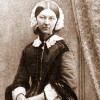
| 12 May 1820 | Birth of Florence Nightingale
ArticlesLara Kriegel, “On the Death—and Life—of Florence Nightingale, August 1910″ Related Articles |
David Rettenmaier |
| 1821 | George Grote's “Statement of the Question of Parliamentary Reform”George Grote, an English historian noted for his works on ancient Greek history, published his first written work “Statement of the Question of Parliamentary Reform with a Reply to the Objections of the Edinburgh Review” in 1821. The pamphlet was published in reply to Sir James Mackintosh's article in the Edinburgh Review. Noting that human action was driven by each individual's interest and that collective actions should be interpreted by laws of individual action, Grote argued for a radical reform which involved "universal or extensive" suffrage, short parliaments, and ballot. Source: Grote, George. Statement of the Question of Parliamentary Reform with a Reply to the Objections of the Edinburgh Review, No. LXI”. London, 1821, https://oll-resources.s3.us-east-2.amazonaws.com/oll3/store/titles/2690…. Accessed 21 Feb. 2021. |
Zephyr Xu |
| 1822 | Creation of the Native Medical InstituteDecades before Sen’s birth, the creation of the Native Medical Institution (NMI) in 1822 marked the beginning of British influence over the medical education system in India, the effects of which reverberated throughout the 19th century. For example, Sen’s final examinations to become a doctor took place at the Medical College conducted by European doctors (Sen 173). Notably, the NMI taught courses in Urdu and the curriculum included both Western and indigenous Indian medical practices. The Sen text illuminates how, though Indian and European doctors continued to work together, a clear hierarchy of European superiority was established with European doctors and nurses being paid significantly more (Sen 184). Sources:
|
Mallory Moore |
| 1822 | Hieroglyphs Deciphered using Rosetta StoneAnother famous object of foreign material culture currently residing in the British Museum, the Rosetta Stone, with its three inscriptions of the same text in different languages and scripts, was used to decipher the hieroglyphic symbols of Ancient Egypt. The text, written in 196 BCE, is a religious commemoration of benefits and support conferred on Egyptian priests by Ptolemy V, and an affirmation of the cult of his royal worship. The damaged block of granodorite was found in 1799 by the French military, in the town for which it is named, also known as el-Rashid, located about fifty miles from Alexandria. The stone’s acquisition by the British from the French in 1801, and subsequent decryption in 1822 by the combined work of an Englishman and a Frenchman was a major cultural event, impacting the study of Egypt but also making its mark on the national consciousness, helping form the conception of a European, and particularly imperial Victorian, relationship with antiquity as being saviors of nigh-inaccessible ancient cultures and their artifacts. Sources James, T. G. H. (Thomas Garnet Henry). Ancient Egypt: the Land And Its Legacy. London: British Museum Publications, 1988. Online. https://hdl.handle.net/2027/mdp.39015035324634. “stela: The Rosetta Stone.” The British Museum, www.britishmuseum.org/collection/object/Y_EA24. “Rosetta Stone.” Encyclopædia Britannica, 22 Mar. 2019, www.britannica.com/topic/Rosetta-Stone. |
Josephine Dawson |
| Winter 1822 | Formation of the Utilitarian SocietyIn 1822, John Stuart Mill gathered a few friends and founded the Utilitarian Society as a forum where men could gather once every two weeks to read essays and discuss questions surrounding utility. He emphasizes that he did not invent the word “utilitarian” and rather borrowed it from John Galt’s novel, Annals of the Parish. There were originally three members, and Mill states that the society always had less than ten members over the course of its existence. Mill mentions the formation of this society in the third chapter of his autobiography, which was a period marking the end of his formal education and beginning of his self-education (Mill 77). This society, founded and led by Mill himself, was a critical stepping stone in that educational transition that showed him how he could simultaneously learn from and lead others. Sources: Anschutz, Richard Paul. John Stuart Mill. 13 Jan. 2021, www.britannica.com/biography/John-Stuart-Mill. Mill, John Stuart. Autobiography. Penguin Classics, 1989. |
Jordan Taha |
| 1823 | Anti-Slavery SocietyMary Prince worked for the Anti-Slavery Society which was founded in 1823. At the time of its founding the slave trade was outlawed in Britian but slavery itself was not outlawed. The society and Mary Prince was integral in their work to outlaw slavery all together. Slavery was outlawed in 1833 unfortunatley the same year Mary Prince died. |
Brandon Walker |
| 1824 | Charles Dickens' ChildhoodBorn in Landport, Portsmouth on February 7th, 1812, Charles Dickens is known as one of the most influential writers of the 19th century. However, Dickens’ fame did not come to him easily. In fact, although not poor, Dickens' family suffered from poor financial management, which caused his father, John, a clerk in the Naval Pay Office, to be sent to Marshalsea prison due to his accumulated debt in 1824. Thus, John’s wife and children were sent to prison to live with him there, except for Charles Dickens himself. Instead, at the age of 12, Dickens was forced to seek employment at Warren’s Blacking Factory, (a re-infested warehouse) where he would label jars of boot polish. Although his time in the factory lasted less than a year, Dickens’ own writing illustrates how traumatizing his experience was at the factory. For example, he says, “[f]or many years, when I came near to Robert Warren’s, in the Strand, I crossed over to the opposite side of the way, to avoid a certain smell of the cement they put upon the blacking corks, which reminded me of what I once was. My old way home by the borough made me cry, after my oldest child could speak” (Dickens 141). Dickens’ experience as a child worker haunted him through adulthood, which illustrates his interest in raising awareness on the living conditions of the less fortunate, especially children, in A Christmas Carol. Principal Sources: Dickens, Charles. A Christmas Carol. Classical Comics, 2008, Print. Charles Dickens Biography - Life, Family, Childhood, Children, Story, Wife, School, Young, Son. https://www.notablebiographies.com/De-Du/Dickens-Charles.html. Accessed 14 Oct. 2020.
|
Yousef Farhang |
| 1825 to 1828 | Owenite social experiment in New Harmony, IndianaRobert Owen was both the manager and the principal partner in the New Lanark mills. As the manager, Owen was already carrying out social welfare experiments and extending the mill’s profits to the employees: living articles were available at cost from the company store; medical services were free; spaces were provided for recreational facilities. Owen also sought to secure better working conditions for laborers through legislation by Parliament, only to meet frustration. His radical opinions and practices had provoked his business associates. Believing that New Lanark was overladen with the Old World’s long-lasting traditions and customs, Owen turned his attention to the New World. He seized the opportunity when the Harmony Society (a close-knit religious community) decided to move and was selling their village at New Harmony. Owen invested his own money to purchase the town, hoping to establish a community that would become the seed for other communities that he envisioned. For a time, life in New Harmony was well-organized and contented under Owen’s guidance, but divergences in the form of government and the role of religion eventually prevailed. In 1828, Owen withdrew from the community after losing 80 percent of his fortune. Owen shares Mill’s idea about the capacity of human progress and the importance of education in elevating the man’s character. However, Mill’s group of political economists differed from the Owenites in that the former supported regulated systems of competition, while the latter called for systems of cooperation. It is worth noting that in the same year that Owen purchased New Harmony and started his experiment, Mill started taking part in the debate against Owenism (1825). Source: Carmony, Donald F., and Josephine M. Elliott. "New Harmony, Indiana: Robert Owen's Seedbed for Utopia." Indiana Magazine of History 76, no. 3 (1980): 161-261. Accessed February 21, 2021. http://www.jstor.org/stable/27790455. |
Emma Yan |
| 1825 to 1826 | Commercial Crisis of 1825Many economists identified the crisis of 1825-1826 as the first modern financial crisis. The real cause, unlike the exogenous causes of previous speculative bubbles, was the “diversification of the finance economy into tiny investment units offered as seemingly responsible ways to maintain credit and generate capital” (Dick, 2021). Such that when the market did crash, no single organization could be held accountable. Reflecting on the crisis, commentators began to realize the capitalism and market economy had transformed from an ideology to a condition in which all parts of the society lived and by which they were sustained. The Latin Americas also played a role in this event. As London replaced Amsterdam as the financial capital of Europe, English capital took a great interest the newly independent South American countries. Domestic mining firms took part in the fervor and formed joint stock enterprises to exploit South America’s mineral interests. The stock price of such a company often rocketed in a very short time. However, information flow between the continents was slow and scarce, making it difficult to assess risks and inviting frauds. One example was Gregor MacGregor, Scottish adventurer, who invented the mythical Central American state Poyais and toured the wealthiest drawing rooms of London with his convincing story. So successful was Gregor’s fraud that he managed to float a large bond issue on the London Stock Exchange in 1822. In his vocation of “writing for the public”, Mill wrote an elaborate essay on the Commercial Crisis. Examining the workings behind the crisis might help in understanding Mill’s mindset as a political economist. Would he also detect the connection to the newly independent Latin America? Sources: 1. Dick, Alexander J. “On the Financial Crisis, 1825-26.” BRANCH: Britain, Reprsentation and Nineteenth-Century History. Ed. Dino Franco Felluga. Extension of Romanticism and Victorianism on the Net. Web. [February 21, 2021] 2. Morgan, Donald P., and James Narron. “Crisis Chronicles: The Panic of 1825 and the Most Fantastic Financial Swindle of All Time.” Liberty Street Economics, Federal Reserve Bank of New York, 10 Apr. 2015, libertystreeteconomics.newyorkfed.org/2015/04/crisis-chronicles-the-panic-of-1825-and-the-most-fantastic-financial-swindle-of-all-time-.html. |
Emma Yan |
| Spring 1827 to 1841 | Invention of PhotographyThe invention of photography opened a new chapter in the history of printing and communication. It’s been quickly replaced instead of painting, wood, and metal engraving in the printing process. Precision, speed, and accuracy were the main characteristics of photograph versus other techniques. Photography could take printing techniques to a higher level of quality and quantity. Tone separation and increasing the tonalities were some achievements that were the most accurate and precise printing technique in the mass printing industry and especially printing media like magazines. Joseph Nicéphore Niépce made the first photograph in 1827 in Le Gras in Burgundy region of France through the window of his small lab. It took 8 hours to record the image on a light-sensitive metal plate. After him, Louis-Jacques-Mandé Daguerre in 1839 made a faster and sharper image on metal named daguerreotype. Two years later in London Fox Talbot made the first photograph on paper named Calotype or Talbotype. However, the first photograph that could be published in a magazine was 'Barricades on rue Saint-Maur'. This photo published in L’Illustration in July 1848 by engraving technique.
Bibliography: Rosenblum, Naomi, and Diana C. Stoll. A World History of Photography. Abbeville Press Publishers, 2019. https://www.metmuseum.org/toah/hd/lith/hd_lith.htm https://journals.openedition.org/etudesphotographiques/347 https://en.wikipedia.org/wiki/Photojournalism https://www.oldbookillustrations.com/techniques/ https://www.oldbookillustrations.com/dictionary/contents/index |
Masoud Eskandari |
| 1828 | Foundation of the Brahmo SamajThe Brahmo Samaj is a monotheistic movement within Hinduism that was founded by Ram Mohun Roy and began in 1828 through meetings of Bengalis in Calcutta. Ram Mohun Roy set out with the goal to reform Hinduism from within, discarding some Hindu rituals and drawing on influences from both Islam and Christianity. Some of the Brahmo Samaj’s distinguishing features are its denouncement of polytheism, the caste system, and image worship, and the fact that it does not insist on belief in the cycle of death and rebirth or karma, accept the authority of the Vedas, or have faith in incarnations. Though it did not necessarily have a major following, the Brahmo Samaj had considerable success with social reform and its impacts were felt through the twentieth century. The foundation of the Brahmo Samaj is important to Haimabati Sen’s timeline because she was involved with a breakoff group of the Brahmo Samaj when she was in Calcutta. Looking to this movement’s origin is critical for understanding how it evolved over the course of her life and beyond. Sources: “Brahmo Samaj | Hinduism.” Encyclopedia Britannica, https://www.britannica.com/topic/Brahmo-Samaj. Accessed 24 Feb. 2021. Brahmo Samaj | Making Britain. http://www.open.ac.uk/researchprojects/makingbritain/content/brahmo-samaj. Accessed 24 Feb. 2021. |
Jordan Taha |
| 1829 | First Purpose Built Mail Facility In BritainThe construction of the first “purpose-built mail facility” in 1829 was one of many reforms that took place in the British Royal Mail system under the leadership of Roland Hill. The establishment of a general headquarters for the General Post Office is significant to Mill’s text because of how important letter correspondence was in allowing him to maintain connections with intellectuals across the UK and the world. The increasing organization of the postal system and subsequent invention of the stamp made mail more affordable, reliable, and fast. Following Hill’s reforms, postal traffic increased tenfold. Sources: |
Mallory Moore |
| 1829 | Sati Regulation ActSati--the practice of burning or burying a widow alive with her deceased husband--was commonplace in British India, especially in the "lower provinces" such as Orissa and Bengal. Lord Bentick observed in 1828 in a letter addressed to military officers, "Of the rite itself, of its horror and abomination not a word need be said. Every rational and civilized being must feel anxious for the termination of a practice so abhorrent from humanity...". The act was passed with other concerns. Indeed, the abolition of Sati manifested the Empire's desire to "civilize" (or culturally coloize) the oriental world. The ancient practice of sati was viewed as a blatant defiance of British ideology--a factor that could potentially threaten the security of British Territories in India. In 1829, the Government of Bengal passed the Sati Regulation Act in which sati was declared illegal and punishable by criminal courts.
However, this controversial practice was revived in independent India more than a century later. One of the most infamous cases was the burning alive of Roop Kanwar in Rajasthan on September 4th, 1987. The incident resulted in the passage of a Central Legislation known as the Commission of Sati (Prevention) Act, 1987.
Source: Pachauri, S. K. “Sati Problem—Past and Present”. Proceedings of the Indian History Congress, vol. 63, 2002, pp. 898-908. https://www.jstor.org/stable/44158159. Accessed 15 Feb. 2021. |
Zephyr Xu |
| 1830 | July Revolution of 1830In the July Revolution of 1830, protests over Charles X’s imposition of restrictive ordinances led to his abdication. The event was significant, in part, because it led to the absolute monarchy being replaced by a constitutional one, heavily influencing Mill’s beliefs about the British electoral system when the Reform Bill was introduced only a few years later. In fact, he notes in his text that the French Revolution of July “roused my utmost enthusiasm, and gave me, as it were, a new existence. I went at once to Paris…after my return I entered warmly, as a writer, into the political discussions of the time” (Mill 94-95), suggesting it was a pivotal point in his development as a political theorist. Sources: |
Mallory Moore |
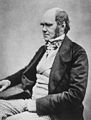
| Oct 1831 to Oct 1836 | Darwin's voyage on the Beagle
ArticlesNancy Armstrong, “On Charles Darwin’s The Descent of Man, 24 February 1871″ Ian Duncan, “On Charles Darwin and the Voyage of the Beagle” Anna Henchman, “Charles Darwin’s Final Book on Earthworms, 1881” Cannon Schmitt, “On the Publication of Charles Darwin’s On the Origin of Species, 1859″ Related ArticlesDaniel Bivona, “On W. K. Clifford and ‘The Ethics of Belief,’ 11 April 1876″ |
David Rettenmaier |
| Jun 1832 | Reform Act
ArticlesCarolyn Vellenga Berman, “On the Reform Act of 1832″ Related Articles |
David Rettenmaier |
| 1833 | Movement for National EducationMill mentions the movement for National Education in the context of his peer John Arthur Roebuck, who attempted to pass legislation for government sponsored universal education as a member of Parliament in 1833. His speech in Parliament describes the distant benefits which will be achieve through national education, and how this education must extend beyond the simple skills of reading, writing, and arithmetic. His resolution also stipulates that money for school funding should first come from private contributions, but taxes can be levied on taxpayers to pay for the cost. Before national education reform gained traction, youth education was handled by church authorities, who stressed religious education in its students; so a transition to government sponsored education would be a dramatic change for Britain when it was implemented towards the end of the 19th century. This movement is very pertinent to the text and Mill’s principles as an utilitarian; in order to promote the happiness of the largest proportion of people, it would logically follow that all people should be educated. Mill and his contemporaries can take some responsibility for the progressive reforms undergoing in the 19th century, as evidenced by Roebuck and his education bill. Sources: “NATIONAL EDUCATION.” NATIONAL EDUCATION. (Hansard, 30 July 1833), api.parliament.uk/historic-hansard/commons/1833/jul/30/national-education. |
Gabrielle Smith |
| 1833 | Slavery Abolition Act Sources: “Slavery Abolition Act.” Encyclopædia Britannica, Encyclopædia Britannica, Inc., www.britannica.com/topic/Slavery-Abolition-Act. “The Slavery Abolition Act of 1833.” The History Press, www.thehistorypress.co.uk/articles/the-slavery-abolition-act-of-1833/. |
Lila Alonso |
| 14 Aug 1834 | The New Poor Law of 1834The Poor Law Amendment Act of 1834, nicknamed the ‘New’ Poor Law, established the workhouse organization. Before this law, resources such as parish poorhouses and almshouses were available to starving families and those living on the streets. These places provided food, clothing, blankets, and even occasional cash to those in need of it. However, with the ‘New’ Poor Law, these establishments were closed down, and in its place was the workhouse. The workhouse was a system of intense, back-breaking labor of the poor in exchange for meagre food and shelter. To labor in the workhouse, the poor had to live there. This rule was highly distressing to the poor because it forced families to abandon many of their belongings, their homes, and even each other as the workhouses separated people by age and gender. Dickens himself never lived in a workhouse, but it was discovered after his death, that his family had been imprisoned in a debtors’ prison. As restricting and miserable as a debtors’ prison was, Dickens believed it was superior to the conditions of a workhouse. At least in the debtors’ prison, young Dickens and his family could stay together. Although he didn’t experience living in a workhouse, Dickens was a reporter for a time during the Poor Law. As such, he witnessed the hardships brought upon by the workhouse. He was a witness to young children being separated from their families and forced to perform extensive labor beyond their years. He got a sense of what it meant for poor people to be desperate, blamed, starving, and mistreated. Additionally, Dickens observed how these workhouses were run by heartless men who didn’t care about the inhumane conditions of their workhouse or the suffering of their laborers. One of these figures of the “heartless men” shows up in Oliver Twist as the man in the white waistcoat. This character represents the arrogant, uncaring officials of the workhouses who were prejudiced against the poor. During this time, they thought of the poor as lowly beggars who were to blame for their circumstances. This hypocritical idea is shown multiple times in Oliver Twist as the higher-ups preach to the poor to change their ways, yet don’t provide them with a sufficient way to do so. One character that portrays this self-righteousness of the higher-up is Mr. Bumble. Mr. Bumble takes great pride in hurting and abusing the children of the workhouse. With Oliver, specifically, Mr. Bumble never believes Oliver is telling the truth and believes Oliver is an inherently bad child. If people like Mr. Bumble believe that children like Oliver are fundamentally evil, how do they expect children and the poor to better themselves as they often preach them to do? To sum, as we examine the ‘New’ Poor Law and Dickens’ own observations of the act, we’re able to see the hypocrisy and prejudice of the upper and middle classes towards the poor and why Dickens was so passionate about this subject. Officials like Mr. Bumble preach Christian morality, and yet, are merciless towards the workhouse laborers. This was one of the main points that Dickens gets across to readers of his novel. He highlights the institutional cruelty of the workhouse officials through satirizing characters like Mr. Bumble to show how the Poor Act was highly detrimental to people of the lower class while drawing from his own experiences as a child and reporter to make his novel personal. Richardson, Ruth. “Oliver Twist and the Workhouse.” The British Library, The British Library, 18 Feb. 2014, www.bl.uk/romantics-and-victorians/articles/oliver-twist-and-the-workhouse.
|
Celeste Acosta |
| 1835 | Publication of Democracy in AmericaAlexander De Tocqueville’s book Democracy in America, published in 1835, still stands as a seminal work on American social and political structures. De Tocqueville’s ideas about individualism and the risk of having a “tyranny of the majority” in a fully democratic society shaped Mill’s own belief in a representative democracy as superior to a pure one. In fact, Mill directly credits De Tocqueville, writing “this last change [in my political beliefs], which took place very gradually, dates its commencement from my reading, or rather study, of M. de Tocqueville’s Democracy in America” (Mill 104). Sources: |
Mallory Moore |
| 1835 | Democracy in AmericaDemocracy in America, in French “De la Démocratie en Amérique”, was first published in 1835, with a second volume in 1840. This classic text written by Alexis de Tocqueville is well known for its analysis of the republican representative democratic regime in the United States. Tocqueville explains the reasons of the success of this regime, and underlines the risk of 'tyranny of the majority', a concept that has marked J. S. Mill a lot in its own intellectual development, and more generally that has marked political sciences. The ‘tyranny of the majority’ becomes the basis for Mill’s book On Liberty. Source: Pappe, H. O. “Mill and Tocqueville.” Journal of the History of Ideas, vol. 25, no. 2, 1964, pp. 217–234. JSTOR, www.jstor.org/stable/2708013. Accessed 21 Feb. 2021. |
Lisa Gilet |
| 20 Jun 1837 to 22 Jan 1901 | Victoria Becomes Queen of the United KingdomQueen Victoria became queen of the United Kingdom in 1837, and her reign lasted until her death in 1901, which was longer than any monarch before her. Her reign was incredibly influential, and the era was given her name—The Victorian Age. Victoria was said to have had little interest in social issues and to have resisted technological change, despite the rapid social and technological change of the era. Victoria was determined to hold onto political power, yet it was during her reign that the British monarchy began to lose power and to take on a ceremonial role. Most importantly, Victoria’s reign was known for a massive expansion of the British Empire, and she was given the additional title of Empress of India in 1876. Mill spent most of the latter part of his life living under her reign, and would have been witness to the empire’s expansion as well as the monarchy’s loss of power and control. This is especially notable as Mill was a long-time employee of the East India Company, and was knowledgeable on the subject of English rule in India, so these changes would have affected him not only politically, but personally, as the government under Victoria was to take over from the East India Company. Sources: “Victoria.” Encyclopædia Britannica, Encyclopædia Britannica, Inc., 18 Jan. 2021, www.britannica.com/biography/Victoria-queen-of-United-Kingdom. Kirsty.Oram. “Victoria (r. 1837-1901).” The Royal Family, 3 Feb. 2021, www.royal.uk/queen-victoria. |
Lila Alonso |
| Nov 1837 to Dec 1848 | Canadian Rebellions of 1837 and 1838In November of 1837 in Lower Canada, a group of French Canadian rebels fought British soldiers and volunteers in a series of skirmishes. This rebellion was the result of years of built up sentiment against the British government that was exacerbated by an economic depression in the 1830s. Specifically, the rebels opposed the authority of the Caltholic Church and the powers of the British governor and advisors. Initially, the rebels were peaceful, but their demands were rejected by the British government in London. After the rebellion in November 1837, the rebels fled to the United States. In November of 1838, a second rebellion was launched in Lower Canada. This rebellion included American volunteers as well as the Canadian rebels. These two uprisings killed 325 people including only 27 British soldiers and 298 rebels. After the first rebellion in Lower Canada, rebels in Upper Canada, led by William Lyon Mackenzie, took action against the British. On December 5, 1837, a group of farmers exchanged gunfire with British militiamen. A few other rebellions followed this in the next few months including raids against Upper Canada that lasted for over a year. While both of these rebellions failed at their ultimate goal, they resulted in the uniting of Upper and Lower Canada in 1841. The Canadian Rebellions occurred during the term of the first Reformed Parliament. John Stuart Mill discussed the British response to the Candian Rebellions in his Autobiography as an example of opinions and policies the men in parliament disagree with (Mill, page 152). SOURCES https://www.britannica.com/event/Rebellions-of-1837 https://www.thecanadianencyclopedia.ca/en/article/rebellions-of-1837 https://www.historymuseum.ca/cmc/exhibitions/hist/canp1/ca16eng.html |
Ellianna Zack |
| 1845 to 1852 | Potato Famine in IrelandAround 1845, Ireland was hit with crop failure that deeply impacted them for years to come. The Irish population heavily relied on the potato crop for their livelihoods, so when the potato blight spread to their crops, they were thrown into a devastating famine with disease and starvation (Powderly “How Infection Shaped History”). The potato was a versatile crop being able to thrive in less desirable soil and providing sufficient nutrients for sustenance (Powderly). The potato blight affected more countries than just Ireland, however, Ireland was hit the hardest due to their “disproportionate dependency” on the potato, and growing only one species of the potato was also a problem because all their crops were affected rather than just one of several (Powderly). Ireland was not the only country to suffer from crop failure and famine, however, what made their famine such a devastating one was the political response of Britain who ruled Ireland at the time. The political atmosphere surrounding the potato famine in the 1840s was very complex and muddled with prejudices against the Irish people (Scholl “Irish Migration to London During the c.1845-52 Famine”). The British people in positions of power felt the Irish people deserved what they got and any relief they gave to Ireland was “exposing Britain to danger and expense” (Scholl). Despite the blame for the devastation of the Irish potato famine being placed on Britain, as many as one million Irish people migrated to Britain (in addition to Australia and North America) according to Scholl. The impact of the potato famine on the Irish population was catastrophic with an estimated range of 800,000 to one million deaths (Scholl). Dr. Powderly effectively illustrates the lasting effects of the famine on the Irish people even today: Governmental indifference, neglect, or deliberate inaction all contributed to the death toll of the Irish Famine. It was fitting, therefore, that 150 years later, the British Prime Minister, Tony Blair, apologized for the role played by the British Government. As he appropriately said, The famine was a defining event in the history of Ireland and Britain. It has left deep scars. That 1 million people should have died in what was then part of the richest and most powerful nation in the world is something that still causes pain as we reflect on it today. Those who governed in London at the time failed their people through standing by while a crop failure turned into a massive human tragedy.
Works Cited Powderly, William G. “HOW INFECTION SHAPED HISTORY: LESSONS FROM THE IRISH FAMINE.” Transactions of the American Clinical and Climatological Association, American Clinical and Climatological Association, 2019, www.ncbi.nlm.nih.gov/pmc/articles/PMC6735970/. Scholl, Lesa. “Irish Migration to London During the c.1845-52 Famine: Henry Mayhew’s Representation in London Labour and the London Poor.” BRANCH: Britain, Representation and Nineteenth-Century History. Ed. Dino Franco Felluga. Extension of Romanticism and Victorianism on the Net. Web. [Here, add your last date of access to BRANCH]. |
jessica Poling |
| 1845 to 1852 | Irish Potato FamineThe Irish Potato Famine, also known as the Great Hunger, began in 1845 and lasted until 1852. During this time, a late blight infestation spread rapidly throughout Ireland and ruined one-half of the potato crop in 1845 and about three-quarters of the potato crop over the following seven years. This infestation was particularly devastating for Ireland’s population overall because they relied heavily on potatoes as a main source of food, resulting in roughly one million deaths before the famine ended in 1852. Additionally, at least another million Irish were forced to leave the country as refugees, resulting in an even greater decline in Ireland’s population. After observing a series of costly, failed attempts by the British government to alleviate the Irish suffering, Mill saw the opportunity for a solution which he believed was “the only mode of combining relief to immediate destitution with permanent improvement of the social and economical condition of the Irish people” (Mill 178). He then advocated for this long-term solution to the Irish land question, which was based on major alterations in land tenure, for the remainder of his life. Sources: Irish Potato Famine. 17 Oct. 2017, www.history.com/topics/immigration/irish-potato-famine. Mill, John Stuart. Autobiography. Penguin Classics, 1989. Mokyr, Joel. Great Famine. www.britannica.com/event/Great-Famine-Irish-history. |
Jordan Taha |
| 1846 to 1852 | Irish FamineThe Irish Famine occurred between 1846-1852, where over one million Irish people died from starvation or epidemic disease. The primary cause of the famine stemmed from the fungus Phytophthora infestans referred to as “the blight”, which effectively destroyed potato crops- the source of 60% of food needs in Ireland. Subsequently, more than two million people fled Ireland as refugees while over a million more died either from starvation or malnutrition related diseases. During the food shortage, the effects of the famine were worsened by the increasing grain exports, as Ireland continued to export grain to England and other foreign countries despite their own people completely lacking food supply. Others have blamed the political apathy by the British government and public, who did not step in to properly distribute food during 1846-1847 as prejudice against Irish Catholics persisted at the time. Mill argues that the rural parts of Ireland should have been converted to peasant properties, and the year he was writing about (1847) would go one to become known as the Black ‘47, the most horrific year of the famine. Source: Donnelly, Jim. “History - British History in Depth: The Irish Famine.” BBC, BBC, 17 Feb. 2011, www.bbc.co.uk/history/british/victorians/famine_01.shtml. |
Gabrielle Smith |
| circa. 1846 | 1846 Repeal of the Corn Laws
COVE Timeline Assignment: 1846 Repeal of Corn Laws The British Corn Laws, or laws that regulated imported grains and food, were influenced by both economic and political conditions in Britain. The purpose of the tariffs were to keep people from buying forgien corn products and, in turn, force people to buy domestic corn products. This was meant to stimulate Britain's economy by enforcing domestic industry practices; it was also enacted to heavily favor the rich landholders who were invested in farmland production. The Corn Laws would not allow foreign corn into Britain unless domestic corn reached a price of 80 shillings per quarter (Vamplew 3). These laws offered a “significant degree of protection to British cereal producers” (Vamplew 11) who made huge profits from grain production. Landowners, seizing the majority of monetary profit, also retained much of the political power at the time; the act of voting was reserved for those who owned land. Thus, the beneficiaries of the Corn Laws were not the common people who were forced to buy grain at an absurdly high price, but the few lucky enough reap the benefits.
While Britain's common people suffered from poverty, starvation and unsanitary living conditions, they were upset by the increasing price of grain products. Many had to quit their jobs because they were ill or they needed to take care of family members; those who did earn a wage used most of it to buy grain products to survive. The middle class was desperate for reform-- not wanting to suffer like those impacted by Irish in the Irish Potato Famine-- and wanted representation in their government. Cheryl Schonhardt-Bailey, author of From the Corn Laws to Free Trade: Interests, Ideas, and Institutions in Historical Perspective, writes “In sum, repeal was an attempt to moderate the mounting pressures for parliamentary reform: by satisfying the middle class industrialist with repeal, the drive to gain control of parliamentary seats would cease, and, moreover, the working class Chartist movement (seeking more radical reform of Parliament) would lose momentum” (16). The repeal of the Corn Laws was a motion intended to “settle down” the middle class by lowering the cost of grain products and thus progressing to a free market economy.
In addition to political reform, the repeal of the Corn Laws may have been the aftermath of a growing population; Betty Kemp, author of “Reflections on the Repeal of the Corn Laws” writes, “The simplest argument for the repeal of the Corn Laws is that the rapid growth of population' in the nineteenth century, which made it necessary to import increasing quantities of wheat, also made it un- justifiable to tax those imports” (3). Thus, a booming need for more materials lead to the repeal of the Corn Laws. This repeal, led by Sir Robert Peel, was a victory for the middle class (Kemp 2) and “the final triumph of the Free Trade move- ment” (Thomas 2) which sought to lower prices on grain and provided the economy with various trade options. Supplemental Material
Works Cited Kemp, Betty. "Reflections on the Repeal of the Corn Laws." Victorian Studies 5.3 (1962): 189-204. Schonhardt-Bailey, Cheryl. From the corn laws to free trade: interests, ideas, and institutions in historical perspective. Mit Press, 2006. Thomas, J. A. "The Repeal of the Corn Laws, 1846." Economica 25 (1929): 53-60. Vamplew, Wray. "The protection of English cereal producers: the Corn Laws reassessed." The Economic History Review 33.3 (1980): 382-395. |
Rebecca Cybulski |
| 1847 | The Discovery of the Importance Antiseptic Practice in Medicine: Ignaz SemmelweisIgnaz Semmelweis was a Hungarian physician who introduced hand-washing into medical practice after observing women in an obstetrics ward during his training. At the time, childbed fever (puerperal fever) was a common disease in maternity wards and was generally seen as incurable and inevitable. However, in 1847, Semmelweis noticed that the women in the portion of the clinic treated by midwives had much lower rates of childbed fever than those who were treated by medical students. He theorized that the medical students carried something to the women they examined, possibly from the dissecting room. He then ordered the students to wash their hands in a chlorinated lime solution before examining each patient. The mortality rate of the student treated women dropped from 18.27% to 1.27%. Initially, other physicians, especially older physicians, rejected the idea and childbed fever continued to rage in maternity wards across Europe. In 1861, Semmelweis published his tretise, The Etiology, Concept, and Prophylaxis of Childbed Fever. He died at 47 in 1865 of childbed fever after cutting his hand during an operation. As the 19th century progressed, his discovery was accepted and put into practice all across the world, resulting in millions of lives being saved. He was not the first person to discover the importance of handwashing in medicine, but it was his book that ultimately popularized the practice. While this occurred before Sen was born, an understanding of the importance of antiseptic practices are vital to a modern understanding of medicine. From her memoir, it is unclear whether they were taught to practice handwashing and other sterilization techniques. Especially given that quite a bit of Sen's medical practice focused on obstetrics, this discovery would likely be very important in her practice. SOURCES https://www.britannica.com/biography/Ignaz-Semmelweis https://www.ncbi.nlm.nih.gov/pmc/articles/PMC6333090/ https://www.washingtonpost.com/nation/2020/03/23/ignaz-semmelweis-handwashing-coronavirus/ https://www.npr.org/sections/health-shots/2015/01/12/375663920/the-doct…; |
Ellianna Zack |
| 1848 | Revolutions of 1848The Revolutions of 1848 were a series of republican revolts against European monarchies. They began in Sicily and swept across large parts of Europe, spreading to France, Germany, Italy, and the Austrian Empire. They brought some partial and temporary successes, including the establishment of republics and universal manhood suffrage. Nevertheless, all revolutions eventually ended in failure and repression, and the fruits were lost. Armies, remaining loyal to their respective governments throughout, started restoring pre-revolutionary order even before revolutions ended. Liberal democratic and nationalist concessions made during the revolution were immediately withdrawn, including universal manhood suffrage and liberty of the press and of assembly. Absolute monarchy was reestablished in Germany, Austria, and Italy. Government, clergy, and middle class formed allies against socialist proposals. Governments strengthened the police forces and organized a persecution of the popular press and associations that paralyzed political life. The failure of the Revolutions of 1848 resulted in widespread disillusionment among liberals, including J. S. Mill. He expressed deep pessimism about the ensuing reaction as well as Louis-Napoleon Bonaparte’s usurpation in 1851, lamenting that the hope of freedom and social improvement in the Continent were gone. Meanwhile, while many of his early opinions gained recognition in England, the changes they effected were limited. The situations in both England and the Continent contributed to Mill’s despondent outlook at the time. Sources: “Revolutions of 1848”. Encyclopedia Britannica. https://www.britannica.com/event/Revolutions-of-1848 Mill, John Stuart. Autobiography. |
Sophie Shi |
| 1848 | First Use of Chloroform in IndiaThe shift in the medical training system to favor Western practices occurred parallel to the emergence of new scientific innovations from Europe such as chloroform, an early type of anesthetic. The first use of chloroform in India took place in 1848, just one year after its first usage in the UK, demonstrating how quickly knowledge and technologies spread. Sen references how doctors forcibly “held me and placed the chloroform cap on my mouth” (Sen 136) during a particularly difficult childbirth, illuminating how both Sen’s education and her physical body were shaped by British imperialism. British influence occurred on the systemic and the individual level. Sources: |
Mallory Moore |
| 24 Jan 1848 to 1855 | California Gold RushThe California Gold Rush began when James Wilson Marshall found flakes of gold in the American River on January 24, 1848. It wasn’t until a few days later, however, that California became US property after the Mexican-American War. After word finally got out about the newfound source of gold around mid-March, people that could get to the river flocked to try to amass a fortune. Immigrants came from Mexico, Chile, Peru, and China. In 1849, thousands of people borrowed money, mortgaged property, and spent their life savings to get to California either by crossing over the mountains or even sailing around the southernmost tip of South America. These miners became known as the ‘49ers and most didn’t receive the fortune they were after. However, miners did extract about 750,000 pounds of gold during the rush. Source: History.com Editors. “California Gold Rush.” History.com. A&E Television Networks, April 6, 2010. https://www.history.com/topics/westward-expansion/gold-rush-of-1849. |
DeShawn Thompson |
| 21 Feb 1848 | The Communist Manifesto is PublishedDeveloped in two years yet written in about seven weeks, Karl Marx and Friedrich Engals wrote The Communist Manifesto in London, England. Due to the influx of industry in London, Karl Marx (and a group of other revolutionary socialists) considered the impact this type of social change troublesome. To them, the workers should own the businesses--as it had been for as long as human memory--instead of one owner to many workers making little wages. After its publication it became extremely popular (despite not being particularly new information) and it became an important topic of debate. It became the reasons for the fall of the Csars in Russia and later on resulted in the Cold War. Source: https://www.history.com/this-day-in-history/marx-publishes-manifesto |
Ann Oliver |
| Jan 1851 | London Labour and the London Poor
ArticlesHeidi Kaufman, “1800-1900: Inside and Outside the Nineteenth-Century East End” |
David Rettenmaier |
| 1851 | The Great Exhibition of 1851The Great Exhibition of 1851, also known as the Crystal Palace Exhibition, was organized by Queen Victoria’s husband and was the first of many World’s Fairs that garnered international acclaim and featured key innovations. Nearly a third of Britain’s population, and 6 million people in total, attended the exhibition in the Crystal Palace, a massive building featuring clear glass supported by iron rods. Several countries participated in the exhibition that featured a total of 100,000 objects. For instance, the United States displayed a bald eagle clutching the American flag. Britain’s contributions featured steam engines, spinning machines, and the hydraulic press, among other industrial technologies, since Prince Albert desired to portray Britain as a country at the forefront of the Industrial Revolution. This exhibition was significant in that it shaped international relations and artistic education around the globe. Mill’s economic philosophy potentially would have been shaped by the cultural and intellectual residues of The Great Exhibition, as a nascent sense of a global community began to emerge. Mill’s philosophy centered around the notion of utilitarianism, or the idea that one’s actions should be perceived as rightful if they promote the happiness of the most amount of people possible. In some sense, the Great Exhibition sought to create a spectacle and create a space to share ideas and technology that different countries were using to increase the quality of life for their residents. Moreover, while Mill does not specifically allude to The Great Exhibition, the fact that he goes to France to continue his education suggests this idea that different parts of the world have different types of knowledge that should be accessible to most individuals. "The Great Exhibition of 1851." Enclopaedia Britannica, 27 February. 2021, https://www.bl.uk/victorian-britain/articles/the-great-exhibition#. "The 1851 Great Exhibition." West Midlands History: People of Ideas, Innovation, and Enterprise, 27 February 2021, https://historywm.com/collections/great-exhibition.
|
Rita Khouri |
| 1 May 1851 to 15 Oct 1851 | Great Exhibition
The Great Exhibition of 1851 was an event in the history of: exhibitions; world’s fairs; consumerism; imperialism; architecture; collections; things; glass and material culture in general; visual culture; attention and inattention; distraction. Its ostensible purposes, as stated by the organizing commission and various promoters, most notably Prince Albert, were chiefly to celebrate the industry and ingeniousness of various world cultures, primarily the British, and to inform and educate the public about the achievement, workmanship, science and industry that produced the numerous and multifarious objects and technologies on display. Designed by Joseph Paxton, the Crystal Palace (pictured above) was a structure of iron and glass conceptually derived from greenhouses and railway stations, but also resembling the shopping arcades of Paris and London. The Great Exhibition of the Works of Industry of All Nations became a model for World’s Fairs, by which invited nations showcased the best in manufacturing, design, and art, well into the twentieth century. ArticlesAudrey Jaffe, "On the Great Exhibition" Related ArticlesAviva Briefel, "On the 1886 Colonial and Indian Exhibition" Anne Helmreich, “On the Opening of the Crystal Palace at Sydenham, 1854″ Anne Clendinning, “On The British Empire Exhibition, 1924-25″ Barbara Leckie, “Prince Albert’s Exhibition Model Dwellings” Carol Senf, “‘The Fiddler of the Reels’: Hardy’s Reflection on the Past” |
David Rettenmaier |
| Summer 1851 | Harriet Taylor Mill's " The Enfranchisement of Women"The Enfranchisement of Women was written by Harriet Taylor Mill and published by the Westminster Review in July 1851. This essay was considered one of the most significant texts in feminine history as it came out during the early English feminist movement where concerns over women’s employment, education and legal status in society were brought up (Hackleman 274). Through this published work, Mill advocated for the “enfranchisement of women; their admission, in law and in fact, to equality in all rights, political, civil, and social, with the male citizens of the community”(Mill 3). Mill made several important points throughout her work and one of the issues she brought up was that the present conditions did not allow women the opportunity to live according to their “nature” or desires since they were deprived of rights such as legal rights. She brought up the issue of women being excluded from common rights of citizenship, bringing up an example of British law that claims, “all persons should be tried by their peers; yet women whenever tried, are tried by male judges and a male jury” (Mill 6). The lack of freedom for women also forced them to become wives and mothers because these were the only options that they had. Mill brought up the argument that women were largely oppressed because of the maternal and care-taking responsibilities placed upon them, which was another way that women were deprived of being able to live according to their “nature”. Mill also advocated for women to have the ability to participate in the work force and public life, stating how women would prefer that that part of the income would be from their own doing (Miller). Mill believed that women deserved the same educational rights as men. Women were expected to take care of their families and also encourage their husbands’ moral and intellectual developments. If women did not go to school, they would not be able to support their husbands and families in general. Mill also brought up the situation of the lower class and claimed that, “nothing will refine and elevate the lower classes but the elevation of women to perfect equality” (Mill 24). Mill claimed that the working-class women suffered the most as the law denied them property and control over earnings and at the same time, she brought up the idea of violence. She argued that lower-class women were the biggest victims of domestic violence and the unjust law (Deutscher 139). In The Enfranchisement of Women, Mill made it clear that the freedom of women was part of the general progress of England during the 19th century in general. She pointed out that, “for the interest, therefore, not only of women but of men, and of human improvement in the widest sense, the emancipation of women...cannot stop where it is (Mill 19 ). Mill’s work represented a beginning in the improvement of women’s rights condition in 19th century England and this issue was only further escalated by future feminists and supporters for better women’s rights. There was debate over whether Harriet Taylor Mill was the main author of this work because she had collaborated with her husband, John Stuart Mill on several works and many of the ideas in this essay were similar to her husband’s essay, The Subjection of Women, but despite conflicting evidence, there was a general consensus that Harriet was the article’s main author since many of the views in the essay corresponded to her radical view of gender roles (Miller). Although Mill was not given the full credit at first and her work was relatively unknown, she was still able to make a big contribution to women’s rights. Her radical views shown through The Enfranchisement of Women and she gave a very clear and rational analysis of the oppression and coercion that women faced in a time when they were considered nothing compared to men and were only defined by their reproductive and care-taking responsibilities (Deutscher 278). Harriet Taylor Mill was able to use this essay to help encourage women to fight for their rights and place in society. Works Cited:
Deutscher, Penelope. “When Feminism Is ‘High’ and Ignorance Is ‘Low’: Harriet Taylor Mill on the Progress of the Species.” Hypatia, vol. 21, no. 3, 2006, pp. 136–150. JSTOR, www.jstor.org/stable/3810955. Accessed 20 Sept. 2020.
Hackleman, Leah D. “Suppressed Speech: The Language of Emotion in Harriet Taylor’s The Enfranchisement of Women.” Women’s Studies: An Interdisciplinary Journal, vol. 20, no. 3– 4, 1992, pp. 273–286. EBSCOhost, doi:10.1080/00497878.1992.9978913.
Mill, Harriet Hardy Taylor. Enfranchisement of Women. 1868. JSTOR, jstor.org/stable/10.2307/60203575. Accessed 20 Sept. 2020.
Miller, Dale E., "Harriet Taylor Mill", The Stanford Encyclopedia of Philosophy (Spring 2018 Edition), Edward N. Zalta (ed.), URL = <https://plato.stanford.edu/archives/spr2018/entries/harriet-mill/>.
“Portait of Harriet Taylor Mill” Wikimedia Commons, London’s National Portrait Gallery, https://www.college.columbia.edu/core/content/harriet-taylor-mill. Accessed 21 Sept. 2020. |
Mae Madrid |
| 1853 to 1856 | The Crimean WarThe Crimean War occurred from October 1853 to February 1856. It was a conflict involving Russia, France, Britain, Sardinia, and the Ottoman Empire that centered around the status of the rights of Christian minorities living in the Ottoman Empire’s Holy Land. This war has also been understood to be the product of the Ottoman Empire’s disintegration, and specifically a tension between Russia’s insistence to protect Orthodox members of the Ottoman Empire and France’s and Britain’s insistence to manage the Russian Orthodox and Christian churches in Palestine. Public unrest emerged in Britain as the country’s involvement resulted in a high death toll and misinformation about the war spread. These tensions manifested in protests such as the 1955 Snowball Riot. Besides this dispute for former Ottoman territory, Britain and Russia were involved in conflicts over disputed territory in India. While Mill explicitly refers to the American War for Independence and details his position on slavery, he only implicitly alludes to the Crimean War, as evidenced when he writes: “The renewed oppression of the Continent by the old reigning families, the English Government’s apparent acceptance of the conspiracy against liberty called the Holy Alliance, and the enormous weight of the national debt and taxation caused by that long and costly war, made the government and parliament very unpopular” (Mill 103). Mill notes that as a result of this war, the Radicalist movement was placed under scrutiny and eventually became more extreme as “a spirit that had ever appeared before” appeared (Mill 103). Mill uses the financial and military blunders produced from the Crimean War to contextualize the rise of radicalism in England and how Bentham’s school of thought gained more prominence. Thus, understanding the Crimean War is useful for making sense of Mill's philosophy, his involvement with Bentham, and his overarching views on liberty and utilitarianism. “Crimean War.” Enclopaedia Britannica, 27 February 2021, www.britannica.com/event/Crimean-War. |
Rita Khouri |
| Apr 1853 | The Launching of the Passenger Train Rails in IndiaGeorge Clark, the Chief Engineer of the Bombay Government, first had the idea for a railroad in India after visiting Bhandup in 1843. The idea was then commissioned by the British government with the help of the British East India Company and construction on the first passenger railway line connecting Bori Bunder (Bombay) and Thane, a distance of about 34 km, ensued. Construction was difficult to navigate as workers found obstacles between rocky hills and valleys, however with the financial backing of eager UK investors, the railways were finished in a matter of a few years. The railroad was officially debuted in April of 1853 when a group of about 400 guests boarded a train from Bori Bunder (Bombay) to Thane, a distance of 34 km. The launch was overwhelmingly successful and soon many railroad lines began making their appearance across the Indian Subcontinent. Haimabati Sen speaks often, even if only in passing, of these railroads as she made her travels in the text. Sources: Ministry of Railways (Railway Board). Accessed February 28, 2021. https://indianrailways.gov.in/railwayboard/view_section.jsp?lang=0&…; “A History of Indian Railways - National Rail Museum.” Google. Google. Accessed February 28, 2021. https://artsandculture.google.com/exhibit/a-history-of-indian-railways-…; Railways in British India: an Introduction to their history and effects. Accessed February 28, 2021. http://www.victorianweb.org/technology/railways/india/introduction.html. |
Angelina Torre |
| 4 Nov 1854 | Florence Nightingale landed at Scutari
ArticlesLara Kriegel, “On the Death—and Life—of Florence Nightingale, August 1910″ Related ArticlesStefanie Markovits, “On the Crimean War and the Charge of the Light Brigade” |
David Rettenmaier |
| 1856 | Widow Remarriage Act of 1856One main challenge for the British judicial authorities in India was the existing diverse systems of law. Apart from literary traditions of different schools of Muslim and Hindu Law, the situation was further complicated by the practical traditions of Customary Law that applied according to caste, tribe, lineage and family group (Carroll, 1983). The solution of British rulers was to promise that administered personal laws would be those of the respective religious community. For upper caste Hindus, this implied that they could appeal to the British-Indian courts based on textual Hindu Law if the concerned parties were also Hindus. The reluctance in Britain’s legal and religious intervention in India also resulted from the fear that the recurring mutiny, stemming from orthodox Hindu and Muslim reactions, would escalate out of control. Enacted in this context, the Widow Remarriage Act of 1856 appealed to “true” interpretations of the precepts of the Hindu religion. In the preamble, the Act acknowledged the established custom (that widows could not remarry) but countered it with “a different custom, in accordance with the dictates of their own conscience”. While legalizing the marriage of Hindu widows and ensuring certain rights to property and guardianship of children, the Act cautiously settled itself within the patriarchal framework. Emphasis was put on the ineligibility of childless widows to inheritance. The minor widow, whose marriage had not been consummated, was subject to a list of male relatives (the mother was ranked after the grandfather) regarding her remarriage. In Sen’s remarriage, one could detect a stronger sanction of customs than that of legal restriction. These aspects of her life, although subjected to the Indian patriarchy, demonstrated a kind of local resistance to the Crown rule. Sources:
|
Emma Yan |
| 1857 to 1859 | Indian Rebellion of 1857The Indian Rebellion of 1857 was a large scale but ultimately unsuccessful rebellion by India against British colonization forces. The conflict initiated among the sepoys- Indian troops recruited under the British East India Company- who were suspicious that the British were forcing them to ingest grease made from pig and cow lard from the gun cartridges of the Enfield rifle during military training, which would have been extremely offensive to Muslims and Hindus. This incident was indicative of larger Indian resentment that the British were dominating and disrespecting traditional culture. Fury over perceived British Westernization efforts contributed to a mutiny of sepoys, who recaptured Delhi and placed Mughal emperor Bahadur Shah II in power. The rebellion was marked by ferocity and brutal massacres, but ultimately ended with the British retaining control of India by 1859. They abolished the East India Company and placed India directly under British government rule in order to tighten control of the native people. Source: Britannica, The Editors of Encyclopaedia. "Indian Mutiny". Encyclopedia Britannica, 4 Nov. 2020, https://www.britannica.com/event/Indian-Mutiny. |
Gabrielle Smith |
| 10 May 1857 to 20 Jun 1858 | Indian Uprising
ArticlesPriti Joshi, “1857; or, Can the Indian ‘Mutiny’ Be Fixed?” Related ArticlesJulie Codell, “On the Delhi Coronation Durbars, 1877, 1903, 1911″ |
David Rettenmaier |
| 15 Jul 1857 | Massacre of British at Cawnpore, India
Related Articles |
David Rettenmaier |
| 1858 | Government of India Act of 1858The Government of India Act of 1858 was initiated in response to the Indian Rebellion, as it abolished control of India under the British East India Company in favor of direct British rule. The new policies represented a reversal of the aggressive Westernization pursued by the British as Queen Victoria announced a policy of nonintervention in Indian religious matters. Beyond the suspension of social reform in India, the Act also changed the structure of the government into a large bureaucracy. Governmental power was vested in a secretary of state for India, a Council of India made up of Brits, and other bureaucratic organizations. Although this Act is introduced before Sen’s birth, it is important for understanding the efforts to erase traditional Indian religion and culture and her experience navigating colonial India. Source: “Government of India Act of 1858.” Encyclopædia Britannica, Encyclopædia Britannica, Inc., www.britannica.com/place/India/Government-of-India-Act-of-1858. |
Gabrielle Smith |
| 24 Nov 1859 | Charles Darwin: "On the Origin of Species" was PublishedCharles Darwin presented himself as a radical of the 19th century, defying the natural order of religious-based reasoning, and introducing an alternative scientific perspective on human existence. On November 24th, 1859, Charles Darwin shook the religious demographic of the 19th century with his book, On the Origin of Species by Means of Natural Selection. It was in his book that Darwin argued the evolution of a species through the process of natural selection: a process in which a species develops or evolves based on the environment in which it lives, as the environment directly impacts the genetic makeup of an organism. Darwin's book immediately sold out. It was greatly appreciated by his fellow scientists because of its offering of an additional and new source of knowledge and scientific reasoning. On the other hand, those of the Christian faith denounced his book, claiming it to be a heretic act against the church. This divide between science and the Church would prove to be problematic as many would begin to question the biblical explanation of creation. It wouldn't be until 1871 that Darwin would publish another book, this one called, The Descent of Man, and Selection in Relation to Sex. This book would take on his theory that humans evolved from apes, once again causing a stir in the Church, threatening the beliefs they sought to maintain. It wasn't until his death in 1882, that his theory became somewhat accepted amongst the general public, encouraging further research of scientists that would follow, though still posing as a continuous threat to biblical explanations. I cannot begin to fathom the book that is, On the Origin of the Species by Means of Natural Selection. I must bid a prayer to our Lord in hopes that this abomination of sinful thought dare not take flight. Who is Darwin to introduce such blasphemy? He, who makes such claims against our beloved Church and our holy creation, is nothing but a non-believer and a heretic of our day. And to think that there are others who squander their thoughts in such foolishness! It is the mission of God's followers here on this land to preach the words of his greatness and to gather those who share in his grace. Anyone not willing to share in his grace and in the teachings granted to us through our Holy Bible, pose as a threat and must be purged from our lands. We must continue to pray to our Lord that the words of this dissenter do not harm what has always been. The Protestant faith has done enough, we will not add to this sacrilege anymore. To allow such a thing would mean that we have failed. But nay, failure must not be an option for I would not be a follower of the faith if I had let it. “Charles Darwin.” Biography.com. A&E Networks Television, August 28, 2019. https://www.biography.com/scientist/charles-darwin. “‘Origin of Species’ Is Published.” History.com. A&E Television Networks, November 24, 2009. https://www.history.com/this-day-in-history/origin-of-species-is-publis…. |
Michaella Maddalena |
| 2 Dec 1859 | Death of John BrownJohn Brown was an American abolitionist famous for raiding the federal arsenal at Harpers Ferry in 1859. John Brown first joined the abolitionist movement when he moved his family to a Black community in New York. There, he became determined to not only free enslaved people, but get justice for them. On October 16, 1859, after participating in multiple raids and massacres in the previous years, John Brown led a group of 21 armed civilians to the armory at Harpers Ferry. He quickly and successfully took the armory, holding it and 60 hostages overnight. The next day, the armory was surrounded by US Military troops, and was attacked. Brown was wounded and 10 of his men were killed. Later that year, Brown was tried for and convicted of murder, insurrection, and treason. He was hanged for these crimes on December 2, 1859, becoming a martyr for the abolitionist movement. John Stuart Mill was deeply invested in the American Civil war stating “My strongest feelings were engaged in this struggle, which, I felt from the beginning, was destined to be a turning point, for good or evil, of the course of human affairs for an indefinite duration” in his Autobiography (Mill, page 198). Mill directly refers to Brown as “the voluntary martyr” (Mill, page 199). Mill felt strongly opposed to slavery, supporting and elevating Brown to the status of a hero. This fits with his views of Utilitarianism as slavery clearly did not increase the overall happiness of humanity. SOURCES https://www.britannica.com/biography/John-Brown-American-abolitionist https://www.history.com/this-day-in-history/john-brown-hanged https://www.smithsonianmag.com/history/john-browns-day-of-reckoning-139… |
Ellianna Zack |
| The end of the month Summer 1860 | Huxley vs WilberforceOn June 30, 1860 Thomas Huxley and Bishop Samuel Wilberforce engaged in a debate at the Oxford University Museum library. Bishop Wilberforce vehemently opposed the idea of evolution that Huxley passionately defended. This debate is a larger reprensentation of what is called the "Victorian Crisis of Faith." It was the struggle between science and religion that many people were dealing with at that time. If Darwin was correct, it threw into question everything that people had read in the Bible. Along with evolution, the use of geology also discovered that the Earth was older than the Bible said. These ideas pitted the men of science and the men of the church against each other more than ever before. This debate was a turning point for public opinion taking Darwin's theory more seriously as well. While this event may not have been the trigger of the Victorian Crisis of Faith, it is one of the most significant moments in that period.
Sources: Meyer, D. H. “American Intellectuals and the Victorian Crisis of Faith.” American Quarterly, vol. 27, no. 5, 1975, pp. 585–603. JSTOR, www.jstor.org/stable/2712443. Accessed 28 Sept. 2020. Grigg, R. (2009, December 1). What did Wilberforce really say to 'Darwin's Bulldog'? Retrieved September 28, 2020, from https://creation.com/wilberforce-huxley-debate |
Claire Hunsaker |
| 30 Jun 1860 | Huxley-Wilberforce “Debate” on Evolution
ArticlesJonathan Smith, “The Huxley-Wilberforce ‘Debate’ on Evolution, 30 June 1860″ Related ArticlesNancy Armstrong, “On Charles Darwin’s The Descent of Man, 24 February 1871″ Ian Duncan, “On Charles Darwin and the Voyage of the Beagle” Anna Henchman, “Charles Darwin’s Final Book on Earthworms, 1881” Martin Meisel, "On the Age of the Universe" Cannon Schmitt, “On the Publication of Charles Darwin’s On the Origin of Species, 1859″ Daniel Bivona, “On W. K. Clifford and ‘The Ethics of Belief,’ 11 April 1876″ |
David Rettenmaier |
| 9 Jul 1860 | Nightingale Home and Training School for Nurses opened
ArticlesLara Kriegel, “On the Death—and Life—of Florence Nightingale, August 1910″ Related Articles |
David Rettenmaier |
| 1861 | Indian Councils Act (1861)In 1861, the British Parliament passed this Act, reorganizing the general and local Indian government systems. It describes how authority is relegated in “her Majesty’s dominions,” through a Council of the Governor-General of India, and the Councils of the Governors of the constituent states, along with their salaries, provisional appointments, and other procedural measures, where they should assemble, procedures for additional members, the rules of conduct, business to be transacted, and so forth. It demonstrates the precision and control of the English bureaucracy then governing India, the extent of their power, and the few events where their actions required royal approval by Queen Victoria. The subsequent history of the Act, with its amendments and emendations, charts the constant reevaluation of the instituted governing structures. Source Great Britain. The Indian Councils Acts, 1861 And 1892, And Rules And Regulations for the Council of the Governor General At Meetings for the Purpose of Making Laws And Regulations. Calcutta: Supt. of govt. printing, India, 1898. https://hdl.handle.net/2027/uc2.ark:/13960/t9b56gg7t. An additional point of interest is the source for this entry: a volume, printed in Madras (now Chennai) in 1893, priced at one rupee, containing a wide selection of information on the Legislative Councils of India, beginning with this 1861 Act. |
Josephine Dawson |
| 1861 to 1865 | The American Civil WarUnderlying the American Civil War (1861-1865) was the important question of whether slavery would be permitted in a nation that proclaimed all men were created equal. The election of Abraham Lincoln in 1860 prompted the succession of several southern states, as Lincoln was the first Republican president to declare his abolitionist sentiments. The American Civil War began with the insurrection at Fort Sumter when the Confederate army open fired on the fort and finally ended four years later when Robert E. Lee (commander of the Confederate army) surrendered his troops to Ulysses S. Grant (commander of the Union army). Mill finds himself frustrated by England’s views on the American Civil War and thus proclaims that it is his “obvious duty to be one of the small minority who protested against the state of public opinion” (200). The American Civil War was a significant time in Mill’s life, as he went on to support many abolitionist causes in his lifetime.
Sources: “American Civil War -- Britannica Academic.” Accessed February 13, 2021. https://academic-eb-com.proxy.uchicago.edu/levels/collegiate/article/American-Civil-War/6104. Mill, John. Autobiography. Edited by John M. Robson. London: Penguin Books, 1989. |
Margaret Wolfson |
| 1865 | Formation of the Kensington SocietyThe Kensington Society was established in 1865 and was a discussion group made up of British women who supported the suffrage movement. The group aimed to achieve equality for women in a number of areas such as marriage, education, and work. Mill was an avid supporter of women’s suffrage and even became involved in the society through his stepdaughter, Helen Taylor, a member of the society. Mill sent letters on behalf of Helen Taylor to important women, such as Florence Nightingale to encourage their participation in the Kensington society.
Sources: Oxford Dictionary of National Biography. “Kensington Society (Act. 1865–1868).” Accessed February 13, 2021. https://doi.org/10.1093/ref:odnb/92488. Mill, John. Autobiography. Edited by John M. Robson. London: Penguin Books, 1989.
|
Margaret Wolfson |
| Oct 1865 | Morant Bay RebellionAlthough slavery was abolished in the British West Indies in 1838, black Jamaicans still felt oppressed being pushed to work for low wages and still primarily under the control of the wealthy white owners of land. In October 1865, sometime after Queen Victoria’s unfavorable response to the Jamaicans’ petition, Paul Bogle led protests against the court settlement of a land dispute. In what became known as the Morant Bay Rebellion, Bogle marched on the courthouse and was met by the response of the soldiers killing hundreds of the rebels. Edward Eyre, the governor of the colony, ordered the arrest of Bogle’s political mentor, George William Gordon. Governor Eyre abused martial law to hang Gordon without the burdens of proof in civilian court. This response to the rebellion divided Britain. John Stuart Mill became chairman of the Jamaican Committee and raised money for a private prosecution against Eyre for what they deemed as the “murder” of Gordon. Thomas Carlyle became the chairman of the Eyre Defence Fund to raise the money for Eyre’s legal representation. The prosecution of the governor failed, but his reputation was tarnished and he lived in private. Source: “Jamaica's Morant Bay Rebellion: Brutality and Outrage in the British Empire.” HistoryExtra, November 26, 2020. https://www.historyextra.com/period/victorian/jamaicas-morant-bay-rebel…. |
DeShawn Thompson |
| 2 Jul 1866 | Hyde Park demonstrationHyde Park Demonstration of the Major Reform League on 23 July 1866. After the British government banned a meeting organized to press for voting rights, 200,000 people entered the Park and clashed with police and soldiers. Related ArticlesPeter Melville Logan, “On Culture: Matthew Arnold’s Culture and Anarchy, 1869″ |
David Rettenmaier |
| 1867 | The Second Reform Act of 1867The Second Reform Act of 1867 was the second of two major reforms passed by Parliament in the 19th century. While the First Reform Act of 1832 proved that change was indeed possible, there was still much to be done to the social, political, and economic landscape of Britain. The Second Reform Act notably expanded voting rights for British citizens. The Act was largely beneficial to working-class men and landowners, as it enfranchised all household owners and lodgers who paid rent of > £10 a year as well as reduced the property threshold so that agricultural landowners and tenants with very small amounts of land might also be given the right to vote. J.S. Mill was a strong proponent of women's suffrage and, as a member of Parliament, was staunch in his position to amend the act in favor of including women in its list of enfranchised citizens. His efforts were in vain and Mill soon left Parliament entirely in 1868. Sources: Carlisle, Janice. “On the Second Reform Act, 1867.” BRANCH. Accessed February 28, 2021. http://www.branchcollective.org/?ps_articles=janice-carlisle-on-the-sec…. “Second Reform Act 1867.” UK Parliament. Accessed February 28, 2021. https://www.parliament.uk/about/living-heritage/evolutionofparliament/houseofcommons/reformacts/overview/furtherreformacts/. Biagini, Eugenio. “John Stuart Mill, 1806-1873.” Liberal History. Accessed February 28, 2021. https://liberalhistory.org.uk/history/mill-john-stuart/. |
Angelina Torre |
| 1867 | The National Society for Women's SuffrageOn 6 November 1867, the National Society for Women’s Suffrage was formed, as the first organization to advocate at the national level for women’s right to vote in the history of the United Kingdom. This event, among others, may symbolize the beginnings of the women’s suffrage movement (even if it had remained mostly decentralized and globally weak during the Victorian era) which was noticeably supported by J. S. Mill and Harriet Taylor. Source: Martin Pugh (2000). The March of the Women: A Revisionist Analysis of the Campaign for Women's Suffrage, 1866–1914. Oxford University Press. p. 10-11. ISBN 978-0-19-820775-7. |
Lisa Gilet |
| 15 Aug 1867 | Second Reform Act
ArticlesJanice Carlisle, "On the Second Reform Act, 1867" Related ArticlesCarolyn Vellenga Berman, “On the Reform Act of 1832″ Elaine Hadley, “On Opinion Politics and the Ballot Act of 1872″ |
David Rettenmaier |
| 1869 | Endowed Schools ActThe Endowed Schools Act was enacted in 1869 in Britain. As concerns over female education arose, a clause was inserted later, providing that girls should share in the endowments. Section 12 referred to grammar schools for girls, but it did not establish the idea of equal shares of the funds: it only vaguely stated that girl schools would be provided for only when that could be done "conveniently". The first commissioners managed to create 27 grammar schools for women and to initiate proceedings that resulted in the founding of 20 more in the brief period between the passage of the act in 1869 and their dismissal in 1874.
Source: Prentice, Alison. "The Education of 19th Century British Women". History of Education Quarterly, vol. 22, no. 2, 1982, pp. 215-219. https://www.jstor.org/stable/367750. Accessed 21 Feb. 2021. Source: Prentice, Alison. "The Education of 19th Century British Women". History of Education Quarterly, vol. 22, no. 2, 1982, pp. 215-219. https://www.jstor.org/stable/367750. Accessed 21 Feb. 2021. |
Zephyr Xu |
| 1870 to 1914 | Second Industrial RevolutionThe Second Industrial Revolution occurred soon after the first, lasting from 1870-1914. This was also known as the Technological Revolution due to it being a period of massive technological growth. The First Industrial Revolution included the rise of many industries such as iron, textiles, coal, and railroads. During the Technological Revolution, many of these industries were expanded upon and advanced. Steel replaced iron as the primary building material. Innovations in electricity made public power possible. Petroleum was also discovered during this period as a fuel source. All of these new innovations in the fields of industry led to the invention of the internal combustion engine, which became used to power the newly invented automobiles and planes. Much of the world grew as a result of these inventions and innovations, including India. Source: “Second Industrial Revolution: The Technological Revolution.” Richmond Vale Academy. https://richmondvale.org/en/blog/second-industrial-revolution-the-techn…. |
DeShawn Thompson |
| 9 Jun 1870 | The Death of Charles DickensCharles Dickens was a prolific author in the Victorian era, and his death in 1870 marked a turning point in the literature of the time. The endings of these novels while Dickens was alive tended to be happy, rewarding the characters for their good Victorian values. After his death, the endings became grimmer and more realistic. Throughout the period, though, there was a focus on the characters' struggles throughout their lives, often with a stance on a social issue of the day. Dickens often chose to write about the lower classes and the hardships they faced, demonstrated in one of his best-known books, A Christmas Carol, by the characters of the Cratchit family. |
Kate Fuesz |
| 1871 to 1871 | Flood Event of 1871The flood event of 1871 in Bengal was, along with the flood of 1885, was recorded to be particularly severe. Documentation on the floods of the 18th century in Bengal are limited, but the 19th century brought further documentation. Records indicate that the areas surrounding Khulna (including Jessore,) Dhaka, Tangail, Rajshahi, and others, were particularly affected. Most of these regions were located in the catchment area of the Ganga. The flood reached its height in August of 1871 due to pre-monsoon rains. Half of the rice crop was destroyed in Nadia, and in Rajshahi, standing water covered the land from mid-August until halfway through October. In her work Because I am a Woman, Haimabati Sen recounts the storm in Khulna during her childhood. She was five years old at the time of the flooding. Sen says (translated) that the storm took place in “the month of Kartik” (October-November) and that “this had been preceded by crop failure for two successive years and there was a great famine in the country.” Though still a small child, Sen displayed the generosity that would manifest itself so profoundly in her adult life by stealing “large quantities of rice” from the family storeroom to give to the village poor. When Sen’s father learned of this behavior, he said “you indeed do well,” highlighting the fact her father was also generous. Sources https://collections.unu.edu/eserv/UNU:2465/pdf9789280811216.pdf https://www.tandfonline.com/doi/full/10.1080/19475705.2019.1650124 Because I am a Woman by Haimabati Sen, page 11, 12 |
Claire Levin |
| 24 Feb 1871 | Descent of Man
ArticlesNancy Armstrong, “On Charles Darwin’s The Descent of Man, 24 February 1871″ Related ArticlesIan Duncan, “On Charles Darwin and the Voyage of the Beagle” Anna Henchman, “Charles Darwin’s Final Book on Earthworms, 1881” Cannon Schmitt, “On the Publication of Charles Darwin’s On the Origin of Species, 1859″ |
David Rettenmaier |
| 18 Jul 1872 | Ballot Act
ArticlesElaine Hadley, “On Opinion Politics and the Ballot Act of 1872″ Related Articles |
David Rettenmaier |
| 1873 to 1874 | Bihar Famine of 1873-1874The Bihar famine of 1873–74 (also the Bengal famine of 1873–74) was a famine in India that followed a drought in the province of Bihar and the neighboring provinces of Bengal and the United Provinces. It affected an area of 54,000 square miles and a population of 21.5 million. The relief effort organized by Sir Richard Temple, the newly appointed Lieutenant-Governor of Bengal was one of the success stories of the famine relief in British India. As the impending famine came to light, a decision was made at the highest level to save lives at any cost. The famine, however, proved to be less severe than had originally been anticipated, and 100,000 tons of grain was left unused at the end of the relief effort. Sen recalled that she was five or six years old during the famine. She would steal large quantities of rice from the family storeroom and give to people in need. After being encouraged by her father, Sen took out more rice along with pillows and mats. Contrary to the optimistic official account, the famine and the epidemics that followed left an indelible impression of misery on Sen. Sources: “Bihar Famine of 1873-1874”. https://enacademic.com/dic.nsf/enwiki/9993533 Sen, Haimabati. Because I am a Woman. |
Sophie Shi |
| 1873 | Dissolution of the East India CompanyThe British East India Company (BEIC) began as a small enterprise of London Merchants in 1600 and eventually expanded into a globally recognized economic and military power. They officially asserted their military dominance after seizing control of Bengal, an Indian province, in 1757. Their presence in India was wholly oppressive and in 1857 ignited a rebellion in India known as the Indian Mutiny. This uprising sparked concern among the British Parliament who worried about the company’s overwhelming political presence in India as opposed to purely economic. Parliament ultimately dissolved the company in 1873 after shareholders in the company received compensation with the “East India Dividend Redemption Act.” The company’s dissolution meant imperial rule in India was given completely to the British Raj. Haimabati Sen was born in Bengal in 1866 and remained there until moving to Benares in 1886, thus she experienced life both under BEIC rule and the rule of the British Raj. Sources: Margaret Makepeace, 'A Brief History of the English East India Company 1600–1858', Qatar Digital Library <https://www.qdl.qa/en/brief-history-english-east-india-company-1600–1858> “East India Company and Raj 1785-1858.” UK Parliament. Accessed February 28, 2021. https://www.parliament.uk/about/living-heritage/evolutionofparliament/l…. |
Angelina Torre |
| 1875 | The Deccan RiotsThe Deccan Riots occurred in 1875, when peasants residing in Pune, Maharashtra, and Ahmednagar became discontent with agrarian pressures presented in the form of increased debt owed. The intention of the riot was to decimate bonds and records of who owed the government money. After years of the British government suppressing Indians’ call for reform, augmented taxation, fluctuating weather and price points for crops, merciless moneylenders, and overall harsh conditions, tension culminated in the Deccan Riots, which involved violent outbreaks against moneylenders sent by the British government. These moneylenders overestimated Indian farmers’ capabilities and were thus overly demanding. While Sen’s autobiography largely takes place in urban settings such as Calcutta, where begging was a popular way for the impoverished to acquire money, Sen does reveal insight into agrarian life in her sections about “Wandering in East Bengal.” Sen recounts a moment when she stole food and Charu defends her: “Why do you call her a thief?” The mistress said, “ She steals the skim from the milk in the afternoon. If it isn’t her, then who takes it?” (Sen 114). This suggest that even in a household that was able to accommodate Sen, there was a dearth of food and that poverty in agrarian areas led to the normalization of theft. Sen further suggests that the agrarian lifestyle is difficult when she remarks that the father “supports [his son] with the sweat of his brow and [the son] begrudge[s] him…[a] small luxury” of milk (Sen114). This points to the harsh lifestyle in rural settings, which is better understood in the context of the Deccan Riots and its causes. Moreover, in light of the Deccan Riots, Sen's description of how "Mr. Rainy was to return the land he had forced the peasants to sell and could rent land only if he paid the customary rate" can be better contextualized (Sen 5). Perhaps Mr. Rainy represents one of the British moneylenders who oppressed Indian peasants. "Agrarian Unrest: The Deccan Riots of 1875." UCLA Social Sciences MANAS, 27 February 2021, http://southasia.ucla.edu/history-politics/british-india/agrarian-unrest... |
Rita Khouri |
| Occurs annually in mid-April | Bengali New YearBengali New Year, also known as Poila Baisakh or Pohela Boishakh, marks the first day of the Bengali calendar and is celebrated in mid-April. This new year celebration connects Bengalis of all regions and religious backgrounds and is a massive cultural festival marked by colorful parades, sports, fairs, cultural activities, and food and sweets. Though this holiday occurs annually in the Bengali community, Haimabati Sen does not mention it every year she celebrates it. One instance where she mentions Bengali New Year is early on during her married life: “A few days later, the first of Baisakh, the Bengali New Year, was celebrated, new accounts books opened, and the pitch was filled with cash gifts from peasant tenants. The third of Baisakh was the date for my departure” (Sen 33). This particular new year celebration receives attention in the text because it occurs right before she must return to her husband’s home. Sources: Bengali New Year (Pohela Boishakh ). https://www.prokerala.com/festivals/bengali-new-year.html. Accessed 24 Feb. 2021. M.A., English Literature. “How Bengalis Make Their New Year, Poila Baisakh, Unique.” Learn Religions, https://www.learnreligions.com/poila-baisakh-bengali-new-year-1770201. Accessed 24 Feb. 2021 “Pohela Boishakh: Origin, History, Culture & Facts.” Daraz Life, 5 Apr. 2020, https://blog.daraz.com.bd/2020/04/05/pohela-boishakh-origin-history-culture-facts/. |
Jordan Taha |
| 1876 | Queen Victoria Titled “Empress of India”By the effort of the then-Prime Minister, Benjamin Disraeli, the title “Empress of India” was added to Queen Victoria’s regality by the Royal Titles Bill passed in Parliament in the summer of 1876. The act paints a very particular and potentially romanticized, on the British part, view of the relationship between the imperial power and the subcontinent. The theatrical and political nature of the title drew criticism in England, and saw Disraeli lambasted as a corrupting influence. A grand celebration of her assumption of the title was held in Delhi, India in 1877. The institution of the title changed the relationship between the Crown and the Colony only minimally -- rupee coins were changed to read “Victoria Empress” rather than “Victoria Queen” -- but the addition publicly advertised British control and influence on an international level. It marked a transition of authority and control from the original merchant companies to the crown, though the actual conferment predates the title.
Sources "Durbar". Encyclopedia Britannica, 29 Feb. 2016, https://www.britannica.com/topic/durbar Wolpert, Stanley A.. "British raj". Encyclopedia Britannica, 8 Sep. 2020, https://www.britannica.com/event/British-raj. Jenkins, Edward, 1838-1910. The Blot On the Queen's Head; Or, How Little Ben, the Head Waiter, Changed the Sign of the Queen's Inn to "Empress Hotel, Limited" And the Consequences Thereof. London: Strahan, 1876. https://hdl.handle.net/2027/hvd.hx3pn1. Taylor, Miles. “Queen Victoria and India, 1837-61.” Victorian Studies, vol. 46, no. 2, 2004, pp. 264–274. JSTOR, www.jstor.org/stable/3830294. Victoria Queen of Great Britain and Ireland and Empress of India, issuing authority. 10 Rupees, British East India, 1870. JSTOR, jstor.org/stable/10.2307/community.28204627. Victoria Queen of Great Britain and Ireland and Empress of India, issuing authority. 10 Rupees, British East India, 1879. JSTOR, jstor.org/stable/10.2307/community.28204628. |
Josephine Dawson |
| 1876 to 1878 | The Great Famine of 1876-1878The Great Famine of 1876-1878 led to around 12 to 29 million deaths in India. The climate pattern, El Niño, was suspected to be one of the main causes of the great famine. Scientists pointed out that the extremely dry conditions and high temperature in India during these years might be driven by “the strongest El Niño that human instruments have ever measured” (Fecht, 2017). But there was also a man-made aspect to the catastrophe. Historically, the rule of the East Indian Company undermined India’s textile industries and forced laborers into agriculture, rendering the Indian economy much more dependent on seasonal monsoons. However, as prices rose and grain reserves dropped, and all signs pointing to a period of great scarcity, the colonial administration made little action. Under the influence of Malthusian principles, the administration considered excess deaths as nature’s response to overpopulation. The mid-nineteenth century economic wisdom dictated that government intervention in famines was unnecessary and even harmful (Patel, 2016). The government’s nonintervention definitely failed to mitigate the losses of the Great Famine. Sen remembered the famine of the year 1872 and stealing rice to give to the village poor. Famine relief work seemed to be carried out mainly by local religious organizations. The “hands-off” approach of the government explained the relative absence of local authorities in the text. Sources:
|
Emma Yan |
| 1876 | The Bengal Cyclone of 1876The Bengal Cyclone of 1876 hit Bengal on October 31st 1876. An estimated 200,000 people were killed. It is supposed that approximately half of the deaths were caused by disease and starvation due to flooding. In her autobiography, Sen refers to a “famine of 1872” (12). It may be possible that she is actually referring to the famines that ensued from 1876 to 1878, perhaps partly driven by the cyclone. Sen’s family’s financial situation may have perhaps buffered her and her family from the devastating effects of the Bengal Cyclone, which is one potential reason why Sen would not have focused on it in her narrative.
Sources: “Bengal Cyclone of 1876 -- Britannica Academic.” Accessed February 13, 2021. https://academic-eb-com.proxy.uchicago.edu/levels/collegiate/article/Bengal-cyclone-of-1876/443758. Bhatia, B. M. Famines in India: A Study in Some Aspects of the Economic History of India with Special Reference to Food Problem, 1860-1990. Delhi: Konark Publishers, 1991. https://catalog.hathitrust.org/Record/002560697. Sen, Haimabati. Because I am a Woman. Edited by Geraldine Forbes and Tapan Raychauduri. New Delhi, 2011. |
Margaret Wolfson |
| 1877 | Establishment of Midwifery SchoolIn 1877, an English missionary named Sarah Hewlett took over the Amritsar Dais’ School Church located in North India and began training midwives who were also known as dais. Though not medically trained herself, Hewlett’s systemization of midwifery training reflected the broader Westernization of medical practice but also paved the way for the inclusion of women in “legitimate” medical professions. In her text, Sen is careful to emphasize how she herself was treated by “the wife of Sundarimohan Das who was a trained midwife” (Sen 136), implying her internalized belief that women with training have greater credibility. In addition, Hewlett’s example illuminates the intersection between missionary and medical practice in India, which may be of use in considering Sen’s spirituality and divergence from traditional Hinduism. |
Mallory Moore |
| 1877 | Establishment of Midwifery SchoolIn 1877, an English missionary named Sarah Hewlett took over the Amritsar Dais’ School Church located in North India and began training midwives who were also known as dais. Though not medically trained herself, Hewlett’s systemization of midwifery training reflected the broader Westernization of medical practice but also paved the way for the inclusion of women in “legitimate” medical professions. In her text, Sen is careful to emphasize how she herself was treated by “the wife of Sundarimohan Das who was a trained midwife” (Sen 136), implying her internalized belief that women with training have greater credibility. In addition, Hewlett’s example illuminates the intersection between missionary and medical practice in India, which may be of use in considering Sen’s spirituality and divergence from traditional Hinduism. Sources:
|
Mallory Moore |
| Nov 1878 to 2 May 1881 | Anglo-Afghan War
ArticlesZarena Aslami, “The Second Anglo-Afghan War, or The Return of the Uninvited” Related ArticlesAntoinette Burton, “On the First Anglo-Afghan War, 1839-42: Spectacle of Disaster” |
David Rettenmaier |
| 1879 | The creation of the Bethune CollegeIn 1879, the first women’s college of India is established: the Bethune College, located in West Bengal and affiliated with the University of Calcutta. Indeed, it was founded yet as a girl school in 1849, called the Calcutta Female School, by John Elliot Drinkwater Bethune, a lawyer, educator, and mathematician, more known for its advocating for women’s education in general in India, which is supported noticeably by members of the Bengali Renaissance. Haimabati Sen, who graduated in 1894, had benefited a lot from this breakthrough. Source: Bagal, Jogesh Chandra (1949). "History of the Bethune School & College (1849–1949)". In Nag, Kalidas; Ghose, Lotika (eds.). Bethune School & College Centenary Volume, 1849–1949. Bethune College. p. 11–12. https://archive.org/details/BethuneSchoolAndCollegeCentenaryVolume18491… |
Lisa Gilet |
| 1879 | Discovery of AttenuationFollowing the invention of the smallpox vaccine, Louis Pasteur began investigating the potential for other vaccines. Pasteur chose to study chicken cholera, isolating and culturing the causative organism, Pasteurella multocida, in 1877. In 1879, through an accident, Pasteur discovered that the bacteria declined in virulence over time by injecting the less virulent cholera into chickens. After being injected, these chickens recovered easily and did not become sick when injected with highly virulent cholera bacteria. He called the process of decreasing virulation in a laboratory attenuation. Attenuation was done using heat, exposure to oxygen, or serial cultivation in a medically significant species depending on the causative agent. Pasteur and others went on to use attenuation to produce vaccines against anthrax in sheep and cows, against rabies in humans, and more. Attenuation was the method used for the creation of vaccines through much of the 20th century. Pasteur’s discovery revolutionized the field of medicine for years to come. Haimabati Sen’s life was often defined by illness whether she was treating it or inflicted with it. Many of these illnesses would later be preventable through vaccines developed through attenuation. SOURCES https://www.historyofvaccines.org/content/first-laboratory-vaccine https://www.vbivaccines.com/evlp-platform/louis-pasteur-attenuated-vaccine/ https://www.ncbi.nlm.nih.gov/pmc/articles/PMC4151719/ https://media.nature.com/original/magazine-assets/d42859-020-00008-5/d42859-020-00008-5.pdf |
Ellianna Zack |
| 19 Apr 1882 | Death of Charles Darwin
Related ArticlesNancy Armstrong, “On Charles Darwin’s The Descent of Man, 24 February 1871″ Ian Duncan, “On Charles Darwin and the Voyage of the Beagle” Anna Henchman, “Charles Darwin’s Final Book on Earthworms, 1881” Martin Meisel, "On the Age of the Universe" Cannon Schmitt, “On the Publication of Charles Darwin’s On the Origin of Species, 1859″ Jonathan Smith, “The Huxley-Wilberforce ‘Debate’ on Evolution, 30 June 1860″ Daniel Bivona, “On W. K. Clifford and ‘The Ethics of Belief,’ 11 April 1876″ |
David Rettenmaier |
| 1883 | The first female graduates of IndiaIn 1883, Chandramukhi Basu and Kadambini Ganguly became the first female graduates of India and the British Empire, paving the way for other women, as Haimabati Sen in 1894. By the way, these two women had made their marks on history from other viewpoints. In fact, Kadambini Ganguly was also among the first women to practice western medicine in Asia, and the first woman to get admission to Calcutta Medical College, while Chandramukhi Basu was also the first woman head of an undergraduate academic school, namely Bethune college, in South Asia. Sources: |
Lisa Gilet |
| 1885 to 1914 | Scramble for AfricaThe Scramble for Africa was the large push by European countries to colonize Africa between the 1880s and the first World War. A large cause for this mass colonization was the availability of market resources. The European countries that participated in this event were France, Great Britain, Belgium, Spain, Italy, Germany, and Portugal. The rivalries between these European countries was also fuel for this endeavor. The resources and land available in Africa would provide them with different advantages against the rivals. The United States also took part; however, they only colonized Liberia under the leadership of the American Colonization Society that sought to use the land for free slaves to immigrate to. This event and the competition that arose was a major factor that led to the breakout of World War I. As India was a colony of Britain, its economy was likely affected by the scramble. Therefore, Haimabati Sen’s life was likely indirectly affected by this, especially with its contribution to the beginning of the First World War in which India was allied with the UK. Source: “Scramble for Africa.” Scramble for Africa - New World Encyclopedia. https://www.newworldencyclopedia.org/entry/Scramble_for_Africa#The_clas…. |
DeShawn Thompson |
| Dec 1885 | Formation of Indian National CongressIndian National Congress is a broadly based political party of India. It dominated the Indian movement for independence from Great Britain. It subsequently formed most of India’s governments from the time of independence and often had a strong presence in many state governments. The Indian National Congress first convened in December 1885. During its first several decades, the Congress Party passed fairly moderate reform resolutions, though many within the organization were becoming radicalized by the increased poverty that accompanied British imperialism. In the 1920s and 1930s the Congress Party, led by Mohandas Gandhi, began advocating nonviolent noncooperation. Many women doctors in India during the time were simultaneously activists associated with the Indian National Movement. For example, Kadambini Ganguly was one of the first ten women delegates to attend the fifth session of the Indian National Congress at Bombay in 1889. Sources: “Indian National Congress”. Encyclopedia Britannica. https://www.britannica.com/topic/Indian-National-Congress Ray, Sharmita. “Women Doctors' Masterful Manoeuverings: Colonial Bengal, Late Nineteenth and Early Twentieth Centuries”. Social Scientist, March–April 2014, Vol. 42, No. 3/4 (March–April 2014), pp. 59-76. https://www.jstor.org/stable/24372948 |
Sophie Shi |
| 28 Dec 1885 | Formation of the Indian National Congress Sources: “Indian National Congress.” Encyclopædia Britannica, Encyclopædia Britannica, Inc., www.britannica.com/topic/Indian-National-Congress. “INC Timeline.” Indian National Congress, www.inc.in/brief-history-of-congress. |
Lila Alonso |
| 1886 | Kadambini Ganguly graduates from Calcutta Medical SchoolIn 1886, Kadambini Ganguly became the first female graduate of Calcutta Medical School and first practicing female physician in South Asia. Her graduation marked a significant change for the face of the medical field as neighboring medical schools also began opening up their doors to female students. In fact, 2 years later in 1888, Campbell Medical School also began admitting female students and, unlike Calcutta Medical School that only admitted students with BA degrees, no prior formal education or knowledge beyond the native Bengali language was necessary for admission. Kandambini Ganguly’s 1886 triumph triggered the great influx of female physicians in India, including Sen herself who graduated from Campbell Medical School in 1894. Sources: Sen, Indrani. (2012). Resisting patriarchy: Complexities and conflicts in the Memoir of Haimabati Sen. 47. 55-62. “Kadambini Ganguly.” UncoverED, January 1, 1970. http://uncover-ed.org/kadambini-ganguly/. |
Angelina Torre |
| 1891 | The Age of Consent ActThe Age of Consent Act was a legislation enacted in 1891, on 19 March, in British India, to raise the age of sexual consent from ten years to twelve for all girls, married or not. Thus, violating this law meant committing a rape. The triggering factor of this law is in 1889, when a girl just above ten was brutally raped by her husband and died. Lansdowne and the colonial government were embarrassed and had to do something, without abolishing child marriage, which was to firmly incorporated into Indian culture. However, this law raised a deep anti-colonial sentiment, with large-scale street demonstrations, because it violated a Hindu ritual: when the wife reaches puberty, within sixteen days she must cohabit with her husband. Yet with the new law, in this case, the husband will be classified as a rapist. It was in fact a mixture of anti-colonial nationalism and orthodoxy. Nevertheless, this law is far from being totally followed. During her life, Haimabati Sen faced a situation in which a girl of eleven was raped by her husband, was hemorrhaging, and died, but the Civil Surgeon wrote a false death certificate saying she was fourteen and not died from a rape, to get around the Age of Consent Act (p.193-194). Sources: Heimsath, Charles H. (1962), "The Origin and Enactment of the Indian Age of Consent Bill, 1891", Journal of Asian Studies, JSTOR 2050879. Short video: https://www.youtube.com/watch?reload=9&v=SbLrt1SDKO4 |
Lisa Gilet |
| 1891 | The Age of Consent Act of 1891The Age of Consent Act aimed to set a “reasonable” age limit below which the child bride was considered to be incapable of giving consent to consummation and protect her from physical coercion. The minimum age limit of cohabitation was set to 12 years in this bill, rising the earlier age of consent (10 years) by the Indian Penal Code. To understand the hindrances that this bill met, it is important to first examine the traditional Hindu marriage sacrament. The sacrament consisted of two parts: first, the wedding ceremony itself, which took place any time during the girl’s childhood; second, the garbhadhan (conception ceremony) which must take place within 16 days of the bride’s first menstruation. The garbhadhan “directly linked sexual intercourse with the sacred duty of procreation” (Kosambi, 1991). The Age of Consent bill challenged the custom of garbhadhan, since the girl could reach puberty before 12. This firm socioreligious foundation of child marriage derived its authority from Hindu legal texts like the Manusmriti, which announced women to be inherently evil and needed constant discipline from men. The concept of consent was rendered irrelevant in a marital relationship where a woman/child was given away as a gift by her father and became the property of her husband. Moreover, the first menstruation was seen as a sign from nature for the natural commencement of married life. The reformers who supported the Consent bill mainly argued to prevent physical harm of the child bride. Sen recorded having to cover up for a child bride of eleven from an oil pressers’ family being raped to death (194). Her reaction was less about shock at the girl’s murder than about women’s helplessness at this situation. Thus, one could infer that the legal protection of the Act was very limited. Moreover, the child bride could experience psychological trauma that was not prevented by the Bill. As a child bride, Sen “quake[d] with fear and lost consciousness” after witnessing sexual intercourse (30). Source: Kosambi, Meera. “Girl-Brides and Socio-Legal Change: Age of Consent Bill (1891) Controversy.” Economic and Political Weekly, vol. 26, no. 31/32, 1991, pp. 1857–1868. JSTOR, www.jstor.org/stable/41498538. Accessed 24 Feb. 2021. |
Emma Yan |
| 1897 | Discovery of AspirinAspirin is one of the most commonly used drugs in the world and is considered one of the biggest success stories of pharmaceuticals in the last century. Aspirin is a synthetic compound that is based on salicin which is found in willow bark. Willow bark was used as a fever reducer and pain reliever in many cultures for much of human history. The active ingredient in willow bark, Salicin, was discovered in 1828 by Johann Buchner. The process of refining Salicin into a usable pharmaceutical was further developed and its effectiveness was tested, but it was not widely used due to unpleasant side effects. In 1897, Arthur Eichengrün, Felix Hoffman, and Heinrich Dreser found acetylsalicylic acid which was a form of Salicin that was stable and did not cause the unpleasant side effects of the previous versions. This became known as aspirin after undergoing clinical trials and was released to the market in 1899. Within 3 years of the release of aspirin, it was widely used throughout the world and was seen as a potential replacement for opium which was incredibly addictive. There is no direct reference to aspirin or other painkillers in Sen’s work, she likely used opium quite liberally to treat her patients. The invention and widespread popularization of aspirin had a huge impact on the medical field as a whole, likely affecting Sen’s medical career to some degree. SOURCES: https://www.ncbi.nlm.nih.gov/pmc/articles/PMC1119266/ https://www.ncbi.nlm.nih.gov/pmc/articles/PMC1894700/#:~:text=In%201897%2C%20Felix%20Hoffman%2C%20a,1).&text=Subsequently%2C%20aspirin%20was%20found%20to,the%20stomach%20than%20salicylic%20acid. |
Ellianna Zack |
| 10 Dec 1901 | First Nobel PrizesAlfred Nobel, the inventor of dynamite and other explosive substances, died on December 10, 1896. Before his death, he had heard people talk about the obituary of his brother thinking it was actually Alfred that had died, and newspaper headlines were released such as “The merchant of death is dead.” This caused him to question his impact on the world that his explosives had, so he included in his will that a large portion of his estate would go towards annual prizes in the fields of physics, medicine, literature, chemistry, and peace. The will read “one award shall be given to the person who has done the most or best work for fraternity among nations, for the abolition or reduction of standing armies, and for the holding and promotion of peace congresses.” There were some disagreements with the establishment of the prizes, which caused the first prizes to be delayed until everyone was convinced to implement them 4 years later on December 10, 1901. For many years, the prizes were dominated by men, which Haimabati Sen would’ve been against. This was right in the middle of Sen’s position at the Lady Dufferin Women’s Hospital. Sources: “The Very First Nobel Prizes.” https://www.nobelprize.org/prizes/themes/the-very-first-nobel-prizes/. “First Nobel Prizes Awarded.” History.com. A&E Television Networks, November 24, 2009. https://www.history.com/this-day-in-history/first-nobel-prizes-awarded. |
DeShawn Thompson |
| 1904 | Indian Women's ConferenceThe Bharata Mahila Parishad (Indian Women's Conference) was inaugurated in 1904 as part of the National Social Conference. In the past century, women mostly met at local associations that were organized by male reformers on their behalf. For this reason, the Indian Women Conference was unusual: it was solely arranged by women who decided that no men should be admitted. The conference urged for female education and focused on social issues such as lack of medical care, early marriage, and child wellfare. In subsequent meetings, between 300 and 700 women attended. They were beginning to formulate strategies for women; most of their efforts were still directed towards understanding and formulating issues. Source: Forbes, Geraldine. Women in Colonial India. New Delhi, Chronicle Books, 2005. |
Zephyr Xu |
| 1905 to 1911 | The Partition of BengalThe Partition of Bengal was the division of the region of Bengal carried out by the British government in 1905. The region was divided as the British felt that it had grown too large to be handled under one administration. The division separated largely Muslim areas in the east from largely Hindu areas in the west, and some Indians felt that the British aimed to turn these populations against each other for their benefit. The partition had strong Indian nationalist opposition, as many felt that it was a move to strangle nationalism in Bengal, where it had been especially strong and organized. Mass meetings and boycotts of British goods were organized in response to the partition, but it was implemented in spite of this. This response to the partition helped to transform the Indian National Congress from a middle-class-centered group to a mass nationwide movement. In 1911, the partition was ended and east and west Bengal were reunited in an attempt to end riots and agitation against the policy. This partition would have been notable to Haimabati Sen, who was born in what would become East Bengal. Sources: “Partition of Bengal.” Encyclopædia Britannica, Encyclopædia Britannica, Inc., www.britannica.com/event/Partition-of-Bengal. Desk, India Today Web. “Partition of Bengal, 1905: All about the Divide and Rule That Spurred Protests.” India Today, 16 Oct. 2018, www.indiatoday.in/education-today/gk-current-affairs/story/partition-of-bengal-1905-divide-and-rule-protests-1368958-2018-10-16. |
Lila Alonso |
| 1906 to 1920 | The Muslim League of 1906The Muslim League of 1906 advocated for the partitioning of Bengal and for the rights of Indian Muslims. The League stated that it expressed support the British government and renounced the swadeshi movement, which sought to spread Indian nationalism and independence. The League heavily relied on Britain’s protection of the Muslim minority in India, and it was comprised of the middle class and intellectuals. Members of the league did not participate in the Indian Congress, as they believed that its Hindu majority shaped legislation despite Congress’ assertion that it was secular. Eventually, the Khilafat Movement replaced the Muslim League. While Islam does not prominently appear in Sen's autobiography, the ideas that Hinduism was the dominant religion practiced in India and that there were insignificant levels of Indian nationalism can be used to better understand Sen's placement of Hinduism and religion at the forefront of her narrative. Sen recounts reading the Mahabharata and the Ramyana, and her family encouraged her to read as it would give her access to these religious texts that are foundational to Hinduism (Sen 16). When narrating an experience in a house in her early life, she recalls images of "divine couples: two small images of Siva with his consort Durga, and image of Krishna in his amorous form as Madangopal with his beloved Radha, and an image of Lakshmi, the goddess of wealth" (Sen 8). Sen thus underscores her knoweldge of Hinduism and its prevalence in the world around her. Her lack of reference to Islamic figures suggests that the Muslim Indians were indeed a minority, or at least in her social circles. Moreover, the historical context of the Muslim League highlights the absence of Indian nationalistic discourse from either Sen, her family, or her acquaintances. Most recalled discussions are centered around family, religious, or financial events, and there is thus a lack of political discussion. With this knowledge, it may be assumed that the activities of the religious minority groups did not really affect Hindus' lives, and that Sen's world was almost completely dominated by religion. However, it is significant to note that Sen remarks that she considers Muslims to be her fellow human beings, an insight that distinguishes her from other Hindus and suggests that she was aware of this minority group's presence. Her identification with Hindusim becomes less intense as she becomes an adult and follows the Samaj; this is evidenced by the fact that her prayers later in life have a more distinctly nonsectarian nature to them. This may suggest that Sen is not completely entrenched in a world solely shaped by Hinduism. "Development of the Muslim League, 1906-20." Country Studies, 27 February 2021, http://countrystudies.us/bangladesh/12.htm. |
Rita Khouri |
| 1910 | Varanasi (Benares) Made Independent StateVaranasi, in the modern Indian state of Uttar Pradesh, in the north-east of India, a historic and religious cultural center, was used by the British as an important commercial hub. The area was made a new Indian state in 1910, in the midst of nationalistic political unrest and a reformed attitude towards India by the British government. The division is one of several novel provincial designations made by the British at this time in recognition of their inability to control the largest areas of population: the solution, the creation of new, divided states, contained two, opposite impulses. In some small measure, there was an effort to increase self-governance regionally, attempting to eliminate various hypocrisies in the narrative of imperial control. Yet at the same time, divisions sought to undercut nationalist movements and undermine popular unity. Benares is a critical location for Sen at various points throughout her account, and this event highlights its larger political significance in the narrative of colonial rule. Sources Wolpert, Stanley A.. "British raj". Encyclopedia Britannica, 8 Sep. 2020, https://www.britannica.com/event/British-raj. "Varanasi". Encyclopedia Britannica, 26 Mar. 2020, https://www.britannica.com/place/Varanasi. Rahman, Aziz; Ali, Mohsin; and Kahn, Saad "The British Art of Colonialism in India: Subjugation and Division," Peace and Conflict Studies: Vol. 25 : No. 1 , Article 5. 2018. https://nsuworks.nova.edu/pcs/vol25/iss1/5 |
Josephine Dawson |
| 1 Aug 1910 | Death of Florence Nightingale
ArticlesLara Kriegel, “On the Death—and Life—of Florence Nightingale, August 1910″ |
David Rettenmaier |
| 1911 | Transfer of Indian CapitalIn 1911 the capital of India was transferred from Calcutta to Delhi. King George V declared this transfer at the end of 1911 Imperial Dunbar. Behind the motivation for moving the capital to Delhi, was the civil unrest created by the partition of Bengal in 1905, which separated Muslim eastern areas from the Hindu western areas. Additionally, Britain wished to rule from a more central located capital and Calcutta was too far East. Delhi gave Britain a more central location to rule from. Sen lived near Calcutta during this time, so it is likely she was affected by the unrest. Throughout her narrative, Sen shows an awareness of the conflict between Hindus and Muslims. When her friend is shocked at Sen for taking food from a Muslim, Sen asks “are the Muslims not human beings?” (120). Sen shows herself to be very sympathetic towards people who are different from her and the transfer of the capital likely presented her with more opportunities to show this kind of compassion to people who were different from her.
Sources: Llewellyn-Jones, Rosie. “Delhi : Short-Lived Capital of the Raj.” History Today 61, no. 12(December 2011): 21–27. “Partition of Bengal -- Britannica Academic.” Accessed February 13, 2021. https://academic-eb-com.proxy.uchicago.edu/levels/collegiate/article/partition-of-Bengal/78599. Sen, Haimabati. Because I am a Woman. Edited by Geraldine Forbes and Tapan Raychauduri. New Delhi, 2011. |
Margaret Wolfson |
| 1914 to 1918 | World War IWorld War I (1914-1918) was a war involving over a hundred nations that arose from existing tensions in Europe that manifested themselves through a network of alliances. The casus belli of the war was the assassination of Archduke Franz Ferninand, the heir to the Austro-Hungarian empire, at the hands of Serbian Gavrilo Princip. Princip, like the nationalists he represented, wanted to eliminate Austro-Hungarian sovereignty over Bosnia. In 1873, long before the assassination of the Archduke, the German chancellor, Otto von Bismarck acted on his concern over the power of England and France by signing a mutual defense agreement with Russia and Austria. Russia and Austria, however, had their own conflict over control of the Balkans, and so Russia exited the agreement, leaving the double alliance of Austria and Germany. This was soon joined by Italy, and eventually, others. Those who would oppose them in the war were Russia, the British empire, France, and myriad other countries, including the United States. World War I was characterized by its high number of casualties –estimates range from between fifteen and twenty two million deaths– and its pioneering of modern technology. The war was often a defensive one fought in trenches as soldiers battled machine guns, new use of chemical warfare, flame throwers, and the disease rampant within the trenches. 1.5 Million Indian men were summoned to fight for England, their colonizer. More than half a million of these men worked as laborers who built infrastructure and carried supplies. The rest held combatant roles. Haimabati Sen’s second son, Atmajyoti Sen, fought in the war as a captain in Mesopotamia and joined the Indian Medical Service. He survived the war, and lived until 1970. Sources Because I am a Woman by Haimabati Sen, photographs and captions between chapters 12 and 13. https://www.britannica.com/event/World-War-I https://www.history.com/topics/world-war-i/world-war-i-history |
Claire Levin |
| 1919 to 1924 | The Kihlafat MovementThe Khilafat movement, which is also known as the Indian Muslim movement, emerged in India in 1919 with the purpose of returning the Ottoman Empire’s caliph back to power after the Treaty of Sècres dismantled the Ottoman Empire. Abudla Hamid II, the sultan and supreme leader of the Muslim world, sent Jamaluddin Afghani to India to acquire the sympathy and support of Indian Muslims. This resulted in Maluna Mehmud Hasan’s call for a war to achieve India’s independence from the British with the Ottoman Empire’s backing. The movement evolved into a non-cooperation movement, in which non-violent civil disobedience was used to increase pressure on Britain. In 1922, this movement declined as Turkey gained a more secular approach to its political affairs. Moreover, the Khilafat Movement replaced the Muslim League, and the overall fight for Indian Muslims' rights was weakened as support was divided between various groups. Notably, the emergence of this movement marked a moment in which Muslim and Hindu leaders unified, particularly after the events of WWI. Sen lived most of her life before this movement started, and her narrative sheds light onto what the status quo in India was before 1919 at a microscopic level. Her narrative focuses on events that are largely personal to her, with only brief remarks of her interaction with British agents. She refrains from any political commentary and does not present the reader with an image of what lies beyond her immediate experiences. The text focuses on Hindu culture and tradition, omitting any significant references to Muslim Indians or conflict. This suggests that Sen, as a widow, is too preoccupied with survival to be as involved with politics and theoretical ideas as thinkers like Mill, who could do so because of his identity as a white, British man. Ultimately, while the Khilafat movement does not explicitly surface in the narrative, its absence is nevertheless telling: a widowed, Indian woman like Sen recounts a narrative rooted in quotidian life because her financial difficulties and the social pressures she experiences are too consuming. Perhaps Sen chooses to omit these large-scale movements because she knows that she would not be seen as an authority on these larger-scale issues. Alternatively, Sen may not deem it necessary to explicitly take sides in this political debate between pro-Indian and pro-Muslim groups because Hindus and Muslims were increasingly inrteracting with each other in Begnal after the British partiion of 1905. and she was mostly isolated from Hindu society. "Kihlafat Movement: Indian Muslim Movement." Encyclopaedia Britannica, 27 February 2021, https://www.britannica.com/event/Khilafat-movement. |
Rita Khouri |
| 5 Sep 1920 to Aug 1921 | Non-Cooperation MovementThe Non-Cooperation movement began on September 5, 1920 and was started by Mahatma Gandhi. The aim of the movement was for the British government to grant independence and self-governance to India. Non-Cooperation was one of Gandhi’s first large-scale movements advocating for Indian Independence. The movement began as the Indian National Congress stopped supporting British reforms after the Jallianwala Bagh massacre of 1919, in which British troops killed several hundred unarmed Indian civilians. The movement urged all Indians to stop work, refuse to buy British goods, and support Indian-made goods—all by nonviolent means. The movement was called off by Gandhi in August 1921 after a number of violent outbreaks swayed public opinion. Still, the movement lead to much broader support for Indian independence and shifted public opinion in its favor. From her autobiography and other writings of her life, it is unknown whether Haimabati Sen had any involvement in the movement, and hard to say what her political opinions would have been at this increasingly polarizing time; however, the movement did amass large support among all groups of people, so Sen would certainly have been aware of it, and is likely to have formed opinions towards the movement, whether for or against. Most people at the time found themselves pressured to choose a side, and Sen may have seen many people around her join this movement and turn away from British rule. “Noncooperation Movement.” Encyclopædia Britannica, Encyclopædia Britannica, Inc., www.britannica.com/event/noncooperation-movement. “Culture And Heritage - Freedom Struggle - The Non Cooperation Movement.” Know India: National Portal of India, knowindia.gov.in/culture-and-heritage/freedom-struggle/the-non-cooperation-movement.php. |
Lila Alonso |
| Summer 1947 | End of British Colonial RuleIn response to increasing pressure from Indian nationalists and significantly depleted finances from World War II, Britain withdrew from India in August of 1947, signifying the end of British colonial rule in the region. With the withdrawal of Britain came the partition of India into two independent countries: India and Pakistan. Bengal was split between the two countries, with West Bengal going to India and East Bengal going to Pakistan. Though Haimabati Sen passed away before Britain withdrew from the region, it is still important to include this event in her timeline since it highlights the fact that she spent her entire life under British colonial rule- something that isn’t particularly apparent throughout the course of her text. Additionally, since she passed away a little over a decade before India gained its independence, this means that she was alive for part of India’s fight for sovereignty. Sources: “Bangladesh - The British Period, c. 1700–1947.” Encyclopedia Britannica, https://www.britannica.com/place/Bangladesh. Accessed 24 Feb. 2021. BBC - History - British History in Depth: Britain, the Commonwealth and the End of Empire. http://www.bbc.co.uk/history/british/modern/endofempire_overview_01.shtml. Accessed 24 Feb. 2021. Colonial Period - Banglapedia. http://en.banglapedia.org/index.php?title=Colonial_Period. Accessed 24 Feb. 2021. Office, Public Record. “Learning Curve British Empire.” Public Record Office, The National Archives, Public Record Office, https://www.nationalarchives.gov.uk/education/empire/g3/cs3/background.htm. Accessed 24 Feb. 2021. Ph. D., History, et al. “How British Rule of India Came About—and How It Ended.” ThoughtCo, https://www.thoughtco.com/the-british-raj-in-india-195275. Accessed 24 Feb. 2021. |
Jordan Taha |